
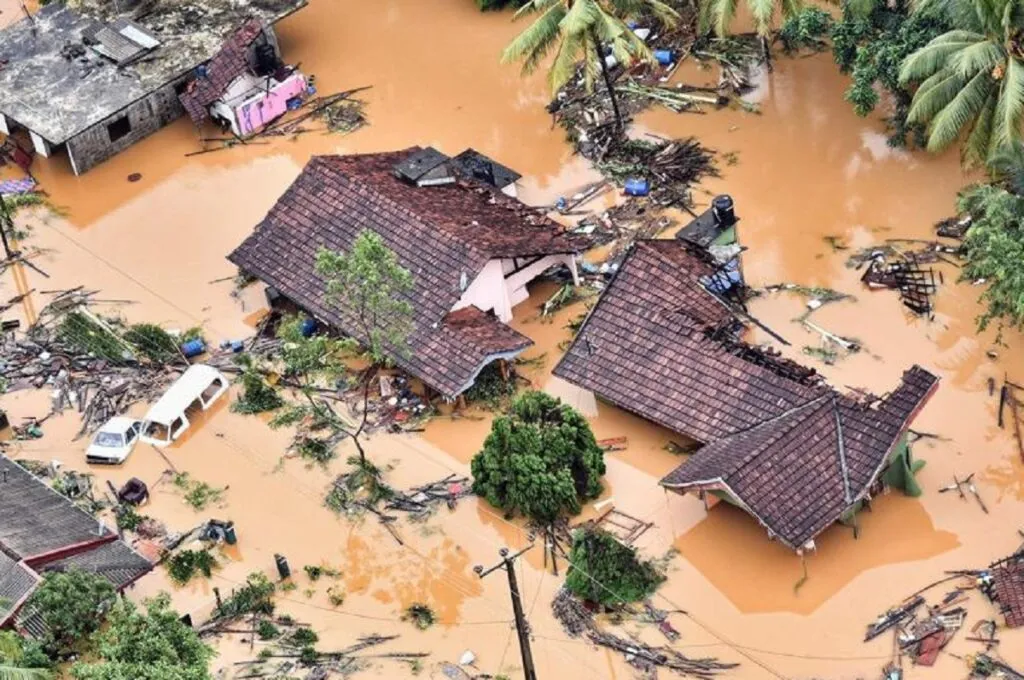
Climate change is no longer a distant environmental concern. For countries like Sri Lanka, it has become an immediate development, economic, and humanitarian challenge. Extreme weather events that were once considered rare are now occurring with alarming frequency, placing immense pressure on Governments, communities, and already‑strained public resources.
Recent warnings from the United Nations following Sri Lanka’s worst natural disaster in two decades highlight a stark reality: the world is not prepared for the scale and intensity of climate‑related disasters that lie ahead.
A World Increasingly Unprepared for Extreme Weather
According to the United Nations, extreme weather events such as cyclones, flash floods, prolonged droughts, and landslides are becoming both more frequent and more severe. However, global preparedness has not kept pace with this accelerating risk.
National disaster management systems, early warning mechanisms, infrastructure standards, and financial safety nets were largely designed for a climate that no longer exists. As a result, countries are repeatedly caught in cycles of destruction, emergency relief, and rebuilding—often in the same high‑risk locations.
For developing nations, this gap between risk and readiness is especially dangerous.
Also in Explained | Sri Lanka’s Cyclone Ditwah Recovery: The President Stressed the Importance of Stable Housing Plans
Sri Lanka’s High Exposure to Climate Risk
Sri Lanka’s geography makes it particularly vulnerable to climate impacts. The island is exposed to:
- Intense monsoon flooding
- Cyclones and storm surges
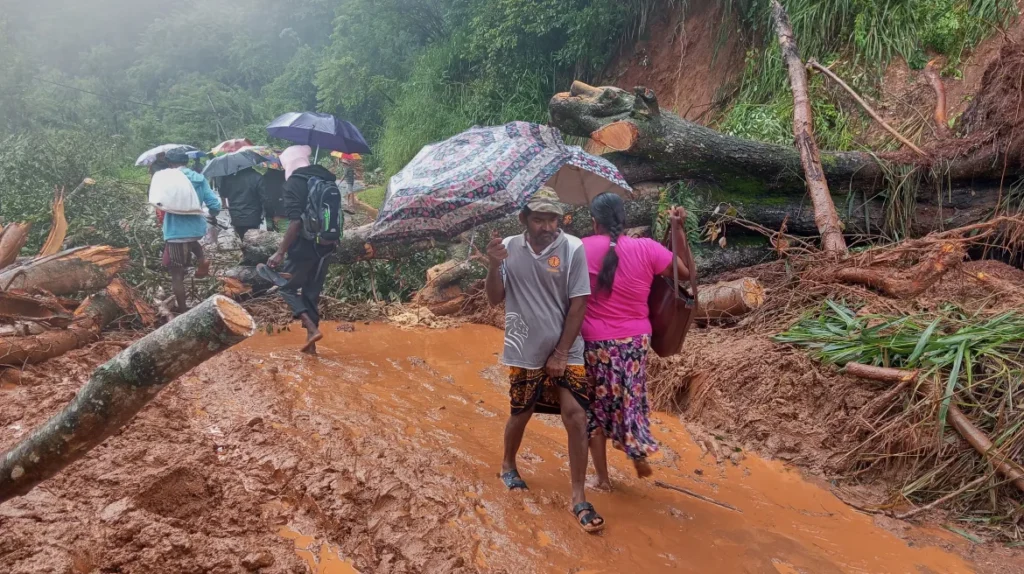
- Landslides in hill country regions
- Coastal erosion and sea level rise
- Heat stress affecting agriculture and urban centres
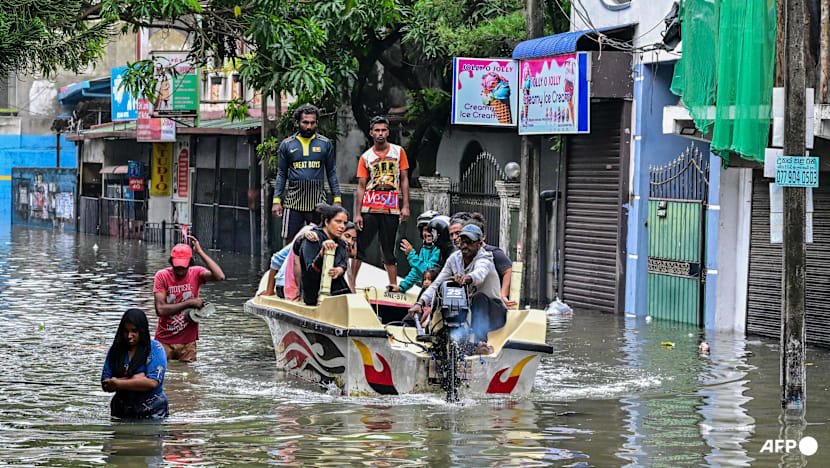
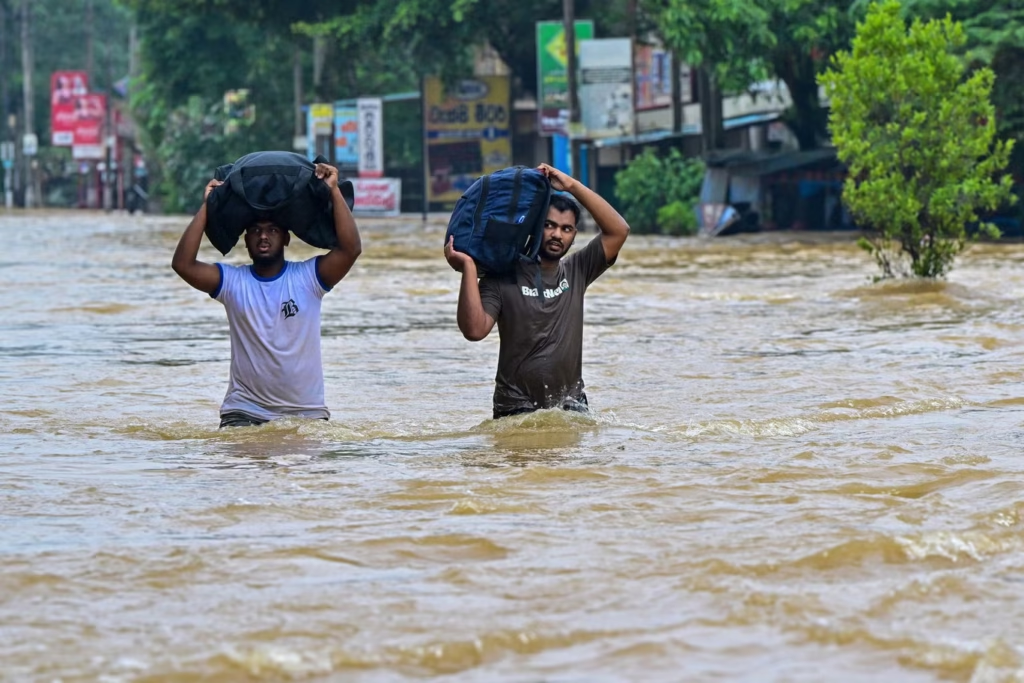
Flood‑prone river basins such as the Kelani, Kalu, and Mahaweli have repeatedly caused displacement, property loss, and economic disruption. Yet, population pressure and land scarcity continue to push communities into historically high‑risk zones.
Climate change amplifies these existing vulnerabilities. What were once “once‑in‑a‑decade” floods are now becoming almost annual events.
Shrinking Global Aid and Rising Competition
One of the most concerning trends highlighted by the UN is the shrinking pool of global humanitarian financing.
Governments worldwide are redirecting funds toward domestic economic pressures, debt servicing, defence, and social protection. At the same time, humanitarian needs are rising sharply across the globe.
Sri Lanka is now competing for limited international aid with countries facing simultaneous crises, including:
- Climate disasters in Southeast Asia
- Ongoing humanitarian emergencies in Sudan, Gaza, and Yemen
- Post‑conflict reconstruction needs in multiple regions
This reality means Sri Lanka cannot rely on post‑disaster international assistance as a long‑term strategy. Climate resilience must be built domestically and proactively.
The Cost of Rebuilding Old Vulnerabilities
One of the most critical warnings from the UN is against rebuilding the past.
Historically, post‑disaster reconstruction often restores infrastructure and settlements exactly where they were before—sometimes in flood plains, unstable slopes, or coastal erosion zones. This approach virtually guarantees repeated losses.
Allowing resettlement in known high‑risk areas creates a cycle where lives, livelihoods, and public funds are placed at risk again and again.
Climate‑resilient development demands difficult but necessary decisions:
- Restricting construction in flood‑prone zones
- Enforcing land‑use planning based on updated climate data
- Relocating communities where risk cannot be mitigated
- Investing in protective infrastructure where relocation is not viable
These are politically sensitive choices, but avoiding them only increases future human and economic costs.
Climate‑Resilient Development Is an Economic Imperative
There is a growing misconception that climate adaptation is a luxury that developing countries cannot afford. In reality, the opposite is true.
Repeated disaster relief, infrastructure repair, loss of productivity, and social disruption are far more expensive than preventive investment. Climate‑resilient development is not an environmental agenda—it is an economic survival strategy.
Key areas for climate‑smart investment include:
- Flood protection and river management systems
- Climate‑resilient housing and urban design
- Early warning and disaster preparedness systems
- Resilient transport, energy, and water infrastructure
- Climate‑adaptive agriculture and food systems
Each rupee spent on prevention saves multiple rupees in post‑disaster recovery.
Redesigning Development Models for a New Climate Reality
The UN’s message is clear: climate change requires countries to rethink how they develop, not just how they respond to disasters.
This means embedding climate risk into:
- National development planning
- Infrastructure approvals
- Housing and urban expansion
- Public investment decisions
- Private sector financing
There is no single solution. Countries like Sri Lanka must use a combination of policy reform, engineering solutions, community engagement, and international cooperation.
Most importantly, climate resilience must move from being treated as a “disaster issue” to being recognised as a core development priority.
A Narrow Window for Action
Climate shocks will continue to intensify. The question is not whether disasters will occur, but whether countries are prepared to withstand them.
For Sri Lanka and other climate‑vulnerable nations, the coming years represent a narrow window to act decisively. Each disaster should be treated not just as a tragedy, but as a turning point—an opportunity to rebuild smarter, safer, and stronger.
Failing to adapt now will lock future generations into deeper vulnerability, higher costs, and repeated humanitarian crises.
Climate change is no longer testing the resilience of nature alone. It is testing the resilience of governance, planning, and political will.
Also in Explained | Central Bank of Sri Lanka Issues Relief Measures for Cyclone and Flood-Affected Borrowers