

What Exactly Is Changing?
New Curriculum | Sri Lanka is preparing to roll out one of its most significant rounds of education reforms in recent decades. From around 2026 onwards, the Ministry of Education plans to introduce a new curriculum for key entry grades (initially Grades 1 and 6, with Grade 10 to follow) and extend the school day by 30 minutes by moving to 50-minute periods and reducing the number of daily periods to about seven.
These changes sit within a broader National Education Policy Framework and reform agenda that emphasise competency-based, activity-oriented learning, better alignment with labour market needs, and a shift away from rote learning and exam obsession.
In parallel, there are proposals to reduce the number of school grades from 13 to 12, move the O/L exam to Grade 10 and the A/L exam to Grade 12, and streamline the number of O/L subjects. Together, these moves raise a central question: will longer hours and a re-engineered curriculum genuinely improve educational outcomes, or simply add another layer of pressure on students, parents, teachers and schools?
Longer School Hours: More Time, Better Learning?
The Ministry’s rationale for extending school hours is straightforward. By shifting to 50-minute periods and cutting down the total number of periods per day, the reform aims to reduce constant subject-switching and create space for deeper, more engaging lessons. In theory, longer periods should allow:
- More time for discussion, group work and practical activities
- Less time wasted on opening and closing each period
- Better pacing for complex topics, especially in STEM and languages
However, teacher unions and education commentators have already warned that simply adding 30 minutes to an already crowded and exam-driven school day could increase fatigue without guaranteeing better learning particularly if teaching methods remain lecture-based and resources remain inadequate.
Curriculum Change: From Content-Heavy to Competency-Based
The proposed curriculum reforms are more ambitious than the time extension itself. Policy documents and ministry presentations signal a move towards:
- Activity-based learning in primary grades
- Competency-based, modular and credit-based structures in the junior and senior secondary stages
- Greater emphasis on skills such as critical thinking, communication and problem-solving
- New content areas, including digital literacy and artificial intelligence from lower secondary level upwards
For Grades 10–11, proposals include a blend of compulsory subjects, electives, and “further learning” modules measured in credits, with assessments spread across school-based work and central examinations. A national “Skill Test” at Grade 9 has also been proposed to measure literacy, numeracy and readiness for different learning pathways.
On paper, this direction is positive: it brings Sri Lanka closer to global trends that prioritise competencies over memorisation, while aiming to make examinations less stressful and curricula “lighter and more meaningful”. The real test, however, lies in implementation.
Impact on Students: Balance Between Opportunity and Burden
For students, longer hours plus a redesigned curriculum could cut both ways.
Potential benefits
- Deeper learning: If teachers genuinely use 50-minute periods for hands-on activities, lab work, discussions and projects, students could move beyond note-taking to real understanding.
- Reduced subject overload per day: Fewer periods may mean fewer subjects per day, which can reduce constant switching, help concentration and lower “cognitive clutter”.
- Broader skills: The shift towards skills, modules and credits can give students more flexibility, with options better tailored to their interests and future careers.
Key risks
- Fatigue and mental health: Extending the day without addressing class sizes, classroom conditions, transport time and homework loads risks pushing students especially younger ones into exhaustion.
- Tuition culture spill-over: If high-stakes exams remain intense, parents may still rely heavily on private tuition. The extra 30 minutes at school could simply shift more of students’ revision into late evenings.
- Inequality: Urban, better-resourced schools are more likely to implement activity-based, technology-rich lessons. Rural or under-resourced schools may struggle, widening learning gaps.
Whether students experience this reform as an opportunity or a burden will ultimately depend on how assessment, class size, infrastructure and counselling support are managed, not just on the clock.
Impact on Parents: Logistics, Costs and Expectations
Parents sit at the centre of the reform trade-offs, especially in a system already heavily dependent on family support and private tuition.
Possible positives
- More structured learning time: A slightly longer, better-structured school day could reduce the need for daytime tuition and give working parents more predictable schedules.
- Less rote drill at home: If competency-based approaches work, parents may see less pressure to “drill” content at home purely for exam performance.
Likely challenges
- Transport and care: Extending the day to around 2.00 p.m. complicates transport, especially where school vans, public buses or parents’ work hours are tightly fixed.
- Cost of adaptation: If schools push for more projects, devices or internet access, the cost burden can shift onto families already strained by the economic crisis.
- Information gaps: Without clear communication, parents may not understand how the new grading, credits and skill tests affect their child’s future pathways, fuelling anxiety.
Policy makers will need to actively engage parent communities through School Development Societies, school circles and community consultations to ensure that reforms are understood, not feared.
Impact on Teachers: Central to Success, but Stretched Thin
Teachers are the hinge on which these reforms will turn. The shift to longer periods, activity-based learning and modular curricula demands new planning, assessment methods and classroom management styles.
What could improve
- Professional autonomy: Longer periods can give teachers more room to design richer, more coherent lessons instead of rushing through fragmented 35- or 40-minute sessions.
- Recognition of teacher role: Recent policy narratives increasingly acknowledge that education reform will fail without meaningful investment in teacher development.
What could go wrong
- Workload escalation: New curricula, new assessments, new reporting formats and longer days, if layered on top of existing administrative burdens, risk pushing teachers to burnout.
- Uneven training: If professional development is limited to short workshops, teachers may not gain the deep pedagogical and assessment skills needed to make competency-based learning work.
- Morale and trust: When reforms are rolled out rapidly, without genuine consultation or pilots, teachers often feel treated as implementers rather than partners a recurring criticism in past Sri Lankan education reforms.
Impact on Schools: Timetables, Infrastructure and Governance
At institutional level, schools will have to redesign timetables, reallocate classrooms, and often run parallel systems as old and new curricula overlap during transition years.
- Timetable pressure: Extending the day sounds simple on paper, but must be reconciled with transport schedules, shared facilities, and the needs of multi-shift schools.
- Infrastructure gaps: Activity-based and modular learning demand flexible classroom layouts, science and computer labs, libraries and safe play spaces all of which are unevenly distributed.
- School leadership: Principals will need strong support in change management, budgeting and community communication to prevent reforms becoming a series of confusing circulars rather than a coherent transformation.
Will These Reforms Bring Positive Change?
On balance, the direction of the reforms more time for learning, lighter and more meaningful curricula, a shift to competencies and skills is defensible and, in many respects, overdue. The current system has long been criticised for exam pressure, rote learning and poor alignment with the modern economy.
But the risk is that longer hours and new curriculum structures are treated as technical fixes while deeper structural issues remain unaddressed: overcrowded classrooms, limited resources, congested exams, and an economy that still rewards credentialism over genuine skills.
For the reforms to produce genuinely positive change, several conditions need to be met:
- Serious, ongoing investment in teacher training and support, not just one-off workshops
- Transparent communication with parents and students on what is changing and why
- Phased implementation with pilots, feedback mechanisms and course corrections
- Targeted support for disadvantaged schools, so reforms do not widen inequality
- Alignment between school-level reforms and higher education, vocational training and labour market policies
Without these, a longer school day may simply mean more time spent in an unreformed classroom. With them, however, the proposed changes could be a genuine step towards a system that delivers not only exam passes, but capable, confident and adaptable citizens.

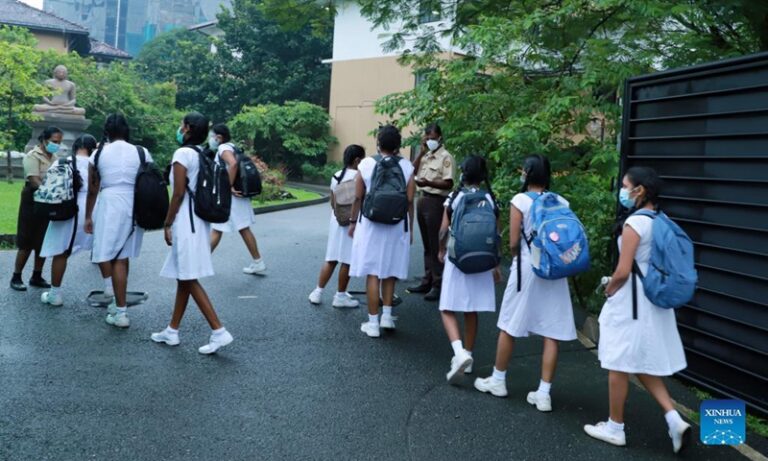

Ceylon Public Affairs will continue to monitor the roll-out of these reforms, the emerging data, and
the voices of students, parents and teachers as Sri Lanka’s education system enters its next phase.