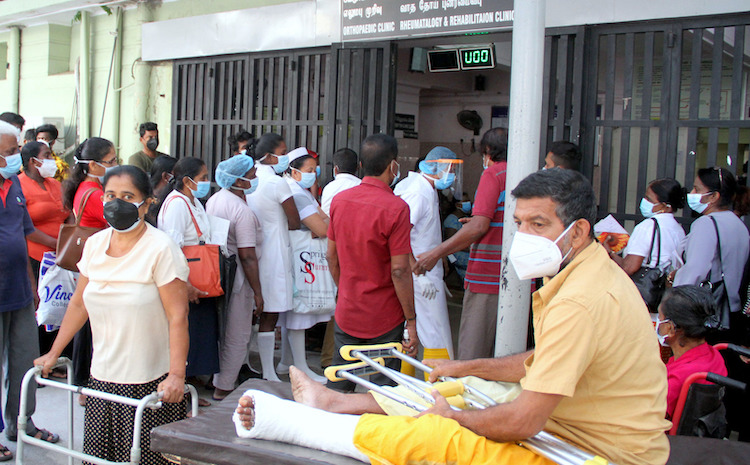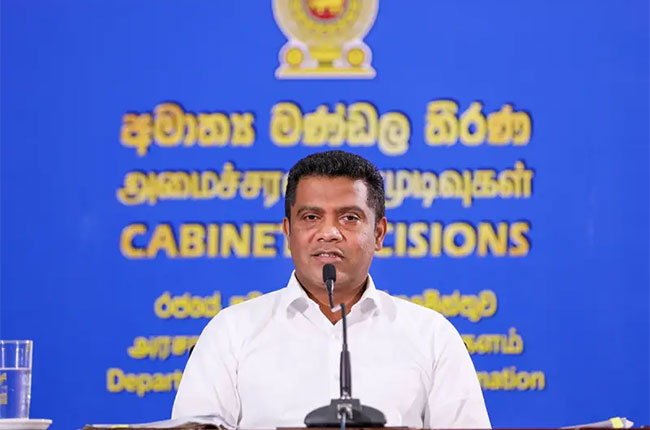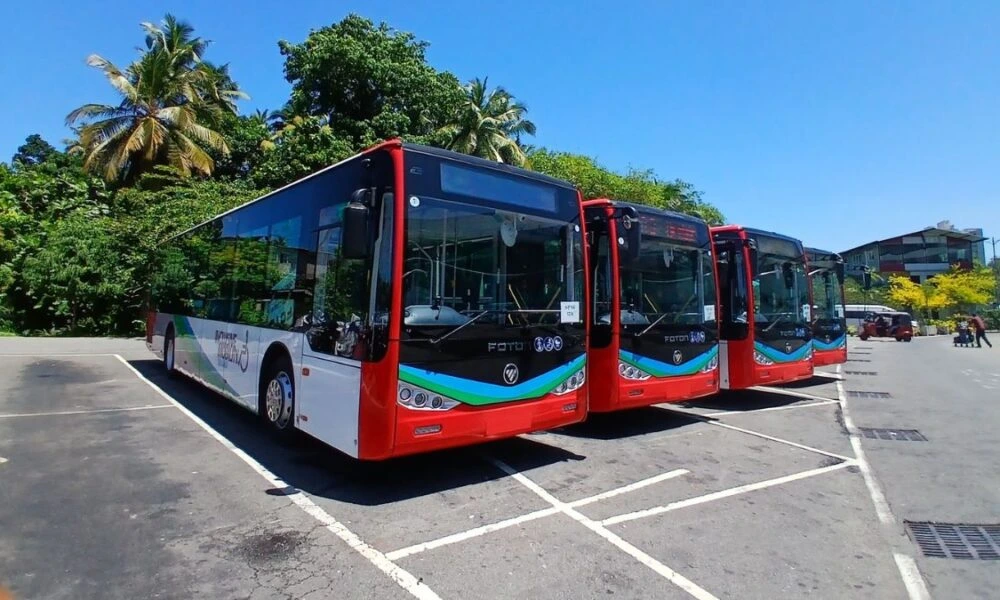

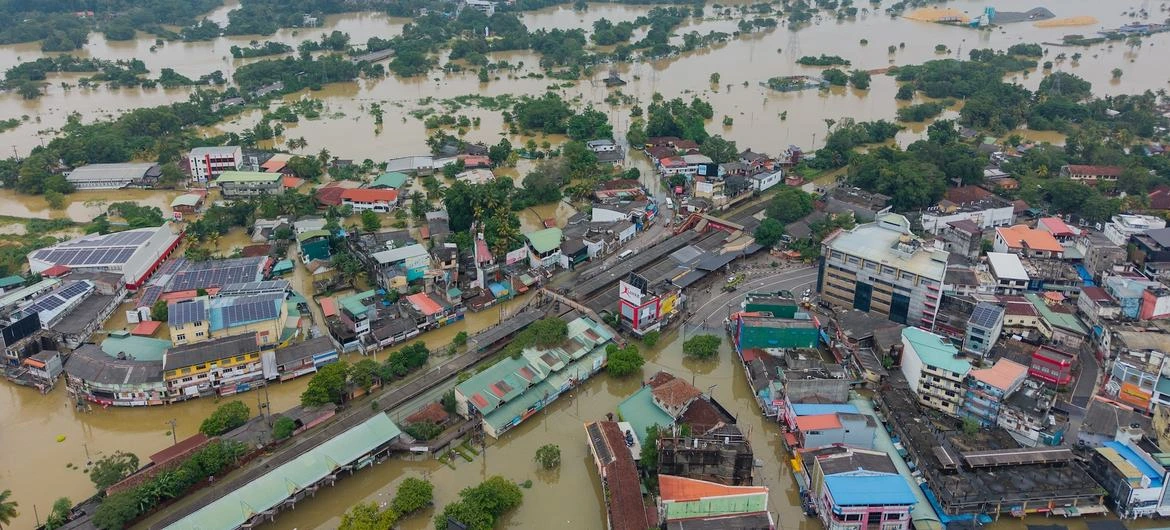
Cyclone Ditwah has emerged as one of the most devastating climate events in Sri Lanka’s recent history. As of early morning December 4, 2025, official figures report 479 deaths, 356 people missing, and over 1.58 million individuals affected across all 25 districts. The government has declared 22 districts as national disaster-affected areas, triggering emergency protocols and humanitarian coordination at an unprecedented scale.
This analysis explores the multi-sectoral impact of Cyclone Ditwah, the government’s response mechanisms, and the intersection with Sri Lanka’s welfare infrastructure, particularly the Aswesuma scheme, which has become a critical lifeline for vulnerable families during this crisis.
Also in Explained | Rebuilding After the Cyclone: What Sri Lanka’s Economy Needs Now
A Disaster of National Scale
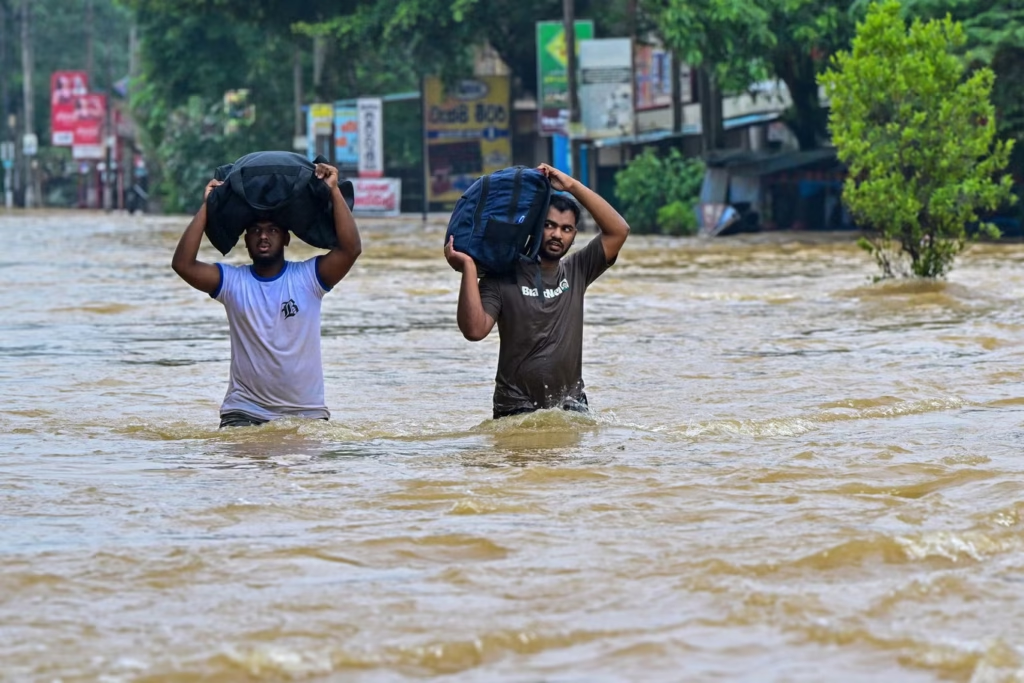
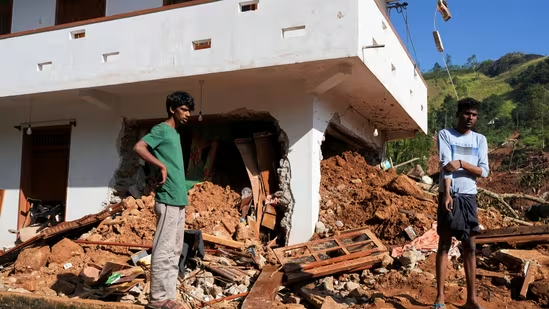
Cyclone Ditwah made landfall on November 28, 2025, bringing torrential rains, flash floods, and landslides across the island. Puttalam, Colombo, Gampaha, and Mannar recorded the highest numbers of affected individuals, with over 200 landslides reported in central highland districts such as Kandy, Nuwara Eliya, and Badulla.
More than 201,000 people are currently sheltering in 1,385 government-run safety centres, and 41,329 homes have been partially or fully damaged. The scale of displacement has strained public services, disrupted transport networks, and exposed longstanding vulnerabilities in Sri Lanka’s disaster infrastructure.
Infrastructure Under Pressure
Despite clearance operations reopening key roadways, multiple roads remain inaccessible, especially in landslide-prone regions. Electricity restoration is ongoing, with priority given to hospitals and water supply centres. However, clean water access remains a concern due to damage to water-treatment facilities and pipelines.
The Kelani River, which threatened severe flooding in Colombo, is now receding, offering some relief. Yet the cyclone has revealed how urban drainage systems, river basin management, and slope stability remain dangerously outdated. These failures underscore the need for climate-resilient infrastructure, especially as northeast monsoon conditions are expected to intensify in the coming days.
Government Response: Emergency Measures and Fiscal Flexibility
The government has activated multiple emergency protocols:
- Rs. 25,000 sanitation allowance per affected household (up from Rs. 10,000).
- Rs. 25,000 educational grant per schoolchild impacted by the disaster.
- Rs. 150 million spending authority for provincial chief secretaries and Rs. 100 million for district secretaries under revised procurement guidelines.
- Duty-free clearance for foreign aid consignments addressed to the Disaster Management Centre.
- Price control raids to prevent inflation of essential food items.
- Suspension of electricity disconnections in disaster-hit areas.
These measures reflect a shift toward decentralized fiscal authority, allowing local officials to act swiftly without waiting for central approvals. The Extraordinary Gazette issued under the Registration of Deaths (Temporary Provisions) Act also enables expedited documentation in disaster zones.
Aswesuma Welfare Scheme: A Lifeline Under Pressure
In parallel with disaster relief, the Aswesuma welfare scheme has gained renewed relevance. The Welfare Benefits Board extended the recertification deadline to December 31, acknowledging the disruption caused by Cyclone Ditwah. This extension applies to both eligible and non-eligible recipients, ensuring that families affected by the disaster are not penalized due to administrative delays.
Social media search such as “Aswesuma recertification,” “Aswesuma deadline extension,” and “Aswesuma welfare update” have surged in public search trends, reflecting widespread concern over benefit continuity. For many displaced families, Aswesuma payments are their only source of income during recovery.
The scheme’s integration with disaster response is vital. Authorities must ensure that shelter centres, mobile units, and local offices are equipped to assist beneficiaries with recertification, especially in regions with limited internet access or damaged infrastructure.
Also in Explained | The Hidden Cost of Mental Health After Sri Lanka’s Cyclone and Floods
Mahapola Distribution: Vital Relief
The Ministry of Higher Education in Sri Lanka has announced that an additional monthly Mahapola Scholarship allowance will be paid on December 05, 2025, for university students affected by the recent severe weather disaster across the country.
This payment will be made in addition to the recent allowance payment, which was disbursed on November 28, the Ministry added. In the midst of Cyclone Ditwah’s disruption, the timely distribution of Mahapola scholarships to university students offer vital relief.
For many undergraduates displaced or affected by the disaster, this financial support ensures continuity in education and daily sustenance. It was a reassuring gesture of stability during an otherwise uncertain moment.
Humanitarian Coordination and International Support
Sri Lanka’s response has been bolstered by international aid:
- Emergency medical teams from Japan and India have arrived for assessments.
- Relief pledges from Maldives, India, Bangladesh, UAE, Nepal, and Great Britain.
- UN-led Joint Rapid Needs Assessment (JRNA) combining satellite imagery, field reports, and GIS data to guide relief planning.
- Distribution of non-food items, hygiene kits, water tanks, and generators to affected districts.
- Protection services, including maternity and dignity kits, are ongoing.
- Indian Military lead operations are going on.
The Rebuilding Sri Lanka Fund, approved by Cabinet on December 1, will include both government and private sector representatives. A Global Rapid Post-Disaster Damage Estimation (GRADE) assessment, supported by the World Bank, is expected within two weeks.
Policy Implications and Long-Term Reform
Cyclone Ditwah has reignited calls for systemic reform in disaster management and welfare delivery. Key priorities include:
- Integrated disaster infrastructure: Smart drainage systems, elevated bridges, and landslide monitoring networks.
- Unified command structure: Real-time data sharing across agencies to avoid fragmented response.
- Welfare–disaster linkages: Automatic benefit adjustments and mobile recertification units during emergencies.
- Community-level preparedness: Local disaster committees, evacuation drills, and public awareness campaigns.
- Climate-adjusted planning: Building codes, zoning laws, and wetland protection aligned with future weather risks.
The Aswesuma scheme, while designed for poverty alleviation, must evolve into a resilience platform, capable of supporting families not just during economic hardship, but during climate emergencies.
Conclusion: A Moment to Reset
Cyclone Ditwah is a national tragedy, but also a national turning point. It has exposed the fragility of Sri Lanka’s infrastructure, the urgency of welfare reform, and the need for coordinated, climate-smart governance.
As the country rebuilds, the integration of disaster response, welfare systems, and infrastructure resilience must become the foundation of public policy. The extension of Aswesuma recertification, the activation of emergency allowances such ad Mahapola, and the mobilization of international aid are steps in the right direction.
But long-term survival depends on more than relief. It depends on reinvention.
Also in Explained | After Cyclone Ditwah: What Sri Lanka’s Disaster Readiness Really Reveals