
Sri Lanka stands at a familiar crossroads. The country has emerged from its most severe economic crisis in decades with macro-stability slowly returning, yet the deeper structural question remains unresolved: what kind of economy does Sri Lanka want to be?
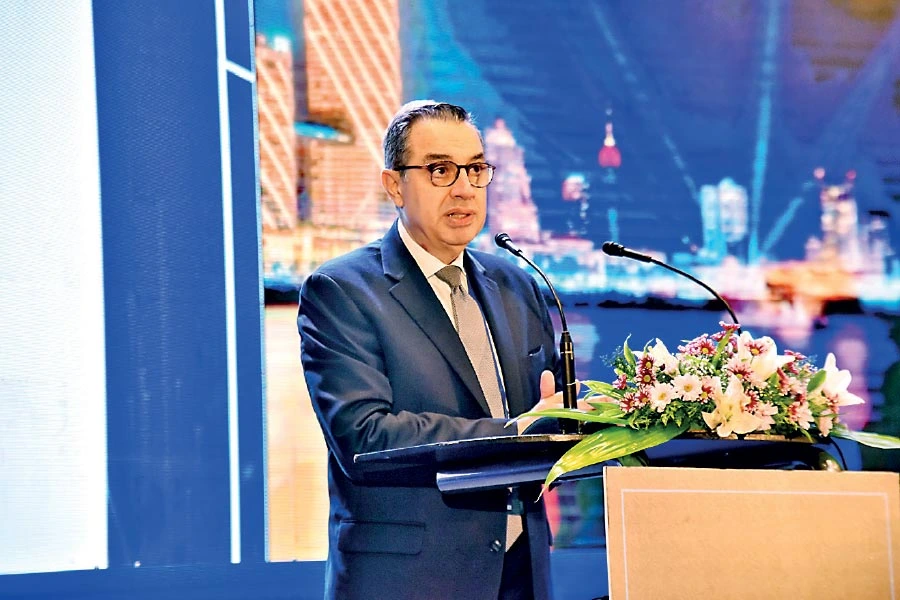
Speaking at the Sri Lanka Economic Summit, International Finance Corporation (IFC) South Asia Regional Director Imad Fakhoury articulated a blunt but necessary truth Sri Lanka cannot get rich by looking inward. His call for the country to reposition itself globally as a green, outward-looking, export-driven investment destination is not a slogan. It is a strategic imperative.
This is not the first time Sri Lanka has spoken about exports, competitiveness, or investment branding. But what makes this moment different is the narrowing of choices. Fiscal space is constrained. Domestic demand is limited. Debt dynamics leave little room for error. Growth, if it is to be durable, must come from the outside.
Also in Explained | Climate Change Is No Longer a “Future Threat” for Countries Like Sri Lanka
The Sri Lankan Paradox: Strong Social Outcomes, Weak Economic Continuity
Fakhoury’s remarks highlight a long-recognised paradox. Sri Lanka outperforms most of South Asia on social indicators literacy, life expectancy, gender parity in education, and human capital. It also enjoys one of the region’s higher per-capita incomes.
Yet this progress has been punctuated by repeated economic crises. Policy reversals, inward-looking trade decisions, weak investment confidence, and stop-start reform cycles have prevented Sri Lanka from converting its human capital advantage into sustained export-led growth.
The 2022 crisis was not an aberration. It was the culmination of years of inward drift, import controls, capital restrictions, policy unpredictability, and ad hoc fiscal decisions. The recovery phase therefore cannot simply be about stabilisation; it must be about repositioning.
Rebuilding Sri Lanka’s Global Investment Brand
The IFC’s central argument is that Sri Lanka must consciously redesign how it is perceived by global investors, partners, and markets. Not as a low-cost economy, and not as a domestically protected one but as a competitive, rules-based, sustainable export platform.
Three elements stand out in this repositioning:
1. Green and Sustainable Orientation
Sustainability is no longer optional branding. Capital is increasingly tied to environmental, social, and governance (ESG) performance. Sri Lanka’s biodiversity, renewable energy potential, and climate vulnerability position it well to attract green finance if policy frameworks are credible and stable. Renewable energy, energy efficiency, and decarbonised manufacturing are not just climate goals; they are investment magnets.
2. Outward-Looking Trade and Investment Policy
Export growth requires predictable trade policy, competitive tariffs, efficient logistics, and integration into regional and global value chains. Sri Lanka’s ambition to function as a transshipment and logistics hub only works if the economy is open, efficient, and globally connected not administratively constrained.
3. Export-Driven Growth, Not Import Substitution
Decades of experimentation have shown that inward-focused protection does not generate competitiveness. Export-oriented sectors whether in goods or services force productivity, technology adoption, and scale. This is the discipline Sri Lanka has often avoided, but now must embrace.
Where the Opportunities Lie
Fakhoury outlined several concrete sectors where Sri Lanka can realistically scale outward-oriented growth.
1. High-Value Tourism, Not Volume Tourism
Tourism recovery cannot be about numbers alone. Sri Lanka’s competitive advantage lies in experience-based, high-value tourism eco-tourism, wellness, heritage, adventure, and boutique offerings. Crucially, unlocking destinations in the North and East would diversify tourism flows, spread income geographically, and integrate post-conflict regions into national growth.
2. Digital Services and Knowledge Exports
Sri Lanka’s educated workforce gives it a clear opening in digital services, IT-enabled exports, fintech, and specialised professional services. These are low-capital, high-value exports that do not strain physical infrastructure. However, scaling them requires regulatory clarity, digital infrastructure, and a mindset shift from domestic servicing to global competition.
3. Agribusiness and Value-Added Manufacturing
Moving beyond commodity exports into value-added agribusiness, specialised manufacturing, healthcare, and pharmaceuticals offers resilience and diversification. The emphasis here is not scale alone, but quality, standards, and integration into international supply chains.
4. Infrastructure as an Enabler, Not a Bottleneck
Renewable energy, ports, logistics, mobility, and energy efficiency are foundational. The IFC’s bullishness on these areas reflects a broader truth: without modern infrastructure, outward orientation collapses. Public-private partnerships (PPPs), as Fakhoury stressed, will be critical given fiscal constraints.
Policy Predictability: The Missing Multiplier
Perhaps the most consequential part of the IFC’s message was not sectoral, but institutional. None of the above is possible without policy predictability.
Investors price uncertainty aggressively. Sudden tax changes, retroactive rules, trade bans, and regulatory ambiguity undermine even the strongest fundamentals. Sri Lanka’s challenge is not a lack of opportunity; it is a lack of credibility over time.
Improving the “doing business” environment is not about rankings alone. It is about trust trust that contracts will be honoured, rules will not change overnight, and reforms will persist beyond electoral cycles.
The Role of IFC and Development Finance
The IFC’s continued presence with a long-term portfolio of around $270 million in Sri Lanka and broader advisory and short-term financing signals cautious confidence. Sri Lanka remains strategically important within IFC’s South Asia framework, particularly in areas such as SME financing, women-led enterprises, sustainability finance, trade finance, and capital-market development.
But development finance institutions are not substitutes for reform. They are catalysts. Their capital follows reform momentum; it does not create it in isolation.
Looking Outwards Is No Longer a Choice
Sri Lanka’s post-crisis window is narrow. The country can either stabilise and drift back into inward comfort or stabilise and re-embed itself into the global economy with intention.
The message from IFC is clear: growth will come from exports, investment, sustainability, and openness or it will not come at all.
Looking outward is not about abandoning domestic priorities. It is about recognising that prosperity, jobs, fiscal stability, and resilience now depend on how effectively Sri Lanka engages the world.
The question is no longer whether Sri Lanka should pivot outward. It is whether it will do so decisively and consistently this time.
Also in Explained | Australia’s Under-16 Social Media Ban: Lessons for Sri Lanka on Digital Policy and Youth Protection