
Denmark is pioneering a groundbreaking legal approach to combat AI-generated deepfakes by amending its Copyright Act to grant individuals stronger control over realistic digital imitations of their own appearance, voice, and physical characteristics.
Announced in June 2025 by the Danish Ministry of Culture, the proposed amendments backed by broad cross-party support, introduce new protections under sections 65a and 73a of the Copyright Act. These provisions require explicit consent before realistic digitally generated imitations of a person’s personal physical traits (face, body, voice) or a performing artist’s performance can be made publicly available.
The protection lasts for 50 years after the person’s death. Exceptions apply for content that qualifies mainly as caricature, satire, parody, pastiche, criticism of power, or social criticism unless it constitutes misinformation that seriously endangers others’ rights or interests.
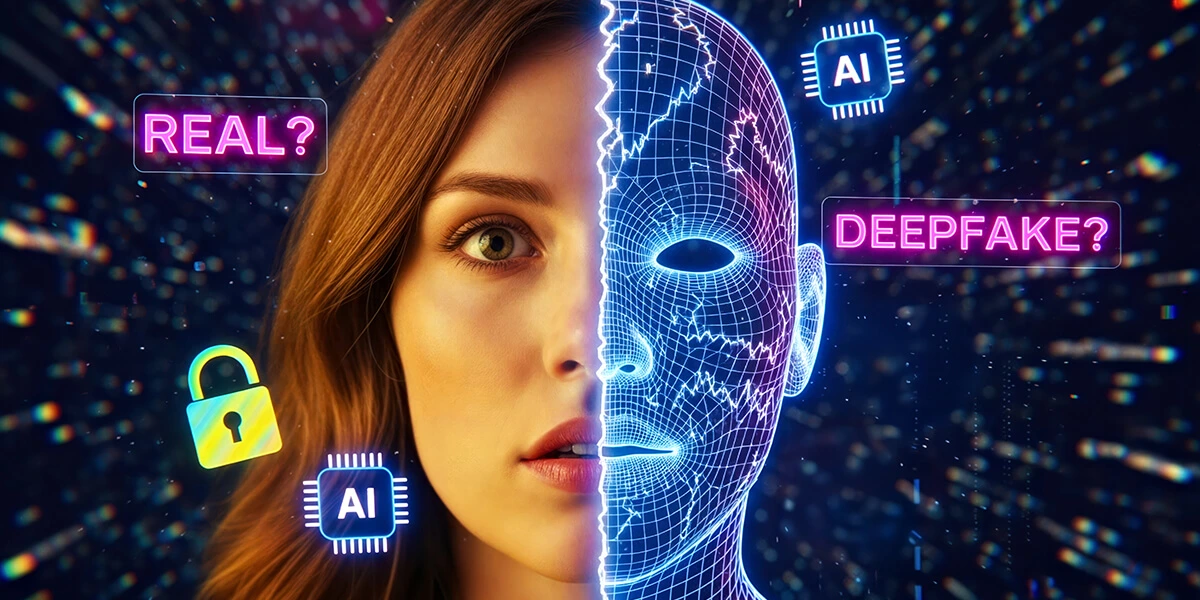
The legislation defines a deepfake as a highly realistic digital representation of a person, including their appearance and voice, created or manipulated using AI.
Also in Explained | Anthropic’s Claude AI and Agentic Misalignment: Concerning Behaviors in AI Safety Testing 2026
Why This Matters: The Rising Threat of Deepfakes
Deepfakes have evolved from niche curiosities to tools for harassment, fraud, non-consensual intimate imagery, political disinformation, and reputational harm. Ordinary citizens, not just celebrities, face risks when AI can clone voices for scams or fabricate videos for bullying and extortion.
Existing laws such as privacy rules, defamation, or the EU’s Digital Services Act (DSA) offer partial remedies, but often fall short when content is synthetic and no original recording was misused. Denmark’s approach fills this gap by treating realistic imitations as a matter of intellectual-property-style control, enabling individuals to demand removal from platforms and potentially seek damages.
The amendments align with the EU Digital Services Act, which requires platforms to act on illegal content notifications. Denmark notified the draft to the European Commission, with public comments open until early February 2026. If adopted as planned, the changes are expected to take effect around mid-2026 (some sources indicate possible entry into force in July 2026 or earlier phases).
Culture Minister Jakob Engel-Schmidt has actively promoted the model during Denmark’s 2025 EU Council Presidency, urging other member states to consider similar safeguards.
A Potential Model for the World – Including Sri Lanka
Denmark’s initiative highlights a forward-thinking response to AI’s impact on personal identity. By extending a copyright-like framework to natural persons’ likenesses, it shifts the burden: creators of realistic synthetic media must obtain consent or risk legal liability.
For countries like Sri Lanka, where smartphone penetration is high, social media usage is widespread, and deepfake incidents (including scams and revenge content) are emerging concerns, this model offers inspiration.
Sri Lanka already has laws addressing cyber-harassment, defamation, and the Online Safety Act (2024), but synthetic media creates novel challenges, especially when no “original” data was stolen. A personality-rights approach, whether through copyright amendments, dedicated digital identity legislation, or updates to data protection rules, could empower citizens to report and remove harmful deepfakes more effectively.
Such a framework would need careful balancing: strong protections against abuse while preserving freedom of expression, satire, journalism, and artistic creativity. Public consultation, clear definitions of “realistic imitation,” and platform accountability mechanisms would be essential.
Denmark’s proposal demonstrates that nations can adapt intellectual property tools to safeguard human dignity in the AI era. As generative technology advances, proactive legal steps like this may become essential to preserve trust, autonomy, and truth online.
Also in Explained | Could Excessive Screen Time and Algorithms Be Diminishing Our Intelligence?