
Sri Lanka education system has long been a source of national pride, delivering near-universal literacy and strong foundational knowledge. Yet it is increasingly critiqued for its heavy emphasis on high-stakes examinations, the Grade 5 Scholarship, G.C.E. Ordinary Level (O/L), and Advanced Level (A/L), which shape teaching, learning, and student aspirations. Rote memorisation and content-heavy syllabi dominate classrooms, often at the expense of critical thinking, creativity, and problem-solving skills essential for the 21st century.
The 2026 curriculum reforms, rolling out for Grades 1 and 6, signal a shift toward competency-based and modular learning with 70 percent formative assessment. The question is no longer whether the system excels at exam preparation; it is whether Sri Lanka’s education system can evolve to genuinely foster critical thinking and creativity while preparing every child for a rapidly changing world.
The distinction matters. An exam-focused system can produce disciplined learners with broad factual knowledge, but when it prioritises recall over inquiry, it risks leaving students ill-equipped for innovation, adaptability, and lifelong learning. Sri Lanka’s recent experience – strong foundational achievements alongside calls for deeper reform shows both the scale of the challenge and the clear path forward through reflective, educational transformation.
Also in Explained | Can Sri Lanka’s Education System Truly Prepare Kids for the Future?
The Exam-Focused Education Challenge in Sri Lanka’s Discourse
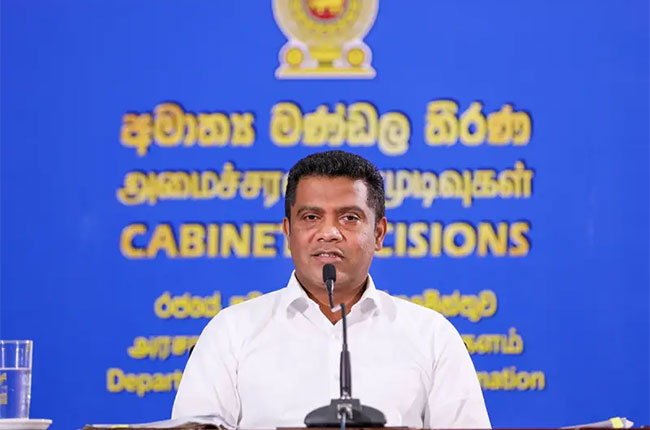
National dialogue increasingly recognises the limitations of the current model. The Government’s “Transforming General Education in Sri Lanka” roadmap and the 2026 curriculum reforms have sparked widespread discussion in media, parliamentary committees, and education forums. The 2026 budget allocated a record Rs 704 billion (around 2.04 percent of projected GDP) to education, the highest in recent years with explicit commitments to modular, competency-based learning, reduced exam pressure, and transversal skills such as critical thinking and creativity. Prime Minister and education officials have publicly emphasised moving away from rote memorisation toward continuous assessment and 21st-century competencies.
These conversations resonate because education remains central to social mobility and national development. Yet the focus often remains on implementation timelines for the new Grades 1 and 6 modules rather than the broader, system-wide cultural and pedagogical shifts needed to embed critical thinking and creativity across all grades and classrooms.
Understanding Critical Thinking and Creativity in Education: The Foundation of Future-Ready Learning
Critical thinking and creativity in education go beyond factual recall to encompass analysis, evaluation, problem-solving, innovation, collaboration, and the ability to apply knowledge in real-world contexts. An effective system integrates inquiry-based learning, project work, open-ended questions, and interdisciplinary approaches while balancing core knowledge with transversal skills such as digital literacy, ethical reasoning, and adaptability.
In a reflective framework, education nurtures curious, independent thinkers who can navigate uncertainty, generate ideas, and contribute meaningfully to society and the economy. Without this foundation, even high exam pass rates fail to translate into the innovation, resilience, and lifelong learning required in a digital, globalised world.
Sri Lanka’s Education System: Strong Foundations but Significant Gaps
The country has achieved impressive progress. Near-universal primary enrolment, high literacy rates, and a dedicated teaching workforce have long been strengths. The 2026 reforms mark a historic pivot: Grades 1 and 6 now follow a modular, competency-based curriculum with formative assessment (70 percent) outweighing summative exams (30 percent). Teacher training programmes are being modernised, and transversal skills, including critical thinking, creativity, and digital literacy are being embedded across subjects.
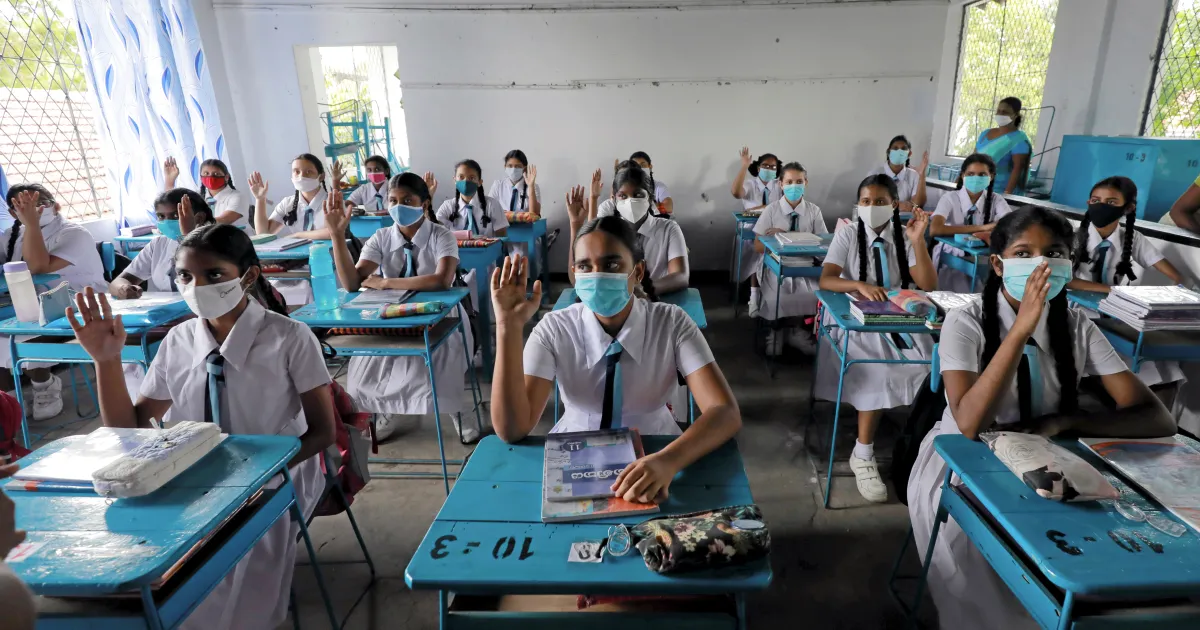
Yet capacity gaps remain stark. For the majority of students in Grades 7–13, the system is still predominantly exam-driven, with rigid syllabi and teaching methods that prioritise “correct answers” over exploration. Many classrooms continue to rely on teacher-centred, rote-learning approaches, especially in preparation for O/L and A/L examinations. Project-based and inquiry-driven learning remain limited, and assessment reforms have not yet fully scaled beyond the pilot grades.
The Exam-Focused Gap: Evidence from Curriculum, Assessment and Learning Outcomes
Data and stakeholder feedback reveal a clear mismatch. The curriculum remains content-heavy and examination-centric, with three major high-stakes exams shaping teaching from early grades onward. Surveys and analyses consistently show that rote memorisation dominates, limiting opportunities for discussion, experimentation, or creative problem-solving. While the 2026 reforms introduce formative evaluation and modular learning in early grades, implementation challenges, including teacher preparedness and resource distribution, mean that deeper shifts toward critical thinking are still emerging rather than systemic.
Learning outcomes reflect these realities: while foundational knowledge is strong, higher-order skills such as analysis, creativity, and application lag. Students often excel in recall-based tasks but struggle with open-ended inquiry or interdisciplinary projects. These gaps are particularly pronounced in rural and estate schools, where access to updated resources and trained facilitators is uneven. The result is a system that prepares students well for exams but less effectively for the demands of higher education, employment, or innovation.
Why the Exam-Focused Approach Persists: Policy, Cultural and Resource Realities
Several factors sustain the current model. First, historical emphasis on examinations as gateways to limited university places and public-sector jobs has entrenched a high-stakes culture. Second, teacher training and classroom resources have not yet fully aligned with competency-based pedagogy, despite recent initiatives. Third, implementation of the 2026 reforms faces coordination challenges, uneven rollout across provinces, and the inertia of long-standing practices.
Public and policy discourse rightly celebrates the bold 2026 curriculum changes and record budget allocation, yet sustained attention to nationwide teacher professional development, equitable resource distribution, and cultural shifts in assessment has been slower to emerge.
Risks of an Exam-Focused System for Sri Lanka’s Future
Continued over-reliance on exam-centric education carries serious risks. Students may graduate with strong factual knowledge but limited creativity, critical analysis, or adaptability qualities increasingly demanded by employers and the digital economy. This could widen skills gaps, slow innovation, and reduce competitiveness in a global knowledge economy. Socially, it risks perpetuating inequality, as students from better-resourced urban schools adapt more easily to emerging competency-based approaches while others lag.
In a country pursuing inclusive growth, digital transformation, and resilience, an education system that under-emphasises critical thinking and creativity could constrain human capital development and long-term prosperity.
A Forward-Looking Policy Shift: Prioritizing Critical Thinking and Creativity
Sri Lanka can transform its education system through reflective, educational action on three fronts.
First, fully embed competency-based pedagogy across all grades. Accelerate the rollout of modular curricula, project-based learning, and inquiry-driven methods beyond Grades 1 and 6, ensuring transversal skills such as critical thinking, creativity, collaboration, and digital literacy are integrated into every subject and classroom.
Second, strengthen teacher capacity and support. Expand comprehensive professional development programmes to equip educators as facilitators of critical thinking rather than deliverers of content, while providing resources, smaller class sizes where feasible, and ongoing mentoring to support the shift from rote to reflective teaching.
Third, reform assessment and system-wide incentives. Scale the 70:30 formative-to-summative model nationwide, reduce the dominance of high-stakes exams through continuous evaluation and National Competency Assessments, and align university admissions and employer expectations with broader competencies. Foster partnerships between schools, universities, industry, and NGOs to create real-world learning opportunities and monitor progress through transparent outcome indicators.
These steps, supported by the 2026 budget momentum and sustained commitment, position Sri Lanka to build an education system that truly prepares every child for the future.
Conclusion – Sri Lanka Education System
Sri Lanka’s education system has delivered strong foundational achievements and is now embarking on significant 2026 reforms including modular, competency-based learning for early grades and a shift toward 70 percent formative assessment. Yet for many students, the system remains predominantly exam-focused, prioritising rote memorisation over the critical thinking and creativity essential for 21st-century success.
Fostering critical thinking and creativity in education is not an optional enhancement, it is fundamental to individual empowerment, national innovation, and inclusive development. By fully implementing pedagogical and assessment reforms, investing in teachers, and aligning the entire system with future-oriented skills, Sri Lanka can move beyond exam preparation to nurture curious, capable, and creative learners. The challenges are real, but so is the opportunity. Reflective, educational action today will determine whether future generations of Sri Lankans are equipped not just to pass exams, but to question, create, and lead. The time to deepen this transformation is now for a more innovative, equitable, and future-ready Sri Lanka.
Also in Explained | Will Longer Hours and a New Curriculum Fix Sri Lanka’s Schools?