

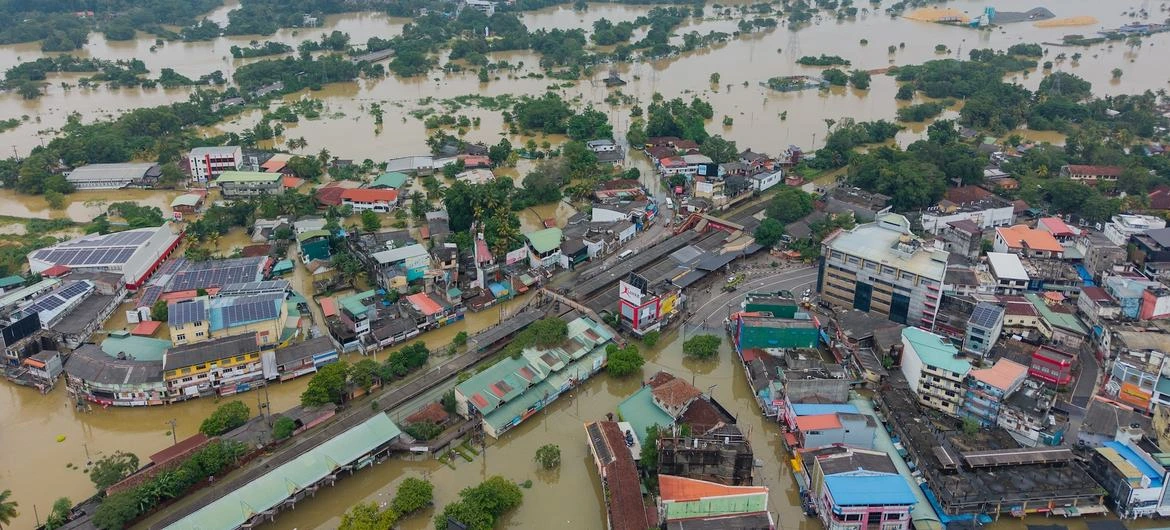
Cyclone Ditwah will be remembered not only for the devastation it caused, but for what it exposed: Sri Lanka’s disaster-management machinery is still far from ready for a climate era defined by intense storms, unpredictable rainfall, and rapid-onset emergencies. The cyclone’s toll lives lost, homes destroyed, roads submerged, communities displaced reveals a reality that cannot be ignored. Early warnings alone did not save enough lives. Preparedness plans did not translate into ground-level action. Institutions responded, but not at the speed or cohesion the situation demanded.
Ditwah was not unprecedented. But its impact shows how outdated systems, weak local governance, and infrastructural neglect can turn a predictable weather event into a national crisis.
Early Warnings Issued, But Not Received
Sri Lanka’s Meteorological Department and Disaster Management Centre (DMC) did issue warnings ahead of the cyclone. Yet large numbers of people in high-risk areas were still caught unprepared. This “warning-to-action gap” is one of the most serious structural weaknesses exposed by Ditwah.
Several factors play a role:
- Last-mile communication breakdowns
SMS alerts do not reach all citizens, particularly in rural and estate sectors. Unreliable coverage and inconsistent dissemination mean that communities relying on radio or word-of-mouth received information too late.
- Alert fatigue
Frequent weather warnings, many of which do not escalate into disasters, reduce public responsiveness. When warnings lack precision, people assume the threat is mild.
- Absence of hyperlocal forecasting
Warnings are often issued at a district or provincial scale. A village on safe ground receives the same alert as a landslide-prone hillside. Without micro-level forecasting, people are unsure whether the danger is real.
The outcome – warnings existed, but preparedness did not. The system informed, but it did not compel protective action.
Evacuation Plans That Didn’t Translate to Practice
Sri Lanka technically maintains evacuation maps, hazard profiles, and shelter lists. Ditwah proved that these plans remain largely theoretical.
- Shelters were under-resourced and overcrowded.
Basic necessities clean water, bedding, medication were insufficient. Some shelters were located in buildings vulnerable to strong winds and flooding, indicating poor site selection and outdated mapping.
- Evacuation delays were widespread.
In several districts, residents waited too long because no clear instructions came from local authorities. Officials themselves lacked the real-time data needed to make confident decisions.
- No simulations or drills.
Most communities had never practiced an evacuation. Without rehearsed protocols, even well-intentioned officials struggled to coordinate movement under pressure.
Cyclone readiness cannot rely on paperwork. It depends on practice, awareness, and local capacity which Ditwah revealed to be lacking.
Infrastructure Failures: The Predictable Disaster
Sri Lanka’s roads, bridges, drainage systems, and flood controls were never built for the climate of the 2020s. Ditwah’s destruction was accelerated by structural neglect:
- Urban flooding exposed drainage collapse.
Colombo and suburbs saw inundation within hours. Decades-old drainage systems some dating back to colonial times could not manage the volume of water.
- Rivers and canals overflowed dangerously.
Poor maintenance, illegal encroachments, and blocked waterways amplified flooding intensity. River basin management is still fragmented across multiple agencies with overlapping mandates.
- Landslides highlighted long-ignored risks.
Hilly districts saw slope failures, partly due to improper construction, deforestation, and unregulated development.
Road closures crippled rescue work.
When bridges collapse and highways flood, rescue teams lose precious time. Ditwah’s impact underscores how weak infrastructure directly translates into higher casualties. This is not a matter of money alone; it is a matter of planning, maintenance, and enforcement.
Institutional Fragmentation: Too Many Actors, Not Enough Unity
Sri Lanka’s disaster-response ecosystem includes the DMC, the Tri-Forces, Police, local authorities, Provincial Councils, the Met Department, and numerous ministries. Ditwah revealed the lack of a single, unified command.
Key gaps:
Slow district-level decision-making
Local authorities hesitated to issue evacuation orders because they awaited central clearance. In a cyclone, minutes matter.
Poor data integration
Rainfall, river levels, wind speeds, satellite data, and on-ground reports are not streamed into one national dashboard accessible to all agencies.
Uneven capacity across districts
Some districts have strong officers and trained officers; others lack equipment, personnel, or even reliable vehicles.
Coordination relied too heavily on the military
The Tri-Forces responded effectively, as always. But when military-led rescue becomes the primary plan, it signals civilian institutional weakness. Countries like Japan and Bangladesh have built community-level disaster cells that act as the first line of defence. Sri Lanka’s response still depends on top-down command.
The Warning Signal for Policymakers
Cyclone Ditwah is a turning point because it occurred in a country that already knew its vulnerabilities. Sri Lanka is no stranger to floods, landslides, and cyclones. Yet preparedness has not transformed into resilience.
Three reforms are urgent:
A modernised national early-warning and communication system
GPS-based alerts, multi-language mass messaging, and unified communication channels.
Infrastructure upgrades focused on resilience
Drainage rehabilitation, river basin management, regulated construction, and climate-proof designs.
Community-level preparedness
Local disaster committees, mandatory drills, and public awareness campaigns. Climate change will intensify storms, not reduce them. Ditwah will not be the last test.
Conclusion: A Wake-Up Call Sri Lanka Cannot Ignore
Cyclone Ditwah exposed a truth the country can no longer avoid: we have warnings, but not readiness; institutions, but not coordination; plans, but not practice. Disaster management cannot remain reactive. It must become proactive, scientific, localised, and community-driven. Sri Lanka now stands at a crossroads. Either we learn from Ditwah or we wait for the next cyclone to provide the same lesson at an even higher cost.

© UNICEF/ InceptChange | Floodwaters have entered several hospitals across Sri Lanka, further straining the health system.

© UNICEF/InceptChange | Gampaha (pictured), a district on Colombo’s outskirts, has been among the areas hardest hit by flooding after Cyclone Ditwah.

Getty Images | People navigate floodwaters on a makeshift raft as heavy rains from Cyclone ”Ditwah” sweep through Colombo, Sri Lanka, on 29 November 2025
Ceylon Public Affairs will continue to provide verified updates and policy analysis as the situation develops.