
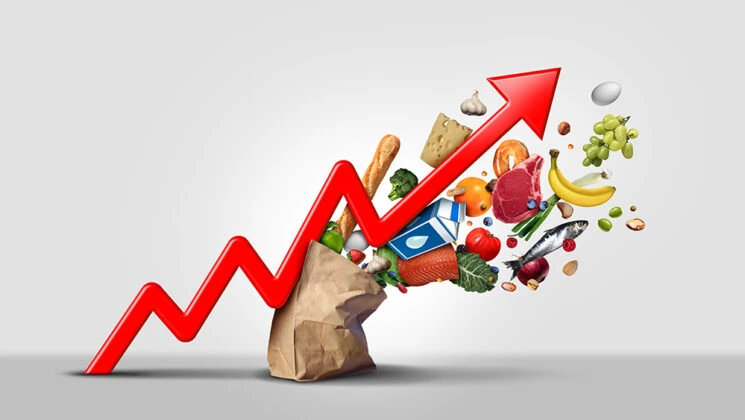
Sri Lanka’s national inflation rate, measured by the National Consumer Price Index (NCPI), rose to 2.9% year-on-year in December 2025, up from 2.4% in November, as confirmed by the Department of Census and Statistics (DCS). Food inflation drove this increase, climbing to 4.4%, while non-food inflation rose modestly to 1.6%. The urban-focused Colombo Consumers’ Price Index (CCPI) remained relatively stable at around 2.1%. Though comfortably below the Central Bank of Sri Lanka’s (CBSL) 5% medium-term target, this uptick adds noticeable pressure on household budgets particularly for essentials as many families continue recovering from earlier economic challenges.
For everyday Sri Lankans, the critical concern is the direct impact on monthly spending. Let’s quantify it using verified data.
Also in Explained | Pension Rights Clarification for Public Officers Appointed After 2016: Ensuring Retirement Security in Sri Lanka
The Extra Burden on Your Monthly Basket
The NCPI basket reflects nationwide consumption, with food items comprising approximately 41.4% of the weight (higher for lower-income households, often 50-60%). Based on recent Household Income and Expenditure Survey (HIES) updates and economic analyses, average monthly household expenditure stands at around LKR 100,000-105,000 in 2025 nominal terms (adjusted from pre-crisis baselines).
- At 2.9% overall y-o-y inflation: Families are effectively paying LKR 2,900-3,045 more per month for the same basket of goods and services compared to December 2024.
- Food’s 4.4% inflation is the main culprit: On a typical LKR 40,000-45,000 monthly food spend (40-45% of total), this translates to LKR 1,760-1,980 extra per month largely on staples like rice, vegetables, coconut, dairy, and dried fish.
- Non-food (1.6%): Contributes about LKR 900-1,000 monthly to costs like transport, utilities, and education.
These figures are approximate calculations applying year-on-year rates to average baskets (no official per-household “extra cost” is published, but the methodology is standard). For lower-income families spending disproportionately on food, the real hit can exceed LKR 2,500-3,000 monthly, forcing cuts in nutrition or other needs.
Why Prices Rose and What It Means for Everyday Life
December’s rise stems from familiar factors: heightened festive season demand pushing up food costs, combined with supply disruptions from early-month heavy rains and flooding that affected harvests and logistics. Imported inputs added mild pressure, though stable global energy prices capped non-food increases.
Publicly, this creep feels significant after prolonged low inflation that supported real income recovery post-2022. Vulnerable households rural farmers, urban daily wage earners, and Samurdhi recipients bear the brunt, with risks to health from reduced nutritious intake. Fixed-income groups like pensioners see savings value erode quietly.
Yet, context matters: This aligns with the CBSL’s projected gradual normalisation toward 5% by mid-2026, amid sustained 4-5% growth and strong private activity (December PMI: Manufacturing 60.9, Services 67.9). It signals healthy demand without the dangers of past spikes.
Protecting Public Welfare: Priorities Ahead
To ease the squeeze, public measures should focus on supply-side stability: investments in climate-resilient agriculture, better market monitoring, and indexed social transfers. Long-term revenue reforms can fund these sustainably.
Sri Lanka’s hard-earned low-inflation environment has been a boon for citizens. December’s modest rise is controllable, but it highlights the need for proactive policies to shield family baskets ensuring broad-based recovery leaves no one behind.
Also in Explained | Sri Lanka’s Minimum Wage Revision Effective January 2026: A Welcome Boost for Workers and Key Compliance Notes