

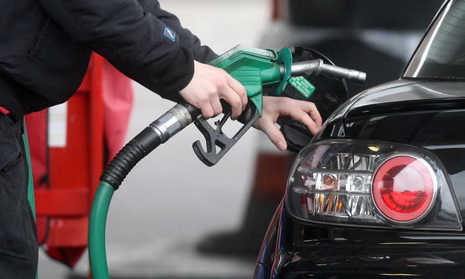
Global oil prices have risen sharply following recent military actions in the Gulf region and warnings from Iran restricting navigation through the Strait of Hormuz. The waterway, which handles about 20% of the world’s oil supply, saw tanker traffic halt or divert after radio warnings from Iran’s Revolutionary Guards instructing ships not to pass. This disruption, combined with ongoing strikes, has pushed Brent crude prices up by 5-10% in recent trading sessions, with analysts warning of potential spikes to $100 per barrel or higher if the situation prolongs.
For Sri Lanka, an import-dependent nation, these developments translate directly into higher fuel costs. On February 28, 2026, at midnight, the Ceylon Petroleum Corporation revised prices upward: Auto Diesel increased by Rs. 4 to Rs. 281 per litre, Super Diesel by Rs. 6 to Rs. 329 per litre, and Petrol 92 Octane by Rs. 1 to Rs. 293 per litre. This marks the latest adjustment amid global volatility.
From a public perspective, the price hikes affect daily life for millions. Commuters using buses or three-wheelers face higher fares; families budgeting for cooking gas or transport feel the pinch; small businesses and farmers see rising operational costs. While the increases are modest, they compound existing economic pressures in a country where fuel remains a major household expense.
Also in Explained | Is Sri Lanka’s Economic Growth Gaining Sustainable Momentum?
Global Oil Market Reaction to Regional Tensions
The Strait of Hormuz serves as a critical chokepoint for oil and gas exports from Saudi Arabia, Iraq, UAE, Kuwait, and Qatar. Recent events US and Israeli strikes on Iran followed by Iranian warnings have led major tanker owners, oil majors, and traders to suspend shipments. Traffic through the strait has dropped significantly, with vessels anchoring in safer waters or rerouting.
Analysts note that even partial disruptions can tighten supply. The region accounts for substantial global flows, and any sustained restriction raises fears of shortages. Prices reacted immediately: Brent crude climbed from recent lows, reflecting market anxiety over potential escalation.
Sri Lanka, with no domestic crude production, imports nearly all its petroleum needs. Higher global prices feed directly into local costs through the Ceylon Petroleum Corporation’s pricing formula, which adjusts based on international benchmarks and exchange rates.
Sri Lanka’s Oil Prices Update and Economic Ripple Effects
The midnight revision on February 28, 2026, reflects the latest global movements. Diesel, widely used for transport and power generation, saw the largest increase, directly impacting bus fares, goods delivery, and electricity generation costs. Petrol adjustments affect private vehicles and three-wheelers, common in daily commutes.
For average citizens:
- Households with school or office runs may see transport expenses rise by Rs. 50-100 weekly.
- Farmers using diesel pumps or machinery face higher cultivation costs, potentially pushing food prices.
- Businesses pass on increases, contributing to broader inflation.
The government monitors the situation closely, with subsidies or adjustments considered for vulnerable groups. However, sustained high global prices could strain the balance of payments, as fuel imports remain a major expenditure.
Public Concerns and Adaptation
Many Sri Lankans express worry over repeated price hikes, linking them to external conflicts beyond local control. Conversations in markets and social media highlight frustration: “We pay the price for distant wars.” Yet resilience shows communities discuss fuel-efficient habits, carpooling, or exploring alternatives like electric vehicles where feasible.
The events underscore Sri Lanka’s vulnerability as an importer. Long-term strategies include diversifying sources, accelerating renewables, and strategic reserves to buffer shocks.
Looking Ahead: Navigating Volatility
The recent tensions in the Gulf and Strait of Hormuz restrictions have driven oil prices higher, with immediate effects on Sri Lanka’s fuel costs as seen in the February 28 midnight revisions. While global markets remain sensitive to developments, local impacts highlight the need for energy security.
For citizens, staying informed and adopting efficient practices helps mitigate effects. Government efforts toward renewables and stable supply aim to reduce future dependence.
As Sri Lanka balances import realities with domestic needs, the situation serves as a reminder: global events shape local lives, underscoring the value of preparedness and sustainable energy paths.
Also in Explained | What Risks Could Challenge Sri Lanka’s Economic Stability Ahead?