

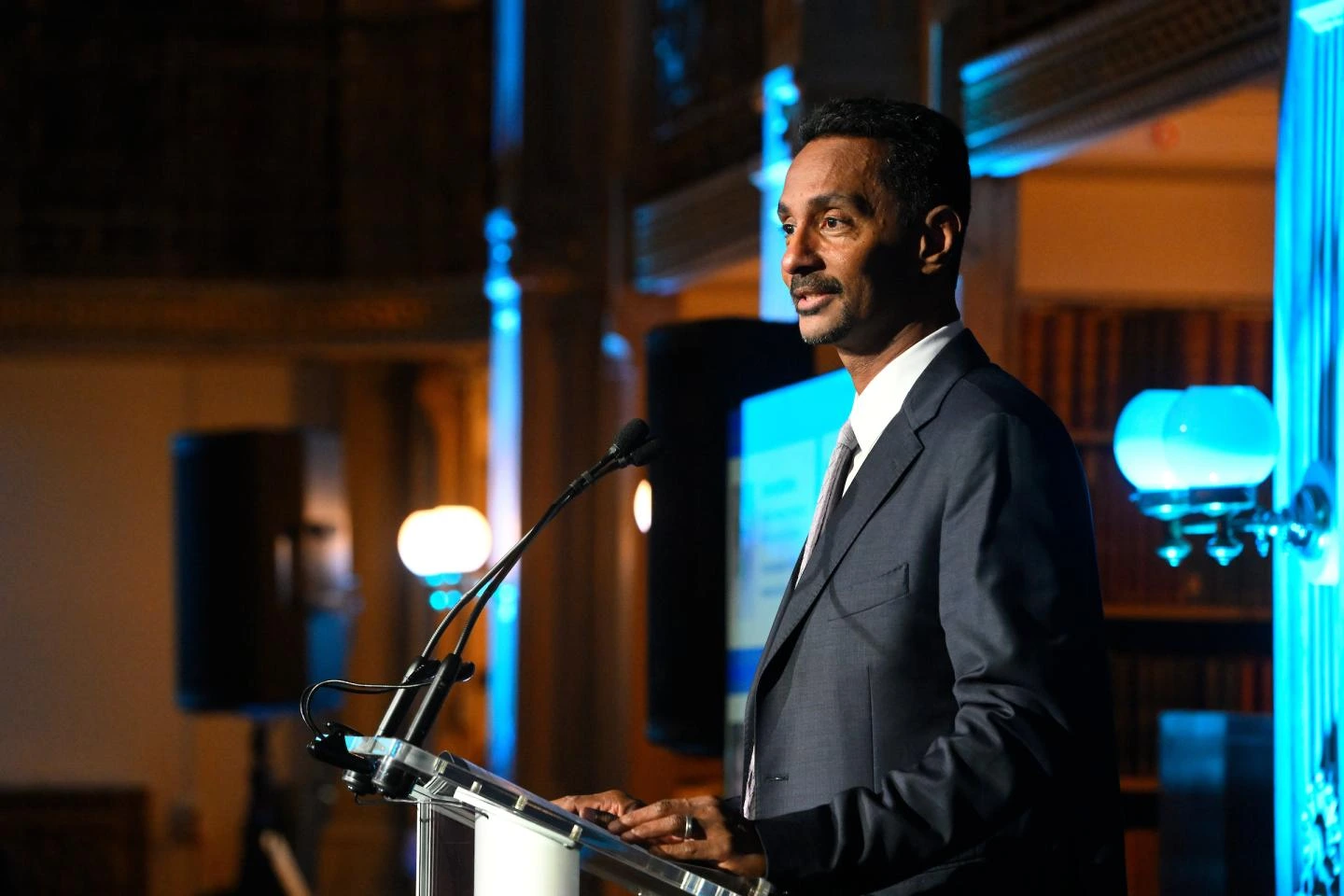
In a momentous announcement that resonates deeply within the global Sri Lankan community, Dr. Ray Jayawardhana, a distinguished astrophysicist born and raised in Sri Lanka, has been appointed as the 10th president of the California Institute of Technology (Caltech), one of the world’s foremost institutions for science and engineering. This historic appointment, revealed on January 6, 2026, during a campus-wide event at Caltech’s Pasadena headquarters, marks a pinnacle in Jayawardhana’s illustrious career and serves as a powerful testament to the potential of Sri Lankan talent on the international stage.
As he prepares to assume the role on July 1, 2026, succeeding Thomas F. Rosenbaum who has led the institute since 2014, Jayawardhana’s story offers profound inspiration for Sri Lankan youth, demonstrating how perseverance, curiosity, and excellence can propel individuals from modest beginnings to the helm of groundbreaking institutions.
Caltech, founded in 1891, stands as a beacon of innovation, boasting 46 Nobel laureates among its faculty and alumni, and pioneering advancements in fields ranging from quantum physics to space exploration. With an endowment exceeding $3 billion and a reputation for fostering transformative research, the institute’s presidency is not merely an administrative post but a stewardship of humanity’s quest for knowledge.
Jayawardhana’s selection by Caltech’s Board of Trustees, following an extensive international search, underscores his unique blend of scientific prowess, leadership acumen, and communicative flair qualities deemed essential amid challenges like federal funding cuts for research under evolving U.S. administrations. For Sri Lankans, this achievement is a source of national pride, highlighting how diaspora members are excelling in academia abroad and paving the way for future generations.
Ray Jayawardhana – From Sri Lankan Roots to Global Academic Leadership
Jayawardhana’s roots trace back to Sri Lanka, where he was born and spent his formative years, nurturing a passion for the stars under the island’s clear night skies. Educated at St. John’s College in Nugegoda and Royal College Colombo, prestigious institutions that have shaped many of Sri Lanka’s luminaries he recalls early memories of stargazing with his father, igniting a lifelong fascination with the cosmos. These humble beginnings in a nation rich in cultural heritage but facing economic and infrastructural hurdles underscore the universal truth that intellectual curiosity knows no boundaries.
As a teenager, influenced by Carl Sagan’s “Cosmos,” Jayawardhana pursued higher education in the United States, earning a Bachelor of Science in astronomy and physics from Yale University in 1994, followed by a PhD in astronomy from Harvard University in 2000. His doctoral work at Harvard involved groundbreaking observations of dusty disks around young stars, contributing to our understanding of planetary formation.
Post-graduation, Jayawardhana’s career trajectory exemplifies relentless pursuit of excellence. He began as a Miller Research Fellow at the University of California, Berkeley, then served as an assistant professor at the University of Michigan. Moving to Canada, he joined the University of Toronto as a faculty member and Canada Research Chair, where he advanced studies on exoplanets, planets orbiting stars beyond our solar system.
His research explores the diversity, origins, and evolution of planetary systems, as well as the formation of stars and brown dwarfs, utilizing premier telescopes like the Very Large Telescope (VLT), Subaru, Keck, Gemini, and Magellan. As a core science team member for the James Webb Space Telescope’s NIRISS instrument, he leads efforts in high-resolution spectroscopy of exoplanet atmospheres, addressing profound questions about life in the universe.
Jayawardhana’s scholarly output is prodigious: he has co-authored over 180 refereed papers in leading journals, amassing more than 10,700 citations with an h-index of 57 and i10-index of 134. He has also co-edited two volumes of conference proceedings. His accolades reflect this impact, including the Carl Sagan Medal for excellence in public communication in planetary science (2020), Guggenheim Fellowship, Radcliffe Fellowship from Harvard, Rutherford Medal in Physics from the Royal Society of Canada, Steacie Prize for Natural Sciences, Dwight Nicholson Medal for Outreach from the American Physical Society, Vainu Bappu Gold Medal from the Astronomical Society of India, and Early Researcher Award from Ontario. In a fitting tribute, asteroid (4668) Rayjay bears his name.


Achievements and Inspiration for Sri Lankan Youth
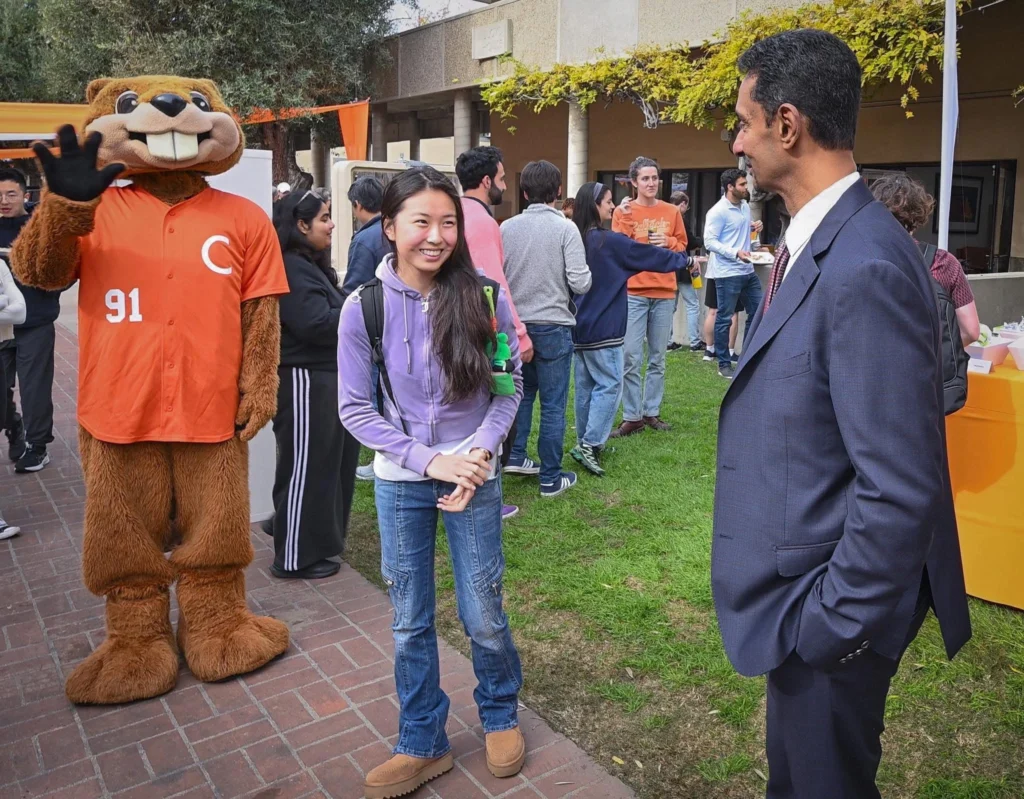
Beyond research, Jayawardhana’s leadership roles have solidified his reputation as a visionary administrator. As Dean of Science at York University, he launched premier postdoctoral fellowships and forged partnerships with institutions like Fermilab. At Cornell University, as Harold Tanner Dean of the College of Arts and Sciences and Hans A. Bethe Professor of Astronomy, he recruited 130 new faculty, secured over $308 million in gifts, and initiated programs like Klarman Fellowships, New Frontier Grants, and the Milstein Program in Technology & Humanity.
He expanded departments, enhanced student experiences through advising seminars and career support, and quadrupled media visibility. Most recently, as Provost of Johns Hopkins University, he oversaw ten schools, advancing research and the “Ten for One” strategic plan while leading initiatives in climate, AI, and quantum research.
Jayawardhana’s commitment to science communication amplifies his influence. Author of acclaimed books like “Strange New Worlds: The Search for Alien Planets and Life Beyond Our Solar System” (which inspired a documentary), “Neutrino Hunters: The Thrilling Chase for a Ghostly Particle to Unlock the Secrets of the Universe” (winner of the Canadian Science Writers Association’s Book Award), and the children’s book “Child of the Universe” (receiving starred reviews), he has made complex ideas accessible to millions.
His articles appear in outlets like The Economist, New York Times, and Wall Street Journal, and he has won the American Institute of Physics Science Writing Award. This skill in bridging science and society was a key factor in his Caltech appointment, as noted by board chair David Lee: “Ray’s ability to communicate the value of science is crucial in these times.”
For Sri Lankan youth, Jayawardhana’s ascent is a clarion call. In a country where access to advanced STEM resources can be limited, his path, from local schools to global leadership illustrates the power of education and determination. He has visited more than 60 countries across all seven continents, embodying the adventurous spirit that drives discovery. His early awards, like the Vainu Bappu Gold Medal in 2007, were celebrated in Sri Lankan media, reminding us of our nation’s contributions to global science. As Caltech’s president, Jayawardhana will guide an institution that tackles humanity’s grand challenges, from climate change to space exploration, offering a model for young Sri Lankans to aspire to roles that shape the future.
In reflecting on his journey, Jayawardhana stated, “I am deeply honored to join this remarkable community of trailblazers,” emphasizing the audacity of human curiosity. For Ceylon’s public affairs, this appointment not only elevates Sri Lanka’s profile but also encourages investment in education, research, and international collaborations. Jayawardhana’s story urges our youth: Dream big, for the stars are within reach.
Also in Explained | Sri Lanka’s Brain Drain Crisis: The Cost of Losing Our Brightest Minds