

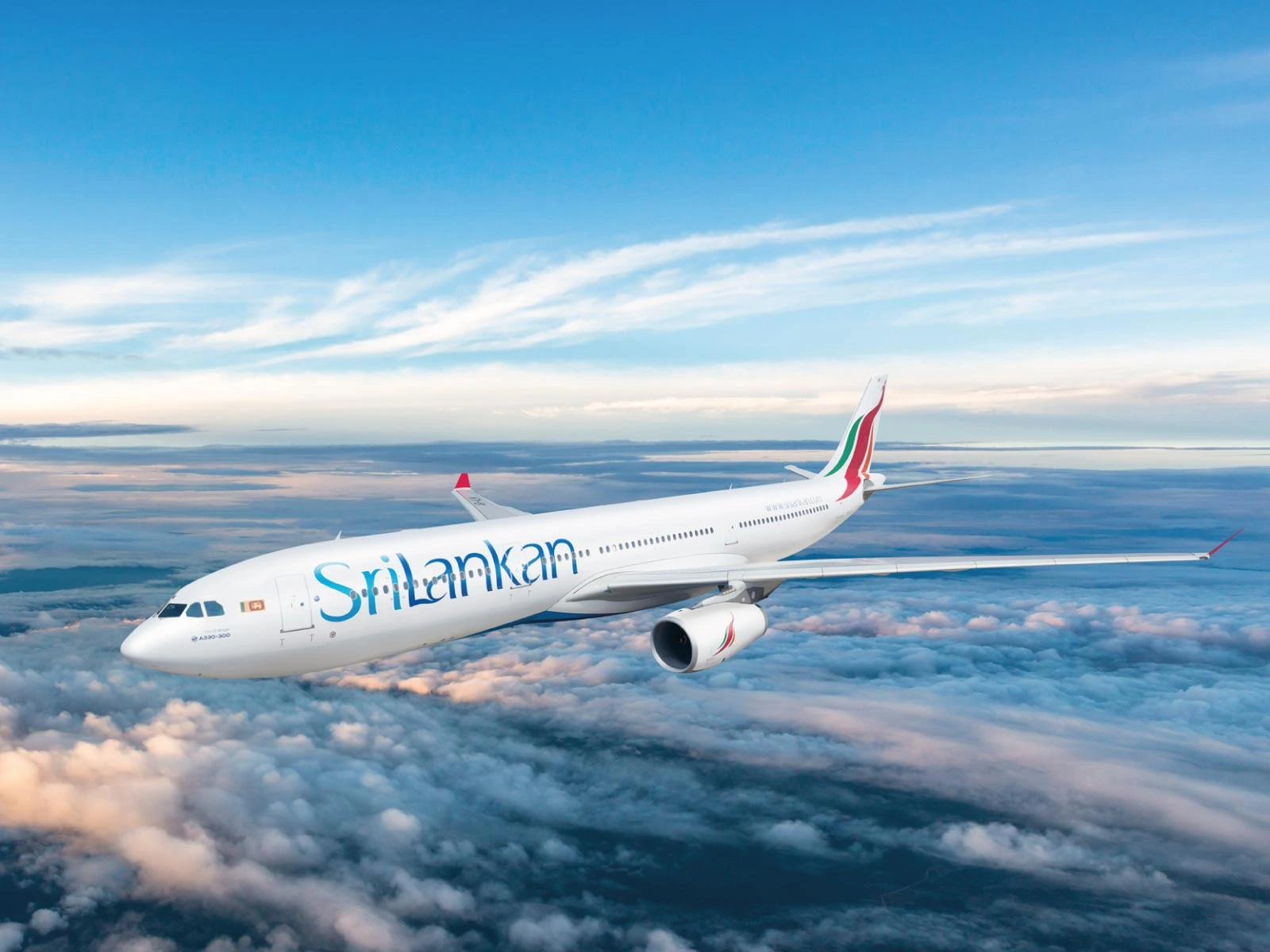
Sri Lankan Airlines the national carrier of Sri Lanka stands at a critical juncture. Amid global aviation recovery and a challenging domestic economic environment, the airline is facing structural headwinds and opportunities alike. This article, examines where Sri Lankan currently stands, key financial and operational metrics, strategic imperatives, and what this means for Sri Lanka’s broader aviation and tourism ecosystem.
Current Operational and Financial Snapshot – Sri Lankan Airlines
Revenue for the year was LKR 303.09 billion, down from LKR 339.59 billion in the prior year. Operating expenditure stood at LKR 276.33 billion, also reduced from LKR 312.93 billion. The airline recorded a net loss of LKR 2.735 billion (versus a profit of LKR 7.925 billion in the previous year) for the group. Total assets fell to LKR 189.26 billion from LKR 201.65 billion the prior year. Shareholders’ funds remain deeply negative at LKR -379.52 billion. The airline noted capacity constraints, fleet-availability issues (particularly maintenance/engine components), and the appreciation of the Sri Lankan rupee as contributory factors.
What the Numbers Tell Us
Revenue decline: A drop of about 10.8% year-on-year indicates the airline is still under pressure primarily from reduced passenger revenue (down 15% to LKR 234.5 billion) and foreign-exchange headwinds.
Operational cost control: The airline managed to cut costs (11.7% reduction in operating expenditure) but this has not offset revenue decline due to heavy finance charges (LKR 31.6 billion) and unscheduled engine repair cost of LKR 2.2 billion.
Deep structural liabilities: The negative equity and high debt burden remain a drag. The audit flagged “material uncertainty” about the going-concern assumption.
Cargo and ancillary growth: Slight glimmers of growth exist in other revenue streams (ancillary services, ground handling) other revenue grew 16% to LKR 27.1 billion.
Strategic Context & Challenges
- Fleet and capacity constraints: The report notes the global shortage of aircraft-parts and engines is restricting growth of the carrier.
- Tourism revival tailwind: Sri Lanka’s tourism recovery presents a tailwind for Sri Lankan to capture inbound travel; however, competition is intense from other carriers and regional hubs.
- Exchange-rate impact: A stronger LKR reduces foreign currency conversion margins for international operations.
- Restructuring imperative: With negative equity and heavy liabilities (including overdue sovereign-guaranteed bonds), the airline needs a restructuring plan and possibly a strategic investor.
- Hub potential: As Sri Lanka lies in a favourable Indian-Ocean geography, Sri Lankan has the potential to act as a regional transit hub but this depends on reliability, connectivity, and cost competitiveness.
What This Means for Sri Lanka’s Aviation & Economy
- The national carrier is a strategic asset: Its health impacts tourism flows, country-branding, connectivity, and foreign exchange earnings via inbound visitors.
- A weak carrier reduces hub potential: If Sri Lankan cannot reliably offer efficient connections, Sri Lanka risks losing transit traffic to competing hubs (e.g., Dubai, Doha, Singapore).
- The state burden remains: The Government may need to provide further support (letters of comfort, guarantees) unless an effective turnaround is achieved raising broader public-finance questions.
- Jobs and supplier ecosystem: Aircraft maintenance, ground handling, catering (SriLankan Catering), and tourism supply chains are linked to the carrier’s performance.
Key Priorities Moving Forward
Liquidity & debt restructuring. The airline must secure cash flows, negotiate with bondholders, and align liabilities with operational realities.
Fleet optimisation. Ensuring aircraft availability and phasing in fuel-efficient, modern planes to reduce cost per seat.
Network strategy. Focus on profitable routes, codeshares, and partnerships (e.g., interline agreements) to boost load factors and yields.
Ancillary revenue growth. Expand cargo, ground-handling, MRO services, and other non-passenger revenue streams to diversify risk.
Operational reliability & cost control. Improve maintenance scheduling, optimise staffing, lower net interest margins, and enhance service quality to protect brand value.
Governance & strategic investor consideration. With the state being the major shareholder, clarity on strategic direction, possible privatisation or public-private partnership would send important signals.
Outlook & Risks
While Sri Lankan has meaningful opportunities (tourism revival, geographic hub potential), the risks remain high: global fuel cost volatility, exchange-rate pressures, aircraft maintenance disruptions, and the heavy debt load. Without prompt strengthening, the carrier may continue to erode value, posing broader economic and reputational costs.
Conclusion
Sri Lankan Airlines is at a cross-road. It continues to play a vital role in Sri Lanka’s connectivity and tourism strategy yet its financial and operational metrics reflect deep stress. The coming 12–24 months will be critical: liquidity and debt restructuring need to be addressed, capacity and cost issues managed, and network and service quality improved. For Sri Lanka to leverage its Indian-Ocean location and tourism momentum, the national carrier must transition from survival mode to sustainable growth mode. This is not just an airline story it is a national infrastructure and connectivity story.