
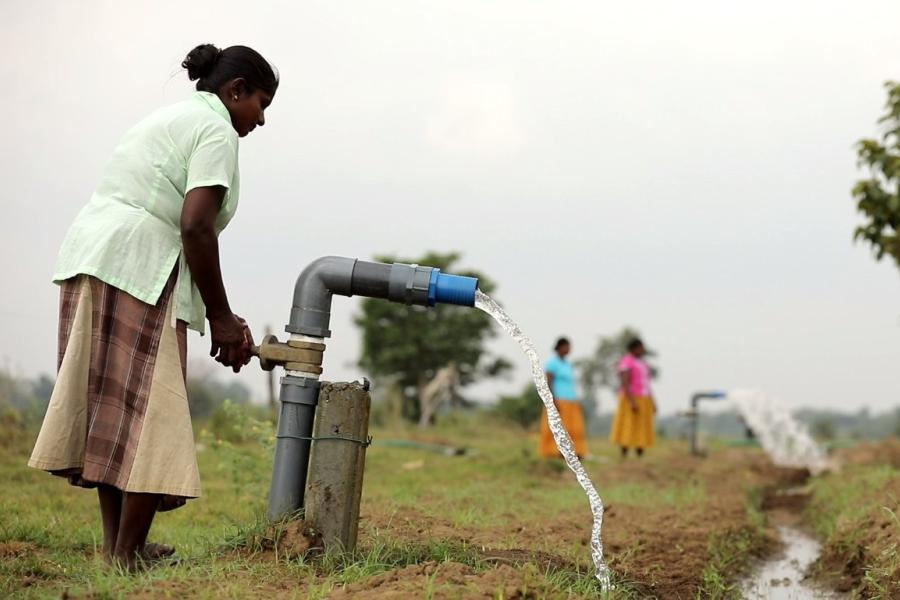
Sri Lanka’s Water Crisis – Sri Lanka possesses abundant rainfall and river systems, yet reliable access to safe water remains elusive for millions. Daily life in rural villages, estate communities, and dry-zone regions is increasingly defined by water scarcity long walks to distant sources, rationed household use, contaminated supplies, and disrupted agriculture and small businesses.
The water crisis is not a sudden emergency but a chronic structural failure rooted in uneven distribution, poor infrastructure, and inadequate resource management. While national coverage of improved water sources hovers above 90 percent, piped water reaches only about 60 percent of households, with stark urban-rural and estate disparities. Equitable public services demand urgent policy and infrastructure reforms if every citizen is to enjoy this basic resource without daily compromise.
The distinction matters. A country can boast high “improved source” coverage on paper while families still face unreliable supply, quality risks, and economic losses. Sri Lanka’s recent experience compounded by climate variability and post-crisis strains illustrates how water scarcity quietly undermines health, livelihoods, and national resilience.
The Pressure of Water Scarcity in Sri Lanka’s Discourse
National dialogue increasingly acknowledges water-related hardships. Reports from the National Water Supply and Drainage Board (NWSDB) and household surveys highlight persistent gaps, especially after events like Cyclone Ditwah in late 2025 that disrupted supplies across multiple provinces. Families in dry-zone districts describe routine rationing, while estate workers queue at communal points and small businesses report production halts during dry spells.
These accounts are powerful because they reflect lived reality rather than aggregate statistics. Policymakers reference SDG 6 targets and climate adaptation plans, yet public frustration grows over delayed projects and uneven implementation. Media coverage often focuses on urban improvements or emergency relief, leaving chronic rural and estate challenges underrepresented. The result is a narrative that understates the systemic nature of the crisis and the daily toll it exacts on households and local economies.
Also in Explained | Can Regional Economic Storytelling Perform Better Than Colombo-Only Coverage?
Understanding Water Resource Management: The Foundation of Equitable Public Services
Water resource management encompasses integrated planning, infrastructure development, quality assurance, and equitable distribution across competing uses — drinking, sanitation, agriculture, industry, and ecosystems. Effective public services require coordinated governance that balances supply reliability, water quality, and climate resilience while ensuring no region or community is left behind.
In practice, this means shifting from fragmented, supply-driven approaches to demand-responsive systems: modern piped networks, rainwater harvesting, groundwater protection, wastewater recycling, and data-driven allocation. Without strong resource management, even abundant rainfall translates into scarcity during dry months or contamination during floods. Equitable access becomes the benchmark measured not just by coverage but by reliability, affordability, and safety for every household and business.
Sri Lanka’s Water Access: Notable Progress but Persistent Gaps
Official indicators show meaningful advances. Improved drinking water sources reach approximately 90.8–94 percent of the population nationally. Pipe-borne coverage has risen to 60 percent (up from 54 percent in earlier years), driven by NWSDB schemes and rural water projects. Urban areas enjoy over 90 percent piped access, and targeted investments have expanded services in some provinces.
Yet critical gaps remain. Rural piped coverage lingers at 30–40 percent, while estate sectors lag further, with over half of households still relying on unimproved or marginally improved sources. The 2024–2025 BRIGHT household survey revealed that 68 percent of estate households experience some level of water insecurity far higher than the 28 percent in urban and 33 percent in rural areas. Quality concerns persist: many sources, particularly in the dry zone, suffer from contamination risks linked to chronic kidney disease of unknown cause (CKDu) and seasonal pollution.
These realities reveal a system that has expanded reach but struggles with reliability and equity. Progress is real, yet incomplete adaptation leaves millions navigating daily uncertainty.
The Water Scarcity Gap: Evidence from Households, Businesses and Regional Impacts
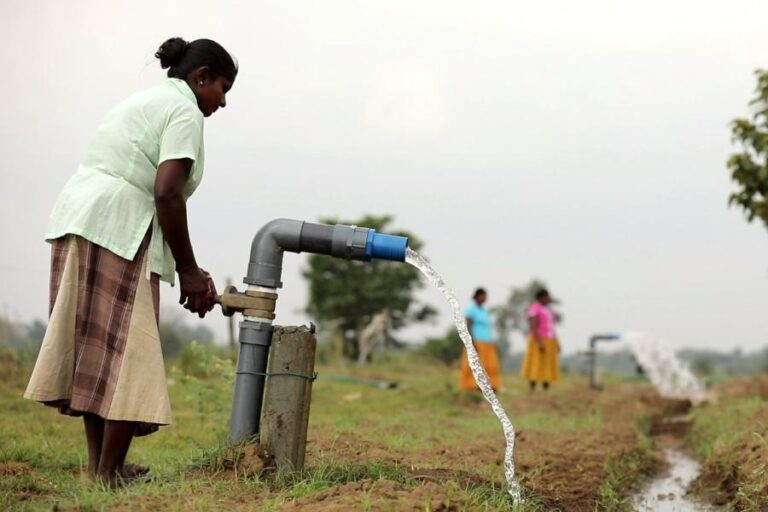
Data paint a consistent picture of uneven hardship. In rural and estate communities, women and children often spend hours fetching water, reducing time for education, income generation, and rest. Households report schedule changes, modified bathing routines, and worry over future supply low-level insecurity that cumulatively erodes well-being.
Business impacts are equally tangible. Agriculture in the dry zone which supports 70 percent of paddy production faces irrigation shortages during prolonged droughts, lowering yields and incomes. Small enterprises in food processing, textiles, and tourism report production disruptions and higher costs when water is scarce or expensive to treat. The dry zone’s water stress index stands at 90.8 percent, signalling severe pressure on renewable resources.
Regional disparities compound the issue. Northern and Eastern provinces experience salinity intrusion, while Central and North Western areas contend with seasonal deficits. Climate projections indicate worsening variability, with more intense droughts and floods threatening both quantity and quality. These gaps translate into higher health risks, lost productivity, and deepening inequality between urban centres and the rest of the country.
Why Sri Lanka’s Water Crisis Persists: Policy and Infrastructure Realities
Several structural factors sustain the crisis. First, governance remains fragmented, with overlapping responsibilities across ministries and limited integration of climate and water planning. Second, infrastructure investment has prioritised expansion over maintenance and modernisation, resulting in high non-revenue water losses and ageing networks.
Third, resource allocation favours urban and politically visible projects, leaving rural and estate schemes underfunded. Fourth, rapid climate change — erratic rainfall, rising temperatures, and extreme events outpaces adaptation efforts. Policy documents such as the draft National Water Resources Policy and NDCs 2026–2035 outline ambitions, yet implementation lags due to financing constraints, capacity gaps, and competing national priorities.
Media and public focus on immediate crises rather than systemic reform further delays the hard work of long-term planning and enforcement.
Risks of Inadequate Resource Management for Sri Lanka’s Future
Continued inaction carries severe consequences. Without reliable water, household health will deteriorate, school attendance will suffer, and nutrition security will decline. Businesses will face higher costs and lower output, slowing rural economic growth. The old-age dependency ratio and urbanisation trends will intensify pressure on already strained systems.
Equity gaps will widen, with women, children, estate workers, and dry-zone farmers bearing disproportionate burdens. Climate-induced migration may rise as water-stressed regions become unsustainable. In short, an unaddressed water crisis risks turning a manageable resource challenge into a barrier to inclusive development and long-term stability.
A Forward-Looking Policy Shift: Prioritizing Equitable Access and Sustainable Infrastructure
Addressing the crisis demands decisive, integrated action on three fronts.
First, accelerate resource management reforms. Finalise and implement a comprehensive National Water Resources Policy with clear targets for piped coverage, quality standards, and climate resilience. Strengthen institutional coordination through a dedicated water authority or enhanced NWSDB mandate.
Second, invest in equitable infrastructure. Prioritise rural and estate piped networks, smart metering, rainwater harvesting, and wastewater reuse. Expand community-managed schemes with technical support and financing to ensure sustainability. Target full piped coverage in high-need districts within the next decade.
Third, embed equity and accountability in public services. Introduce performance-based funding for local schemes, regular water-quality monitoring with public dashboards, and targeted subsidies for vulnerable households. Integrate water planning into education, agriculture, and urban development policies.
Fiscal and international support should focus on high-impact projects that deliver measurable gains in access and resilience. Countries that have successfully managed similar transitions demonstrate that early, sustained investment in integrated water governance yields health, economic, and social dividends.
Sri Lanka’s natural endowments, technical expertise, and policy foundation provide a strong base. What is needed now is political will and execution at scale.
Conclusion
Sri Lanka faces a water crisis that quietly shapes daily life for millions from families rationing supplies in estates and villages to businesses struggling with unreliable inputs. While improved-source coverage exceeds 90 percent, the gap between access on paper and reliable, safe, equitable supply remains wide, particularly in rural, estate, and dry-zone regions.
Resource management and public services must evolve from fragmented expansion to integrated, climate-resilient systems that put equity first. By closing infrastructure gaps, strengthening governance, and prioritising the most vulnerable, Sri Lanka can transform water from a daily concern into a foundation of prosperity and dignity for every citizen. The policy choices made today will determine whether future generations inherit a country where clean, reliable water is a universal reality or a persistent struggle. The time for decisive reform is now.
Also in Explained | The Real Cost of High Living Expenses: How Can Families Cope?