
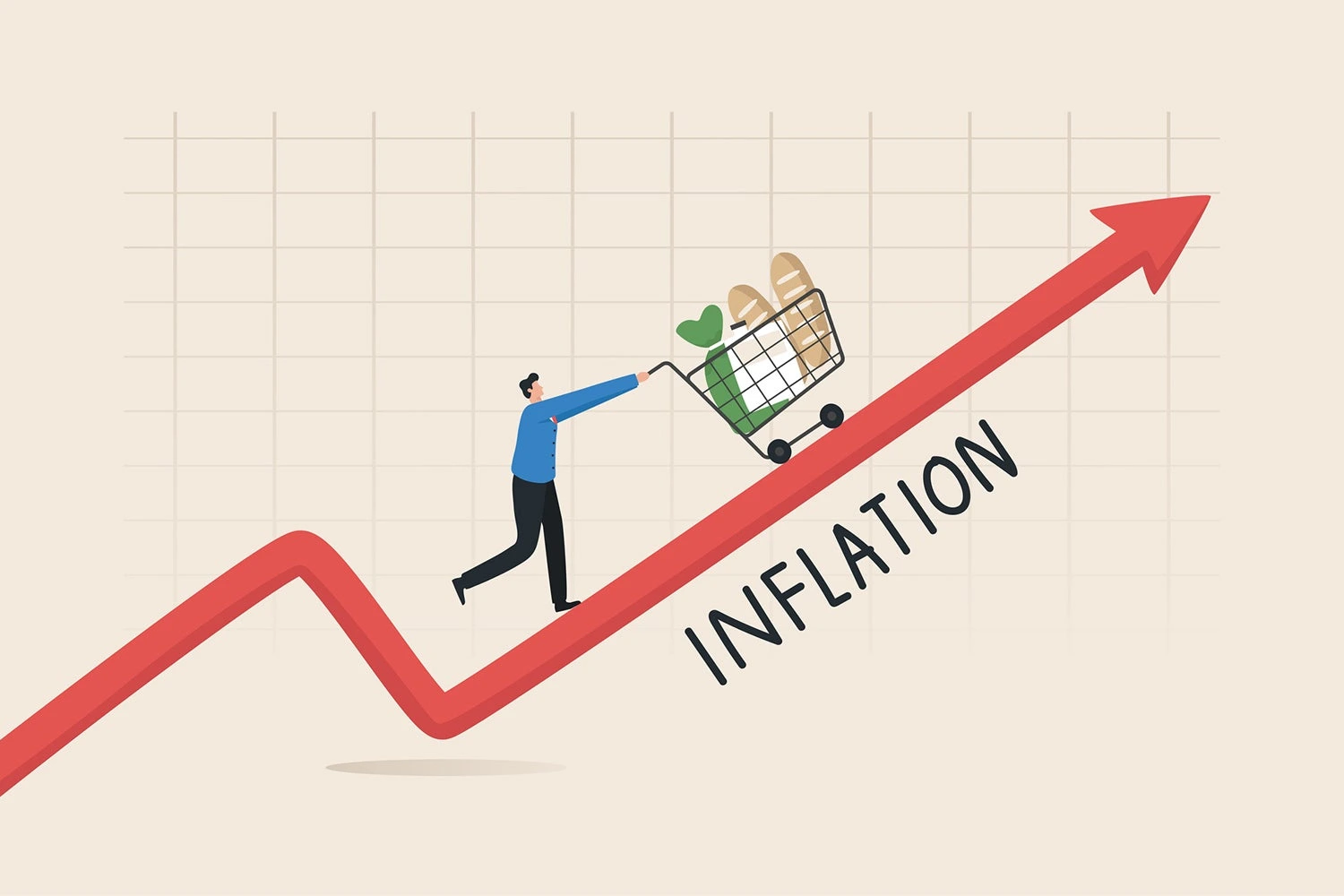
What is Inflation? In everyday conversations, people often complain about “inflation” when prices at the grocery store, fuel pump, or rental market go up. A cup of tea that cost 100 rupees last year now costs 150. Wages feel like they buy less. Retirement savings lose purchasing power. These experiences make inflation one of the most widely felt economic phenomena.
Yet inflation is more than just rising prices. It is a sustained increase in the general price level of goods and services in an economy over time. When inflation occurs, each unit of currency buys fewer goods and services eroding money’s value. Understanding inflation matters for everyone: families budgeting households, workers negotiating salaries, businesses setting prices, savers planning futures, and policymakers steering economies.
This article explains inflation in straightforward terms: its definition and types, how it is measured, causes, consequences, management strategies, and why moderate inflation is often preferred over zero or negative rates.
Also in Explained | Does the IMF Promote Cuts to Health, Education, Social Protection, or Public Investment During Economic Crises?
Defining Inflation and Its Types
Inflation is measured as the annual percentage change in a broad price index. Moderate inflation typically 2–3% in many advanced economies is considered normal and even healthy. High inflation (double digits) or hyperinflation (50%+ monthly) becomes disruptive.
Key types include:
- Demand-pull inflation: Occurs when aggregate demand exceeds supply too much money chasing too few goods. Strong consumer spending, government stimulus, or export booms can trigger it.
- Cost-push inflation: Arises when production costs rise higher wages, imported oil prices, or supply chain disruptions forcing businesses to pass costs to consumers.
- Built-in inflation: A self-reinforcing loop where workers demand higher wages to match past price rises, leading businesses to raise prices further.
Other distinctions:
- Headline inflation: Overall price changes, including volatile food and energy.
- Core inflation: Excludes food and energy for a clearer underlying trend.
- Disinflation: Slowing inflation rate (prices still rise, but slower).
- Deflation: Falling prices often linked to recessions and reduced spending.
- Stagflation: High inflation combined with stagnant growth and unemployment.
How Inflation is Measured
Central banks and statistical agencies track inflation using price indices:
- Consumer Price Index (CPI): Most common tracks a basket of goods and services typical households buy (food, housing, transport, healthcare, education). Weights reflect spending patterns, updated periodically.
- Producer Price Index (PPI): Measures wholesale input costs early warning for consumer prices.
- GDP Deflator: Broadest covers all domestically produced goods and services.
Countries calculate monthly and annual rates. Targets are often set around CPI (Example: many central banks aim for 2%).
Measurement challenges include quality improvements (a better phone at same price isn’t true inflation) and substitution (consumers switch to cheaper alternatives).
Causes of Inflation
Inflation rarely has one cause multiple factors interact:
- Monetary factors: Excess money supply growth central banks printing money or keeping rates too low can fuel demand-pull inflation (Milton Friedman’s “too much money chasing too few goods”).
- Supply shocks: Wars, pandemics, natural disasters, or commodity spikes raise costs (Example: 1970s oil crises).
- Fiscal policy: Large government deficits financed by borrowing or money creation increase demand.
- Exchange rates: Currency depreciation makes imports costlier, pushing imported inflation.
- Expectations: If people expect higher inflation, they demand higher wages and prices creating a wage-price spiral.
In open economies, global factors like commodity prices or trade disruptions play large roles.
Consequences of Inflation
Effects depend on rate, predictability, and distribution:
Positive (moderate inflation):
- Encourages spending over hoarding cash.
- Eases debt burdens (borrowers repay with cheaper money).
- Allows relative price adjustments without wage cuts.
Negative (high/unpredictable inflation):
- Erodes purchasing power hurting fixed-income groups (pensioners, low-wage workers).
- Redistributes wealth arbitrarily from savers to borrowers, poor to rich if assets rise faster.
- Creates uncertainty discouraging long-term investment and contracts.
- Menu costs (frequent price changes) and shoe-leather costs (more bank trips).
- Hyperinflation destroys savings, barter emerges, economies collapse (1920s Germany, 2000s Zimbabwe).
Deflation can be worse delaying purchases, increasing real debt burdens, sparking downward spirals.
How Inflation is Managed
Most countries assign central banks independent mandates to control inflation, primarily via monetary policy:
- Interest rates: Raising rates cools demand by making borrowing costlier reducing spending and investment.
- Open market operations: Selling bonds absorbs liquidity.
- Reserve requirements: Limiting bank lending.
Fiscal policy complements governments can cut spending or raise taxes during demand-driven booms.
Supply-side measures include boosting productivity, competition, or infrastructure. Exchange rate stability and prudent debt management help.
Inflation targeting publicly announcing and pursuing a specific rate has become standard since the 1990s, adopted by dozens of central banks.
Moderate Inflation vs. Zero or Deflation
Many economists prefer low positive inflation (around 2%) because:
- Provides buffer against deflation.
- Allows real wage adjustments without nominal cuts (which workers resist).
- Greases labour markets.
Zero inflation risks tipping into deflation during downturns. Japan’s prolonged low inflation/deflation since the 1990s illustrates stagnation dangers.
A Balanced Perspective
Inflation is neither inherently good nor bad, it is a symptom of underlying economic forces. Moderate, stable, predictable inflation supports growth and employment. High or volatile inflation undermines trust in money and institutions.
Controlling it requires credible policies and coordination between monetary and fiscal authorities. Unexpected shocks pandemics, wars, climate events can complicate efforts, highlighting the need for resilient supply chains and buffers.
For ordinary people, understanding inflation means recognising its impact on daily budgets. Indexing wages, pensions, or contracts to inflation helps. Diversifying savings (assets that rise with prices) offers protection. Ultimately, sustained low inflation signals sound economic management benefiting everyone.
In today’s interconnected world, with lingering post-pandemic effects, geopolitical tensions, and climate risks, keeping inflation anchored remains a core challenge and achievement for policymakers worldwide.
Also in Explained | Do IMF-Supported Programs Impose Austerity on Countries in Financial Crisis?