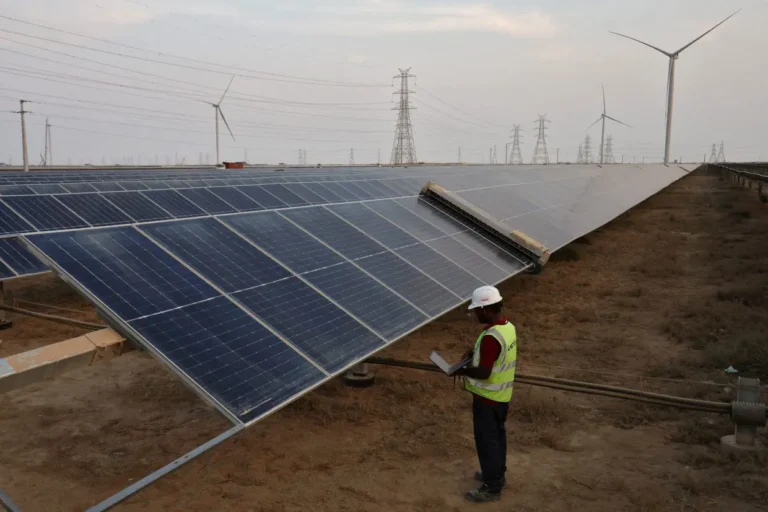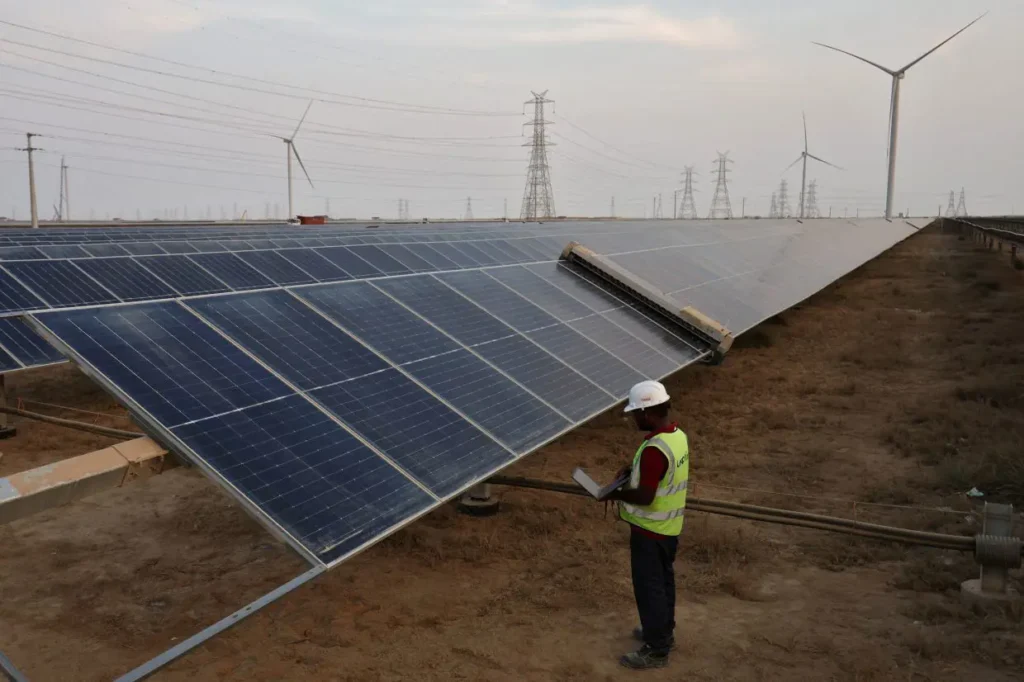

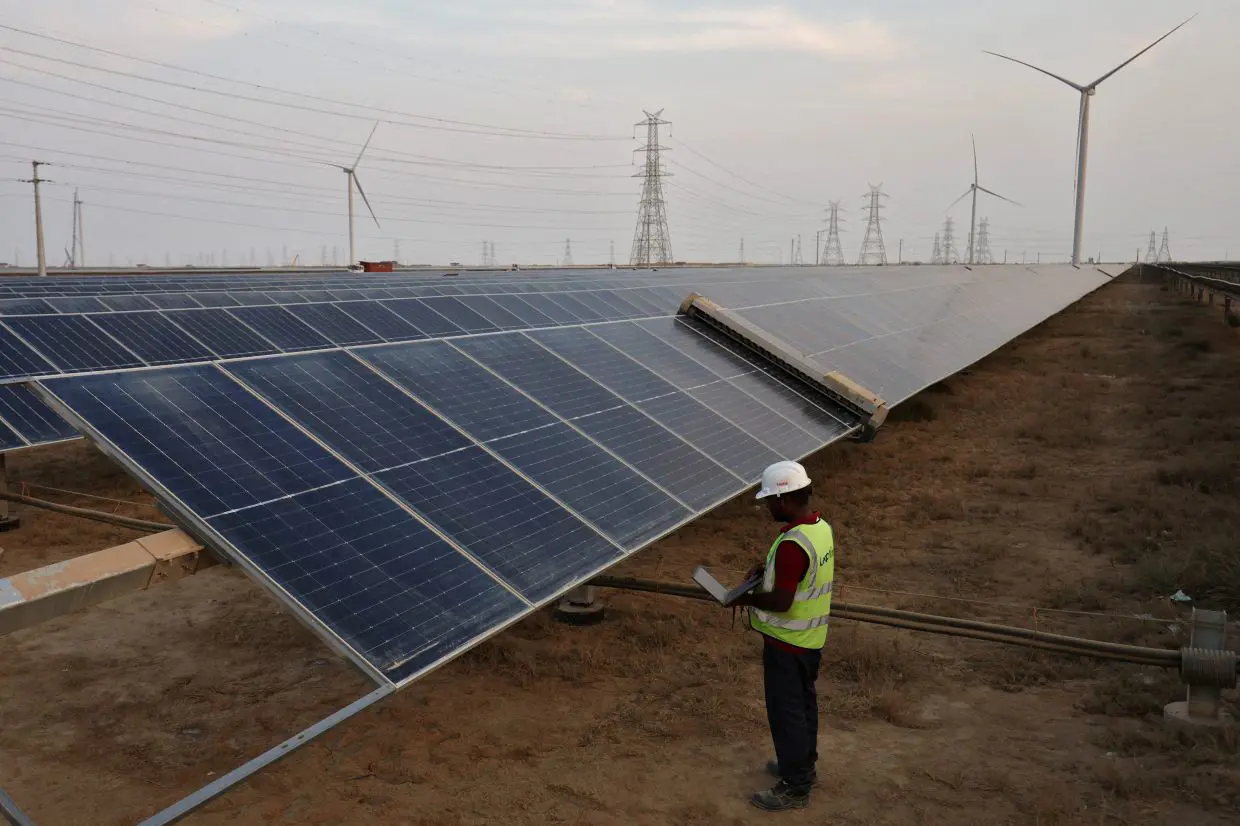
Sri Lanka solar grid integration entered a more consequential phase on 13 September 2026 when the first project in a nationwide programme targeting 300 MW of ground-mounted solar capacity was formally connected to the national electricity system at Veyangoda. The project itself is comparatively small at 3 MW, but what it represents is considerably larger: Sri Lanka is moving from discussing renewable-energy potential towards dealing with the operational consequences of having substantially more solar and wind connected to a relatively small island grid.
The Veyangoda project, implemented by Hayleys Fentons under the supervision of the Ministry of Energy and relevant State institutions, is expected to generate about 6.35 million kWh of electricity annually. It uses high-efficiency bifacial solar panels and has also incorporated an agrivoltaic model, allowing crops including chillies and aubergines to be cultivated below elevated panels. The Government estimates that the project could avoid approximately 4,340 tonnes of carbon dioxide emissions each year.
Those are useful gains, particularly for a country that continues to spend scarce foreign exchange on imported fossil fuels. But the milestone also exposes the next challenge. Sri Lanka’s central renewable-energy question is gradually changing from whether more solar projects can be constructed to whether the electricity system can economically absorb, move, store and use the power they produce at the time it is available.
Sri Lanka Solar Grid Integration Is Becoming a System Problem
Solar electricity has a characteristic that matters greatly to grid operators: output is concentrated during daylight hours and changes with weather. Wind output is similarly variable. Electricity demand, however, does not automatically rise and fall at the same time as renewable generation.
This produces a balancing problem.
Sri Lanka already had more than 1,350 MW of rooftop solar capacity incorporated into the system by the reference point used in an Energy Ministry renewable-project planning document. That document highlighted the increasingly difficult conditions occurring on Sundays and public holidays, when commercial and industrial demand falls while rooftop generation remains strong. It cited an example in December 2024 when daytime net system demand fell to approximately 600 MW.
The issue is not that solar energy is somehow undesirable. It is that an electricity system must maintain generation and consumption in balance every second.
Conventional plants may have minimum operating levels. Hydro resources have water-management constraints. The grid requires frequency control, operating reserves and enough controllable generation to respond quickly when clouds reduce solar output or evening demand rises as the sun sets.
As variable renewable penetration increases, adding another megawatt of solar is therefore no longer only a generation decision. It becomes a grid-planning decision.
Curtailment Is Already Part of the Conversation
One of the clearest signs that Sri Lanka has reached this stage is the growing importance of renewable-energy curtailment.
Curtailment occurs when a solar or wind plant could produce electricity but the system operator requires output to be reduced because the grid cannot safely or economically absorb all the available generation at that particular moment.
Sri Lanka’s earlier Long-Term Generation Expansion Plan anticipated that renewable curtailment would become increasingly visible after 2026 unless enabling technologies were developed. The current CEB Long-Term Generation Expansion Plan for 2025–2044 again addresses curtailment patterns and explicitly includes storage, flexible generation, improved renewable monitoring and demand-side management among the tools needed to operate a system with much higher renewable penetration.
PUCSL has now also introduced a methodology and payment framework for compensation where renewable generation is curtailed. That is important for investors because a solar plant earns nothing from electricity it is technically capable of producing but is instructed not to supply.
From a national perspective, however, simply compensating curtailed generators cannot be the long-term solution.
If Sri Lanka continues financing renewable capacity that regularly produces electricity the grid cannot use, consumers may eventually carry part of the economic cost without receiving the full energy benefit.
The objective must therefore be to reduce avoidable curtailment rather than merely determine who pays for it.
Battery Storage Is Moving From Optional to Essential
This is why battery energy storage has moved rapidly towards the centre of electricity policy.
In early 2026, Cabinet approval was granted for a programme to establish 160 MW / 640 MWh of standalone Battery Energy Storage Systems at 16 grid substations. Each installation is designed around 10 MW of power capacity with 40 MWh of energy storage, allowing electricity generated during periods of lower demand to be shifted towards periods when it is more valuable to the system.
The economics are straightforward in principle.
Instead of reducing solar generation at midday and burning more expensive fuel during the evening peak, a battery can absorb some of the daytime surplus and release it several hours later. Batteries can also provide fast-response grid services useful for frequency stability.
PUCSL’s August renewable feed-in tariff decision further recognised this transition by introducing tariff structures for renewable projects and rooftop installations combined with battery storage. The regulator also required the National System Operator to ensure sufficient renewable and storage capacity is connected to address potential supply constraints in the first quarter of 2027.
The question now is implementation speed.
Solar plants can often be developed considerably faster than major transmission lines, pumped-storage schemes or grid-scale storage. If generation additions move ahead while enabling infrastructure is delayed, the country risks creating a mismatch between installed renewable capacity and usable renewable electricity.
Transmission Determines Whether Cheap Power Can Reach Demand
Storage solves only part of the problem. Electricity also has to travel from where renewable resources are strongest to where demand exists.
Sri Lanka’s northern and eastern regions offer substantial solar and wind potential, while the largest electricity demand remains concentrated around the Western Province and major industrial areas. That geography makes transmission investment central to the renewable transition.
CEB is already developing infrastructure specifically for this purpose. The Habarana–Veyangoda transmission project includes a new grid substation and 220 kV infrastructure intended to absorb renewable generation from the North and East and transfer it towards major load centres. CEB reports that this project is nearing completion.
The Sampur–Kappalthurai transmission project similarly aims to evacuate electricity from future renewable developments in the Eastern Province, including the Sampur Solar Park. Elsewhere, CEB has acknowledged that existing substations in several renewable-rich regions have already reached limits on their ability to absorb additional generation, requiring new substations and transmission lines.
These projects make an important policy point.
Renewable capacity and grid capacity must increasingly be planned as one investment programme.
Approving generation first and solving transmission afterwards can leave expensive assets waiting for connections or operating below potential.
Demand Can Become Part of the Solution
Sri Lanka also has another resource that receives less attention than solar panels or batteries: flexible electricity demand.
Historically, electricity planning has treated demand largely as something that occurs and must then be supplied. A renewable-heavy system increasingly benefits when some demand can shift towards periods when clean electricity is abundant.
Industrial refrigeration, water pumping, selected manufacturing processes, commercial cooling systems, electric-vehicle charging and some forms of thermal storage can potentially operate more heavily during solar-rich hours if tariffs and technology provide an incentive.
This does not mean factories should restructure production simply to accommodate the grid. Reliability remains essential for industry. But smarter time-of-use pricing and automated energy-management systems can allow suitable consumers to benefit financially from shifting flexible loads.
The CEB’s approved generation plan specifically recommends demand-side management alongside storage and better renewable monitoring. Sri Lanka’s National Electricity Policy similarly envisages a progressively more flexible power system capable of accommodating increasing renewable generation.
That makes demand management a potentially cheaper complement to building infrastructure solely for a few hours of extreme system conditions.
The 70% Target Depends on Usable Energy, Not Installed Megawatts
Sri Lanka maintains a national ambition to generate 70% of electricity from renewable sources by 2030. The policy has considerable economic logic for an island economy exposed to global fuel prices and foreign-exchange constraints.
But the target should be interpreted correctly.
Installing enough solar and wind nameplate capacity to theoretically produce large volumes of renewable electricity is not the same as successfully operating a system in which 70% of actual electricity generation comes from renewable sources.
The latter requires balancing power, transmission, storage, forecasting, dispatch capability and flexible demand.
Sri Lanka has previously discussed the advantages of expanding renewable power as a way of reducing energy dependence. The next phase requires equal attention to the less visible infrastructure that allows renewable generation to become dependable system energy rather than simply installed capacity.
This is also where the restructuring of the electricity industry becomes important. As Ceylon Public Affairs previously examined in its analysis of the CEB’s restructuring into separate entities, responsibilities for generation, transmission, distribution and system operation are becoming more clearly separated. Renewable integration will test whether those institutions can coordinate investment decisions effectively across the entire power system.
Investors Need Certainty About More Than the Purchase Price
For independent power producers, the central commercial question is increasingly broader than the feed-in tariff.
An investor needs to know whether grid capacity is available, when a connection can be delivered, whether future curtailment is likely, how curtailment will be compensated, whether storage is required and which entity carries responsibility for network expansion.
These uncertainties directly affect financing.
A project with an attractive electricity purchase price may still be difficult to finance if lenders cannot predict how much electricity the grid will actually accept.
Sri Lanka’s regulatory system is beginning to address these questions through new renewable tariff methodologies, storage rules and curtailment arrangements. But the long-term investment environment will depend heavily on whether technical grid information becomes transparent enough for developers to understand constraints before committing capital.
This would also improve national planning. Renewable projects should increasingly be encouraged in locations where they create the highest system value, not simply wherever land and sunlight are available.
Electricity Users Have a Stake in Getting This Right
Grid integration may sound like an engineering issue, but the consequences eventually reach households and businesses through electricity prices and reliability.
Renewables can reduce exposure to imported fuel, but batteries, transmission lines, substations and control systems also require capital. Poor sequencing could leave consumers paying simultaneously for new renewable plants, network upgrades and backup generation that remains necessary because flexibility has not arrived quickly enough.
The objective should therefore not be maximum renewable construction at any cost.
It should be the lowest-cost reliable electricity system capable of using progressively more domestic renewable energy.
That requires competitive procurement, realistic generation forecasting and careful assessment of storage economics. Sri Lanka’s National Electricity Policy calls for transparent techno-economic evaluation of storage technologies rather than adopting them simply because batteries have become fashionable.
Such discipline protects both the renewable transition and public confidence in it.
The First 3 MW Marks the Beginning of a Harder Transition
The Veyangoda plant deserves recognition. It is the first grid-connected project in a programme intended to add 300 MW of ground-mounted solar across Sri Lanka, combines power generation with agricultural land use and demonstrates continuing private-sector participation in the country’s energy transition.
But its larger significance lies in what comes next.
Every additional solar project will increase the importance of storage. Every new wind farm will make transmission and forecasting more valuable. Every period of renewable curtailment will raise questions about where the next investment rupee should go. And every industrial consumer will increasingly care not simply about whether electricity is renewable, but whether it remains affordable and reliably available at the moment production requires it.
Sri Lanka has largely answered the first renewable-energy question. Yes, it can build solar.
The next question is much more demanding: can it build the grid that makes all that solar economically useful?
The answer will depend less on the number of panels inaugurated and more on whether transmission, battery storage, system control, demand management and generation planning advance at the same pace. The first project in the 300 MW programme should therefore be seen not as the completion of a renewable-energy ambition, but as another signal that Sri Lanka’s energy transition has entered its technically harder and economically more important stage.
For further energy, infrastructure and socio-economic analysis, visit Ceylon Public Affairs.
This analysis is for educational and public-affairs purposes only. It is based on official Government, CEB, Ministry of Energy and PUCSL information reviewed up to 15 September 2026. It does not constitute engineering, investment or financial advice.