
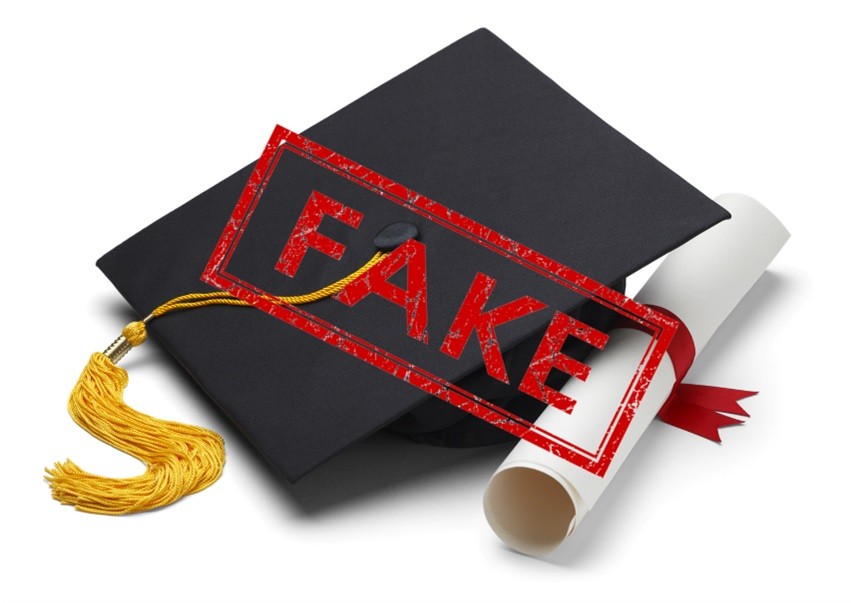
UGC approved diploma Sri Lanka has become a remarkably powerful marketing phrase. It appears in advertisements, social-media videos, course promotions and conversations with prospective students because three letters “UGC” immediately create an impression of government authority, academic legitimacy and future recognition.
That is exactly why the wording needs scrutiny.
A private education provider should be able to explain precisely what is recognised, who recognises it, under which legal or regulatory process, and where a student can independently verify that claim. “UGC recognised”, “government approved”, “SLQF aligned”, “internationally recognised” and “foreign affiliated” are not interchangeable expressions.
The first important correction is that saying the UGC has absolutely no involvement with any form of diploma is itself too simplistic. Sri Lanka’s University Grants Commission has responsibilities across the university system, quality assurance, postgraduate programmes and recognised higher-education qualifications. What it does not provide is a universal “UGC Approved” badge that any private academy can attach to an independently created standalone diploma or certificate.
That distinction is where students can protect themselves.
UGC Approved Diploma Sri Lanka: What the UGC Actually Covers
The University Grants Commission operates under the Universities Act and currently oversees a state university system comprising 17 universities, alongside other higher educational institutions within its statutory structure. It regulates admissions, standards, academic development and quality assurance across that system.
Non-state higher education works differently. Under the statutory degree-awarding framework, particular institutions and qualifications can receive recognised degree-awarding status through the legally prescribed process. The UGC’s own recognition portal specifically identifies categories including recognition of foreign universities, recognition of the Higher National Diploma in Accountancy and recognition of degrees of non-state institutes published through Gazette notifications.
That wording is important.
The UGC does not describe its service as a database of every private certificate and diploma offered in Sri Lanka.
A private institute may legitimately offer a qualification. It may have a recognised degree programme. It may collaborate with a foreign institution. None of those facts automatically means that every diploma, certificate or short course marketed under the same institutional brand is “UGC approved”.
Institutional reputation cannot be transferred automatically from one approved programme to another unrelated programme.
Check the UGC Recognition of Higher Educational Qualifications service
The SLQF Is a Framework, Not a Marketing Stamp
Another increasingly common phrase is “aligned with SLQF”.
The Sri Lanka Qualifications Framework is extremely important. It creates a national structure for understanding academic qualifications and their expected learning outcomes. The UGC’s current framework identifies Diploma at Level 3, Higher Diploma at Level 4, Bachelor’s at Level 5 and Bachelor’s Honours at Level 6. Postgraduate Certificate is Level 7, Postgraduate Diploma is Level 8, Master’s qualifications occupy Levels 9 and 10, MPhil Level 11 and doctoral qualifications Level 12.
But here is the part prospective students rarely see in advertisements.
The UGC’s own FAQ asks: “Who decides the SLQF Level?” Its published answer is: “At present there is no authorized body.” The same guidance explains that compliance must be demonstrated using evidence against qualification and level descriptors, and even provides self-evaluation templates.
That makes one thing very clear.
Writing “SLQF Level 3”, “SLQF Level 4” or “aligned with the Sri Lanka Qualifications Framework” on a brochure does not by itself prove that the UGC inspected, accredited or approved that particular programme.
A provider may genuinely have designed a programme according to SLQF descriptors. That can be academically useful. But alignment and regulatory approval are two different claims.
A framework is not a licence, and self-mapping is not accreditation.
Read the official UGC SLQF guidance and FAQs
Where TVEC and NVQ Enter the Picture
Sri Lanka also has a separate vocational qualification system, and this is where students need to stop treating every qualification carrying the word “Diploma” as though it belongs to one regulatory pathway.
The UGC’s own SLQF guidance explains that the National Vocational Qualification framework was developed by the Tertiary and Vocational Education Commission, and is the nationally recognised framework used for vocational education and training.
It also shows the broad comparison between the two frameworks: NVQ Level 5 is comparable with the Diploma level of SLQF Level 3, while NVQ Level 6 is comparable with Higher Diploma at SLQF Level 4. The UGC explicitly warns, however, that comparable levels are not automatically academically identical qualifications.
Therefore, when a course is being marketed as a technical, occupational or vocational diploma, the logical question is not “Is this UGC approved?”
The student should ask about its TVEC registration, course status and NVQ pathway where applicable.
Conversely, when the qualification is academic and offered by a university or recognised higher-education institution, the student should verify the legal authority of the awarding institution and the status of the specific programme.
The word “Diploma” alone tells you remarkably little.
Even State-University Diplomas Need Accurate Language
There is another reason blanket statements about the UGC and diplomas should be avoided.
The UGC’s Quality Assurance Council publishes formal application procedures for postgraduate degree and diploma programmes within the university system. Its SLQF framework also formally recognises Postgraduate Diplomas at Level 8.
A diploma awarded by a state university therefore has a completely different institutional basis from a certificate created by an independent training company.
But even here, students should understand what gives the qualification its legitimacy: the legal authority of the university, its academic approval procedures, the applicable UGC framework and the programme itself.
Using “UGC recognised” as a casual marketing expression can hide these distinctions rather than clarify them.
The Early-Exit Argument Is More Complicated Than Social Media Suggests
Another claim sometimes used to give private diplomas credibility is that Diploma and Higher Diploma are recognised UGC qualifications because they appear as Levels 3 and 4 of the SLQF.
That does not mean any standalone private programme using those names has received UGC approval.
The UGC’s Commission Circular No. 02/2024 provides a useful example of how carefully lower qualifications are handled inside the formal university system. It regulates early-exit and fall-back awards connected to existing undergraduate and postgraduate programmes.
Importantly, the circular states that early-exit pathways are not permitted for undergraduate degree programmes to which students are admitted through the UGC. It provides specific fall-back mechanisms and institutional approval procedures instead, including conditions relating to programme completion and Senate decisions. For certain qualifications associated with existing UGC-approved programmes, formal Commission approval is also required.
So even inside the state university system, a lower qualification cannot simply be invented because somebody believes that the completed credits “look like Level 3 or Level 4”.
- There is process.
- There is academic authority.
- There is documentation.
That is precisely what students should demand from private providers too.
“Our Foreign Partner Is Recognised” Does Not Answer the Question
Foreign affiliations create another area where perfectly true statements can be presented in misleading ways.
The UGC provides a mechanism for recognising foreign universities. That helps Sri Lankans verify whether an overseas university has recognised standing.
But consider the logic carefully.
A foreign university being recognised does not automatically prove that every programme taught by a Sri Lankan company using that university’s name is itself a UGC-approved Sri Lankan qualification.
Students must identify the actual awarding body.
Is the certificate issued by the foreign university itself? Is it a regulated qualification of that country? Is the Sri Lankan institution authorised to deliver it? Is it merely an endorsed training course? Does it provide progression into a recognised degree? Will an employer or university accept it for the purpose the student expects?
“Internationally recognised” is one of education marketing’s favourite expressions because it sounds enormous while often telling the student very little.
Recognition has to be recognition for something.
An Influencer Is Not an Accreditation Authority
This is where Sri Lanka’s current influencer culture deserves a direct response!!!
A professionally edited reel does not establish academic recognition. A graduation gown does not establish accreditation. A celebrity attending the certificate ceremony does not change the legal status of the qualification. Ten thousand positive comments cannot turn an unverified programme into a nationally recognised academic award.
Young people should absolutely pursue professional development, short courses and practical certifications. A qualification does not need to be a university degree to be useful.
The problem begins when a course is sold as something it is not.
There is nothing wrong with saying: “This is a six-month private professional certificate designed to teach these particular skills.”
There is something very different about surrounding the same programme with language that creates the impression of government or UGC recognition that the provider cannot document.
Prestige by association is not accreditation.
Before Paying, Ask These Questions
Students and parents should make verification part of the purchase decision rather than something they investigate after graduation.
- Who legally awards the qualification? Ask for the exact institution named on the final certificate.
- What exactly is recognised? The institution, one particular degree, the foreign university, an NVQ course or this specific diploma may all have different statuses.
- Where is the evidence? Ask for the Gazette, UGC reference, regulatory registration or official verification mechanism supporting the marketing claim.
- What qualification framework applies? Determine whether the programme belongs primarily to the university/SLQF system or the vocational/NVQ pathway.
- What does “internationally recognised” actually mean? Ask which regulator, university, employer or professional body recognises it and for what purpose.
- Can the claim be verified independently? Do not rely on a screenshot, salesperson, influencer or institute-created brochure. Check with the relevant authority yourself.
If a provider becomes defensive because a student asks these questions, that is already useful information.
Sri Lanka Needs Stronger Qualification-Marketing Rules
This issue is larger than individual consumer mistakes.
Education has become a significant household investment. Families use savings, salaries and sometimes debt to finance qualifications because they believe education will improve employment prospects, migration opportunities or progression into higher study.
When regulatory terminology is used loosely, the economic damage can appear years later. A graduate may discover that a qualification does not meet a university admission requirement, professional standard or employer criterion only after spending substantial time and money.
Sri Lanka should therefore require private higher-education advertising to identify clearly the awarding body, regulatory status, relevant qualification framework and exact basis for any claim of government recognition.
Terms such as “UGC Approved”, “UGC Recognised” and “Government Approved” should never be left as decorative marketing language. If used, the provider should be required to display the exact programme and documentary authority to which the statement refers.
The UGC could also make public verification simpler by maintaining highly visible consumer guidance explaining the difference between recognised degrees, foreign-university recognition, SLQF classification, postgraduate qualifications and vocational awards.
That would protect legitimate institutions too. Providers investing properly in academic standards should not have to compete with advertisements that obtain credibility simply by borrowing regulatory vocabulary.
Do Not Buy the Acronym. Verify the Qualification.
Sri Lanka does not have a shortage of ambitious students. It has thousands of young people trying to improve their careers in an education market that has become increasingly commercial, digital and influencer-driven.
That makes regulatory literacy as important as career ambition.
The UGC has a genuine and significant role in Sri Lankan higher education. Precisely because its name carries authority, that authority should not be casually borrowed to sell qualifications falling outside the particular recognition being claimed.
Students should stop asking only, “Is this institute famous?”
- Ask who awards the qualification.
- Ask what exactly is recognised.
- Ask which framework applies.
- Ask to see the evidence.
Because once the fees are paid and the certificate is framed, discovering that the marketing language meant something completely different becomes an expensive lesson.
A good education provider should welcome verification. A questionable marketing claim depends on you never doing it.
For a wider discussion on the country’s long-term human-capital challenge, read: Sri Lanka’s Brain Drain Crisis
This analysis is for educational and public-affairs purposes only. It is based on official University Grants Commission material reviewed up to 29 August 2026. It does not make findings against any individual education provider and does not constitute legal or academic-recognition advice. Prospective students should verify the status of a specific qualification directly with the relevant authority before enrolment.