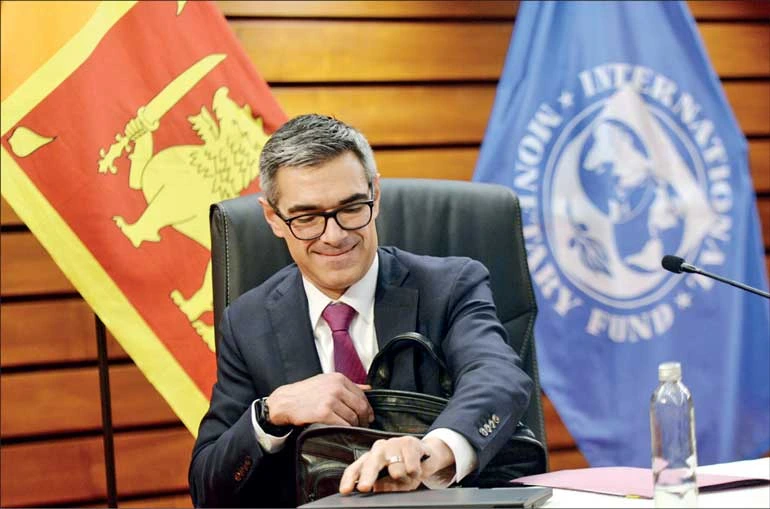


Sri Lanka usable reserves 2026 deserve a more demanding interpretation than the headline figure alone suggests. The Central Bank’s latest weekly indicators place gross official reserves at a provisional US$6.905 billion at end-August, up from around US$6.6 billion at end-July and representing a substantial rebuilding of the external buffer compared with the crisis years. The same release shows workers’ remittances at US$748.6 million in August, taking January – August inflows to US$6.131 billion, 19.8% higher year on year, while the rupee had depreciated by approximately 5.7% against the US dollar by 11 September.
These numbers matter because the external environment remains difficult. CBSL’s 11th September indicators noted that Brent and WTI crude had moved above US$100 per barrel amid continuing Middle East tensions, while Sri Lanka has already experienced a substantially larger fuel-import bill during 2026. At the same time, remittances are providing exceptional foreign-exchange support, giving the country more room to absorb pressure than it possessed several years ago.
But US$6.905 billion should not be read as though the Treasury or Central Bank has US$6.905 billion of completely unrestricted cash waiting to finance the next emergency. Reserve adequacy is about liquidity, liabilities, future payments and continuing foreign-exchange inflows, not simply the number printed at the top of the balance sheet.
Sri Lanka Usable Reserves 2026: Start by Opening the Headline Number
CBSL’s reserve breakdown shows that the US$6.905 billion consisted primarily of US$6.690 billion in foreign-currency reserves and around US$210 million in gold, alongside small IMF reserve-position and SDR balances. More importantly, the headline figure explicitly includes proceeds from the People’s Bank of China currency-swap arrangement.
That swap is worth approximately US$1.4 billion, based on the CNY10 billion bilateral facility renewed between CBSL and the PBOC. CBSL’s own financial statements describe it as a stand-by arrangement and its reserve reporting continues to note that the facility is subject to conditions governing usability.
For this analysis, Ceylon Public Affairs therefore creates a deliberately conservative first adjustment. We remove the entire US$1.4 billion swap from the headline stock, not because we are claiming it has no value, but because contingent or condition-dependent liquidity should not be treated identically to ordinary reserve assets when testing crisis capacity.
That reduces the working reserve stock from US$6.905 billion to approximately US$5.5 billion.
Known Foreign-Currency Drains Reduce the Cushion Further
The next adjustment concerns obligations already sitting against the reserve position.
CBSL’s latest available International Reserves and Foreign Currency Liquidity template, measured at end-July, reported around US$2.272 billion in predetermined short-term net drains on foreign-currency assets over the following twelve months. Those obligations include foreign-currency loans, securities and deposits, with CBSL noting that the figures incorporate payments arising from the restructured international sovereign bonds.
If that full twelve-month amount is provisionally reserved against the non-PBOC portion of the reserve stock, the Ceylon Public Affairs conservative residual cushion falls to approximately US$3.23 billion.
This should not be confused with an official CBSL reserve measure. Government and Central Bank obligations do not all have to be paid from today’s reserve assets because new foreign financing, tax receipts, market purchases, exports and other inflows occur continuously. The purpose of the adjustment is to ask a harder question: what reserve cushion remains if known obligations are treated as claims that should already be planned for?
There is also a further US$3.721 billion of aggregate short positions in forwards and currency swaps reported in the liquidity template. We do not subtract this from the Ceylon Public Affairs cushion because CBSL explicitly states that a major share of the swap position is expected to be rolled over; deducting it mechanically would therefore exaggerate immediate cash requirements.
IMF Adequacy Is Different From the Headline Reserve Number
The IMF likewise does not judge Sri Lanka purely by gross reserves.
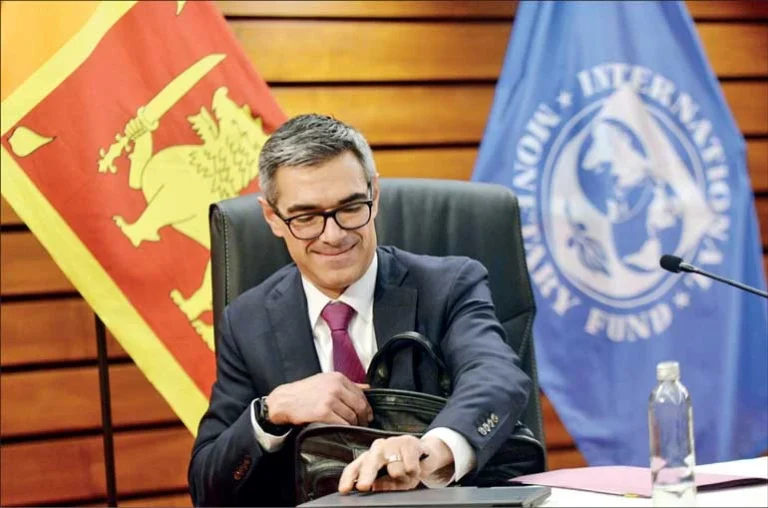
Its programme uses Net International Reserves, which deduct reserve-related liabilities and applies detailed adjustments for government financing, project inflows and external debt-service deviations. The May 2026 IMF framework projected gross reserves of around US$8.645 billion at end-2026, equivalent to roughly 3.9 months of prospective goods-and-services imports, while projected NIR was materially lower.
The authorities also committed under the programme to make at least US$2.2 billion in net foreign-exchange purchases during 2026, although that commitment was to be reassessed at the Seventh Review because of the external shock.
The end-August US$6.905 billion stock therefore represents meaningful progress, but it remains below the IMF’s earlier year-end gross-reserve projection. This does not mean a programme target has automatically been missed because the formal NIR performance criterion is different and contains adjustors, but it demonstrates why further reserve accumulation remains a live policy requirement.
Fuel Is the Most Immediate Stress Variable
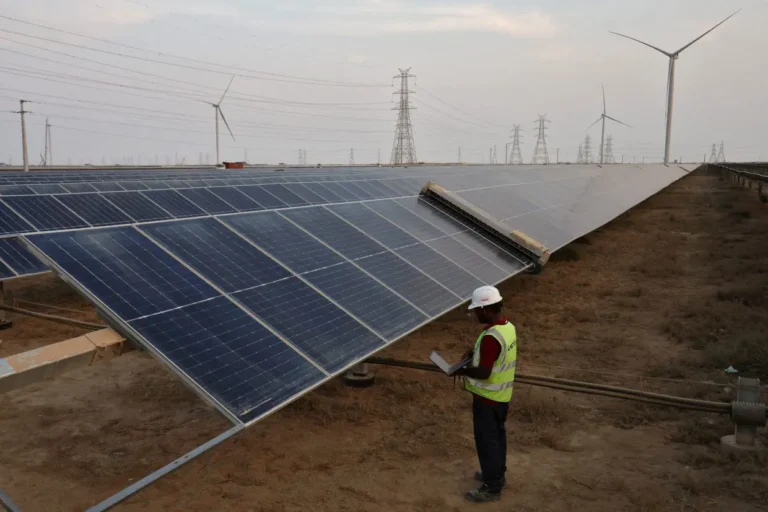
Sri Lanka spent approximately US$3.62 billion on fuel imports during January–July 2026, or just over US$500 million a month on average. That expenditure has risen sharply because of higher petroleum prices and illustrates why another prolonged oil shock can quickly consume foreign exchange.
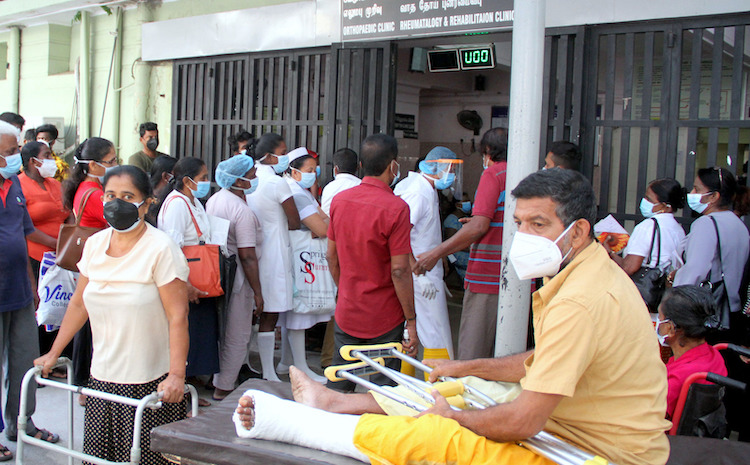
Medical and pharmaceutical imports are far smaller but economically essential. CBSL data for January–April recorded around US$204 million, equivalent to roughly US$51 million per month during that period.
For the Ceylon Public Affairs model, we therefore use approximately US$517 million per month as the fuel reference at a US$100 oil environment and US$51 million as a basic monthly pharmaceutical requirement. Fuel expenditure is then scaled illustratively to US$80, US$100 and US$120 oil.
This is deliberately simple. Sri Lanka imports crude oil and refined products with different pricing structures, so the relationship between the international crude benchmark and the final national fuel bill is not perfectly linear. The scenarios are a stress tool, not a forecast.
Tourism Adds a Second External Shock
Tourism earnings amounted to approximately US$1.797 billion during January–July 2026, giving an average of roughly US$257 million per month. The sector has already underperformed the comparable 2025 period, making a further tourism shock a realistic variable rather than a purely theoretical one.
The model therefore combines three tourism scenarios – reductions of 10%, 20% and 30% from that monthly earnings baseline, with the three oil-price environments.
The resulting runway uses the US$3.23 billion Ceylon Public Affairs conservative residual cushion, rather than the US$6.905 billion gross headline reserve stock.
Ceylon Public Affairs Usable Reserve Adequacy Stress Test
| Oil scenario | Tourism -10% | Tourism -20% | Tourism -30% |
|---|---|---|---|
| US$80/barrel | 6.6 months | 6.3 months | 6.0 months |
| US$100/barrel | 5.4 months | 5.2 months | 5.0 months |
| US$120/barrel | 4.6 months | 4.5 months | 4.3 months |
The result needs to be interpreted correctly. This is a deliberately severe zero-offset emergency runway: it asks how long the conservative residual reserve cushion alone could meet the modelled monthly fuel and pharmaceutical requirement plus the loss of tourism income.
In reality, Sri Lanka would continue receiving exports, remittances and other service earnings. The exchange rate would adjust, import demand could fall, new multilateral financing could arrive, and private-sector foreign exchange would continue circulating through the banking system. Those factors would extend the effective national runway, while a severe financial shock could create additional demands that the model does not include.
The useful conclusion is therefore not that Sri Lanka has exactly 4.3 or 6.6 months before a crisis. It is that the country appears capable of absorbing a meaningful period of external stress, but the margin becomes considerably less comfortable once the headline reserve stock is stripped of contingent components and known obligations.
Remittances Are Powerful, but They Expose a Different Vulnerability
The extraordinary remittance performance significantly improves that conclusion.
Sri Lanka received US$6.131 billion during the first eight months of 2026, exceeding the current gross reserve stock accumulated over years. Remittance inflows therefore act as a major continuous replenishment mechanism for the domestic foreign-exchange market rather than merely a household-income statistic.
But the strength of remittances also creates a development paradox.
Remittances are not the same as productive domestic growth. They are generated because Sri Lankans work abroad and transfer part of their income home. If the country increasingly depends on these inflows for external stability while losing nurses, technicians, engineers, skilled tradespeople and other workers, the balance-of-payments benefit can coexist with a domestic human-capital cost.
The stronger remittances become, therefore, the more important it becomes for Sri Lanka to measure who is leaving, which skills are being lost, whether return migration occurs and how remittance income is converted into investment rather than predominantly consumption.
Today’s PMI Release Shows the Domestic Economy Still Has Momentum
The latest activity data released by CBSL on 15 September provide useful context. Manufacturing PMI remained above the expansion threshold at 53.0 in August, although production fell below 50 and new orders were neutral. Employment and purchasing activity continued to increase, suggesting firms were preparing for year-end production despite weaker immediate output.
Services were considerably stronger. The Services PMI rose from 61.4 in July to 65.6 in August, supported particularly by transportation, wholesale and retail trade, professional services and financial services. Employment increased and business expectations remained positive, although respondents continued to identify global uncertainty as a downside risk.
The August PMI release therefore reinforces an important point: reserve rebuilding is taking place while domestic activity continues to expand. That is preferable to rebuilding reserves solely through recession-driven import compression, but it also means a growing economy will continue demanding imported fuel, machinery, intermediate goods and consumer products.
US$6.9 Billion Is Stronger, but It Is Not Yet Comfortable
Sri Lanka today is unquestionably better protected from an external shock than it was during the depths of the crisis.
Gross reserves are approaching US$7 billion, remittances remain exceptionally strong and the Central Bank has demonstrated that it can purchase significant foreign exchange when market conditions permit. The economy is also continuing to expand rather than remaining trapped in emergency contraction.
Yet the more useful reserve question is not whether US$6.9 billion sounds large.
Once the PBOC swap is treated conservatively, known short-term foreign-currency drains are recognised and essential import requirements are stress-tested against expensive oil and weaker tourism, the cushion looks closer to US$3.2 billion of conservatively protected space before new inflows are considered.
That is enough to provide genuine resilience, but not enough to justify complacency.
Sri Lanka therefore still needs the policies that make reserves less necessary in the first place: diversified exports, lower dependence on imported energy, stronger tourism earnings, sustained remittance flows, disciplined external borrowing and an exchange rate capable of adjusting before pressure becomes a reserve crisis.
The achievement is that Sri Lanka once again has a buffer. The next objective should be making sure the economy does not have to spend that buffer every time the world changes.
This Ceylon Public Affairs model is an independent analytical stress test and is not an official reserve measure of the Central Bank of Sri Lanka, the IMF or the Government. It uses publicly available data reviewed up to 15 September 2026 and deliberately conservative assumptions. It does not constitute financial, investment or policy advice.