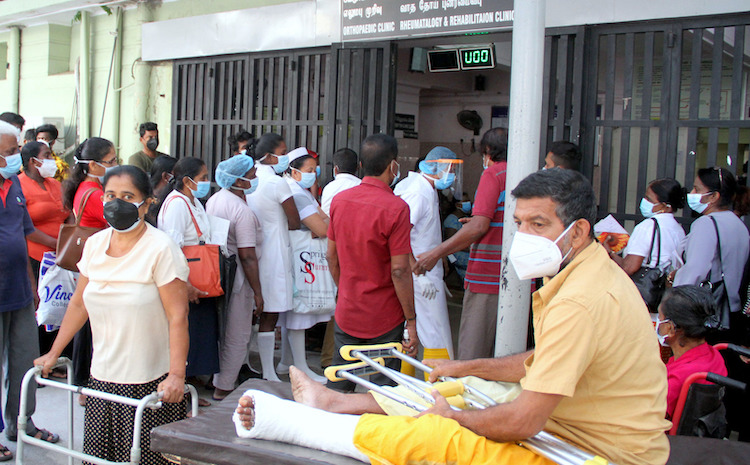


Sri Lanka’s economy is recovering, yet one in every eleven citizens remains largely excluded from its opportunities. Approximately 8.7 percent of the population around 1.6 million people with disabilities, with women comprising 57 percent of this group. Only 29 percent of persons with disabilities are engaged in economic activities, far below the national average, leaving the majority trapped in poverty, dependency, and social isolation. Barriers in employment, education, accessible infrastructure, and attitudes continue to limit full participation despite legal protections. The question is no longer whether economic inclusion matters; it is whether Sri Lanka can build an economy that truly works for people with disabilities, turning potential into productivity and dignity into contribution.
The distinction matters. An economy that leaves millions of capable citizens on the sidelines can achieve short-term growth while sacrificing human capital, social cohesion, and long-term resilience. Sri Lanka’s recent experience post-crisis recovery alongside renewed policy focus on disability rights shows both the scale of the challenge and the clear path forward through inclusive, advocacy-driven action.
Also in Explained | How Are Sri Lanka Education Sector Ratios Changing After the 2024 Census?
The Challenge of Disability Inclusion in Sri Lanka’s Discourse
National dialogue is increasingly recognising the need for greater inclusion. The 2026 budget introduced targeted measures, including a Rs. 19 billion allocation for a Rs. 10,000 monthly subsidy to approximately 140,000 persons with disabilities through the Aswesuma programme, a Rs. 1,000 million commitment to improve accessibility in public buildings and transport hubs, and a proposed 50 percent wage subsidy (up to Rs. 15,000 per month for 24 months) for private-sector employers hiring persons with disabilities.
The government has also signalled plans to raise the public-sector employment quota from 3 percent to 4 percent and enforce it more rigorously. Recent recruitment drives, such as the “Embracing Diversity” initiative, have connected jobseekers with disabilities to employers, while the National Policy on Disability and the Protection of the Rights of Persons with Disabilities Act continue to frame public commitments.
These discussions gain attention because they align with Sri Lanka’s obligations under the UN Convention on the Rights of Persons with Disabilities and reflect growing advocacy from organisations of persons with disabilities. Yet the conversation often centres on welfare support and awareness rather than systemic reforms that would enable full economic participation across public and private sectors.
Understanding Economic Inclusion for People with Disabilities: The Foundation of Inclusive Growth and Social Equity
Economic inclusion for people with disabilities means ensuring equitable access to decent work, entrepreneurship, skills development, accessible workplaces, and supportive ecosystems so that individuals can contribute productively while enjoying financial independence and dignity. It encompasses reasonable accommodations, anti-discrimination measures, accessible infrastructure, inclusive education-to-employment pathways, and targeted incentives that level the playing field without creating dependency.
In a truly inclusive framework, persons with disabilities become active participants in the labour market, driving innovation, diversifying talent pools, and reducing the fiscal burden of long-term welfare. Without these foundations, even progressive policies fail to translate into lived economic empowerment, perpetuating cycles of exclusion and limiting national productivity.
Sri Lanka’s Efforts Toward Disability Inclusion: Progress but Significant Gaps
The country has made important strides. The 2026 budget demonstrates concrete advocacy-driven commitments, including expanded cash transfers, accessibility upgrades, and private-sector wage incentives. The government continues to implement the 3 percent public-sector quota (with announced plans for stricter enforcement and a possible increase to 4 percent), while initiatives such as the Employers’ Network on Disability and recent job fairs show growing private-sector engagement. A new Disability Classification Framework was finalised in 2025 to improve assessment and service delivery.
Yet capacity and implementation gaps remain critically limited. Enforcement of the public-sector quota is weak, and private-sector uptake of incentives remains low. Accessibility standards for buildings, transport, and digital services are inconsistently applied, particularly in rural and estate areas. Vocational training and skills programmes tailored to persons with disabilities are underdeveloped, and stigma continues to restrict hiring and promotion opportunities.
The Inclusion Gap: Evidence from Employment, Accessibility and Outcomes
Data reveal a persistent mismatch between policy intent and reality. Only 29 percent of persons with disabilities participate in economic activities, with many confined to informal or low-productivity work. Unemployment and underemployment rates are significantly higher than the national average, contributing to elevated poverty levels. Approximately 30,000 school-age children with disabilities remain out of education, limiting future employability. Public buildings, transport hubs, and workplaces frequently lack basic accessibility features, while digital services and ICT tools often exclude those with sensory or cognitive impairments.
These realities translate into real exclusion: lower lifetime earnings, higher dependency on family or state support, and untapped contributions to the economy. Women with disabilities face compounded barriers, experiencing even lower participation rates due to intersecting gender and disability discrimination.
Why Gaps Persist: Policy, Cultural and Resource Realities
Several factors sustain the shortfall. First, while laws and policies exist, enforcement mechanisms remain weak due to limited monitoring, coordination challenges across ministries, and insufficient resources for implementation. Second, deeply ingrained social stigma and low awareness among employers and the public continue to hinder attitudinal change. Third, fiscal priorities following the economic crisis have sometimes delayed large-scale accessibility investments and tailored employment programmes, even as the 2026 budget begins to address these.
Public discourse rightly highlights welfare enhancements and new incentives, yet sustained focus on enforceable quotas, universal design standards, and scalable skills pathways has been slower to materialise.
Risks of Inadequate Inclusion for Sri Lanka’s Future
Failure to build a more inclusive economy for people with disabilities carries serious risks. Untapped human capital will constrain labour supply and productivity in an ageing society facing skills shortages. Persistent poverty among this group will increase long-term welfare costs and deepen inequality. Socially, continued exclusion risks eroding dignity, fuelling marginalisation, and weakening national cohesion at a time when unity is essential for recovery and resilience.
In a country pursuing inclusive growth and digital transformation, leaving 1.6 million citizens behind risks undermining the very equity and competitiveness Sri Lanka aims to achieve.
A Forward-Looking Policy Shift: Prioritizing Full Economic Participation
Sri Lanka can build a genuinely inclusive economy through inclusive, advocacy-driven action on three fronts.
First, strengthen enforcement and incentives for employment. Fully implement and monitor the public-sector quota (with the proposed increase to 4 percent), expand the 2026 wage subsidy scheme for private employers, and introduce tax credits or recognition awards for inclusive workplaces. Mandate reasonable accommodations as a standard requirement.
Second, accelerate universal accessibility and skills development. Revise and enforce accessibility regulations for all public and private infrastructure, transport, and digital services, while scaling targeted vocational training, entrepreneurship programmes, and inclusive education-to-work transitions. Prioritise rural and estate areas to ensure equitable reach.
Third, embed inclusion in national policy and culture. Integrate disability considerations across all economic strategies including the digital economy roadmap and National Health Policy (2026–2035) launch nationwide awareness and anti-stigma campaigns, and establish regular monitoring dashboards with input from organisations of persons with disabilities. Foster stronger public-private and NGO partnerships to co-create solutions.
These steps, supported by the 2026 budget momentum and sustained advocacy, position Sri Lanka to turn disability inclusion into a driver of shared prosperity.
Conclusion
Sri Lanka is home to approximately 1.6 million people with disabilities, 8.7 percent of the population yet only 29 percent are engaged in economic activities. While the 2026 budget has introduced meaningful steps such as expanded subsidies, accessibility funding, and private-sector incentives, full economic participation remains limited by enforcement gaps, accessibility barriers, and persistent stigma.
An inclusive economy for people with disabilities is not an optional add-on, it is essential to human dignity, social stability, and national progress. By enforcing quotas, scaling accessibility and skills programmes, reducing stigma, and embedding inclusion across all policies, Sri Lanka can unlock the potential of every citizen. The challenges are real, but so is the opportunity. Inclusive, advocacy-driven action today will determine whether future generations of Sri Lankans with disabilities can contribute fully and thrive. The time to build a more inclusive economy is now for a fairer, stronger, and more prosperous nation.
Also in Explained | The Hidden Risks of AI in Legal Practice: Lessons from a Recent High-Profile Court Filing Incident