
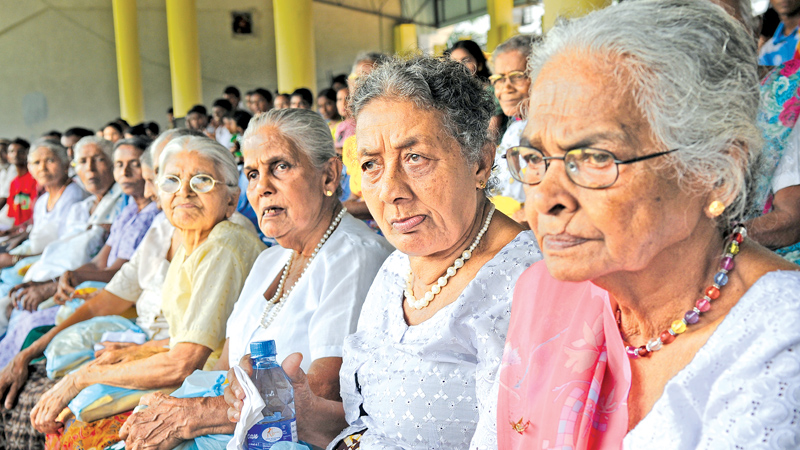
The Reality of Senior Citizens in Sri Lanka – Sri Lanka’s population is ageing at one of the fastest rates in Asia, creating urgent demands on health, financial security, and social support systems. The proportion of citizens aged 60 and above has risen from 12 percent in 2012 to 18 percent in 2024 (approximately 3.92–3.97 million people). Projections indicate this share will reach 25 percent by 2040 meaning one in every four Sri Lankans will be a senior citizen. Life expectancy at birth stands at approximately 77.7–77.9 years.
Many seniors face challenges including chronic non-communicable diseases, multidimensional poverty, social isolation, and inadequate long-term care, especially in rural and estate areas. Yet national dialogue is beginning to shift toward proactive preparation. The question is no longer whether the country is ageing rapidly; it is whether Sri Lanka is truly prepared to support its senior citizens with dignified, accessible, and sustainable care.
The distinction matters. A society that celebrates longer lifespans can reap the benefits of experienced elders contributing to families and communities, but only if supportive systems are in place. Sri Lanka’s recent experience demographic transition alongside economic recovery and strained public services shows both the scale of the challenge and the clear path forward through compassionate, policy-driven action.
Also in Explained | Can Sri Lanka’s Healthcare System Keep Up with an Ageing Population?
The Ageing Population Challenge in Sri Lanka’s Discourse
National dialogue is increasingly recognising the implications of rapid ageing. The National Policy for Senior Citizens (2025–2035), with preparations for launch around International Day of Older Persons, along with the National Health Policy (2026–2035), emphasises healthy ageing, rights protection, and community-based care. Policymakers highlight efforts to integrate geriatric services into primary care, expand social protection, and promote age-friendly environments. Discussions in parliamentary committees and health ministry briefings address rising old-age dependency ratios and the need for better pension coverage and long-term care.
These topics gain attention because they reflect a profound demographic shift driven by declining fertility and improved longevity. Yet the conversation often focuses on policy frameworks and awareness rather than the operational readiness of services that directly impact the daily lives of seniors, particularly the most vulnerable in rural communities.
Understanding Senior Citizens’ Needs: The Foundation of Dignified Ageing and Social Cohesion
Support for senior citizens encompasses health and wellness services, financial security through pensions and savings, long-term care (home-based, community, or institutional), social engagement, and protection from abuse or neglect. Effective systems integrate preventive care for non-communicable diseases, geriatric-specialised treatment, affordable long-term support, and opportunities for active ageing through lifelong learning and community participation.
In a prepared framework, services are accessible, culturally sensitive, and equitable across urban-rural divides. They promote healthy ageing, reduce caregiver burdens on families, and allow seniors to contribute meaningfully. Without these foundations, longer lifespans risk translating into prolonged vulnerability rather than extended wellbeing, straining families, communities, and public resources.
Sri Lanka’s Preparedness for Ageing: Progress but Significant Gaps
The country has made important strides. The National Elderly Health Policy (2017) and the Essential Service Package have encouraged integration of elderly care into primary health facilities. Recent initiatives focus on community-based programmes, palliative care frameworks, and the National Policy for Senior Citizens (2025–2035), which covers rights, health, financial security, and age-friendly environments. Some districts have expanded day-care centres and home-based support, while social protection schemes for vulnerable elders continue.
Yet capacity remains critically limited. Geriatric-trained professionals are scarce, long-term care infrastructure is underdeveloped, and community/home-based services for lower-income seniors are patchy. Pension coverage is low, with many schemes providing benefits below the poverty line and limited reach for informal-sector workers (including many women). Traditional family caregiving is under strain due to urban migration and smaller family sizes.
The Preparedness Gap: Evidence from Demographics, Health and Financial Realities
Data reveal a widening mismatch between demographic needs and available support. The elderly population (60+) reached approximately 18% in 2024, with the old-age dependency ratio rising steadily. Non-communicable diseases (diabetes, hypertension, cardiac conditions) dominate the health burden among older adults, compounded by disabilities, mental health concerns, and a gap between life expectancy and healthy life expectancy. Many seniors, especially women and rural residents, live with functional limitations or psychological distress in later years.
Financially, coverage gaps mean most elders rely on family or limited state allowances, with out-of-pocket health costs pushing households into hardship. Infrastructure shortfalls are evident: limited specialised geriatric services, uneven access to community care, and low uptake of available programmes due to awareness or accessibility issues. These realities translate into real suffering delayed care, social isolation, financial insecurity, and increased burdens on working-age families.
Why Gaps Persist: Policy, Resource and Societal Realities
Several factors sustain the shortfall. First, chronic resource constraints and competing fiscal priorities limit scaling of geriatric training, infrastructure, and community services. Second, implementation of existing policies lags due to coordination challenges across ministries and shortages of trained caregivers. Third, cultural reliance on family support is eroding amid migration and smaller family sizes, while pension systems remain fragmented with low effective coverage and often inadequate benefits for informal-sector workers.
Public discourse naturally highlights policy launches and demographic achievements, yet sustained focus on last-mile delivery, rural equity, and financial protection for seniors receives less consistent attention amid broader economic recovery efforts.
Risks of Inadequate Preparation for Sri Lanka’s Future
Failure to strengthen support for senior citizens carries serious risks. Rising healthcare demands could overwhelm the public system, increasing costs and reducing quality. Financial insecurity among elders may deepen poverty and inequality, while weakened family structures risk social isolation and neglect. A shrinking working-age population facing higher old-age dependency will strain productivity, public finances, and intergenerational equity.
In a country pursuing inclusive growth and resilience, unaddressed ageing challenges could slow human development, exacerbate rural-urban divides, and undermine social cohesion. Long-term, this risks turning a demographic achievement into a quiet crisis.
A Forward-Looking Policy Shift: Prioritizing Dignified Support for Seniors
Sri Lanka can better prepare for its ageing population through compassionate, policy-driven action on three fronts.
First, expand health and long-term care capacity. Accelerate integration of geriatric services into primary care, train more healthcare professionals in elderly needs, and scale community- and home-based care models with clear standards and accreditation for private providers.
Second, strengthen financial security and social protection. Reform pension systems for broader coverage (including incentives and schemes for informal workers), ensure adequate benefit levels above poverty thresholds, and introduce targeted allowances or savings schemes for vulnerable seniors, supported by financial literacy programmes.
Third, promote active ageing and age-friendly environments. Embed measurable targets for healthy ageing in the National Policy for Senior Citizens (2025–2035) and National Health Policy (2026–2035), launch awareness campaigns on rights and wellbeing, develop accessible infrastructure and transport, and foster community engagement through day centres, lifelong learning, and intergenerational programmes. Encourage public-private and NGO partnerships to expand reach.
These steps, supported by sustained fiscal prioritisation and international technical assistance, position Sri Lanka to turn demographic ageing into an opportunity for greater social cohesion and dignity.
Conclusion – Senior Citizens in Sri Lanka
Sri Lanka is experiencing rapid population ageing, with the share of citizens aged 60 and above at 18 percent in 2024 and projected to reach 25 percent by 2040, alongside life expectancy of approximately 77.7–77.9 years. While important policies and initiatives provide a foundation, preparedness in health, financial security, and social care still falls short of the growing needs of senior citizens.
Support for elderly care and dignified ageing is not an optional concern, it is essential to individual wellbeing, family stability, and national resilience. By expanding geriatric services, strengthening pensions and protection, reducing access barriers, and fostering active, age-friendly communities, Sri Lanka can ensure its seniors live with dignity and purpose. The challenges are real, but so is the opportunity. Compassionate, policy-driven action today will determine whether future generations of elders and the families and society supporting them receive the care and respect they deserve. The time to prepare is now for a more inclusive, compassionate, and resilient Sri Lanka.
Also in Explained | One Day the Chair Will Be Empty – A Gentle Reminder for Every Sri Lankan Family