
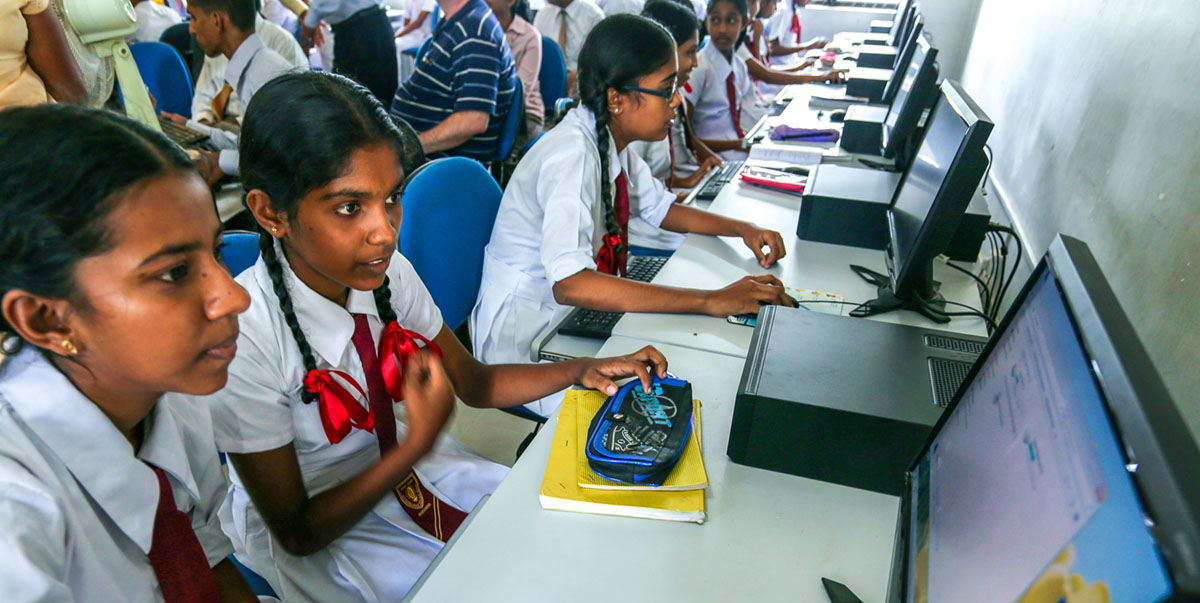
Can Sri Lanka’s Education System Truly Prepare Kids for the Future? Sri Lanka takes immense pride in its free education system, which has produced high literacy rates and a skilled diaspora. Yet as the country navigates economic recovery and global technological shifts, a pressing question emerges: is the current education system adequately equipping children with the future skills needed for the 21st-century workforce? The system remains largely examination-driven and content-heavy, while employers repeatedly highlight gaps in practical abilities such as critical thinking, problem-solving, digital literacy, creativity, and adaptability. Sri Lanka education reform is underway for 2026, but meaningful progress will require deeper alignment between schooling and tomorrow’s economic realities.
The distinction matters. Strong foundational knowledge and exam performance can mask weaknesses in applied competencies that determine employability and innovation capacity. Sri Lanka’s young population represents a demographic dividend, but only if the education system evolves from rote learning toward competency-based, future-oriented preparation.
Also in Explained | Sri Lanka’s Water Crisis – How the Lack of Resources Is Impacting Daily Life
The Allure of Traditional Strengths in Sri Lanka’s Education Discourse
National dialogue often celebrates the system’s historic achievements — near-universal literacy, strong performance in core subjects, and success in producing professionals who excel abroad. The 2026 national budget allocated a record Rs 704 billion (approximately 2.04 percent of projected GDP) to education, the highest in recent years, signalling continued commitment. Reforms launched in 2026 for Grades 1 and 6 emphasise modular structures, competency-based learning, and practical skills, including entrepreneurship and STEM enhancements.
These narratives reassure parents and policymakers that the system remains a national asset. Yet they risk overlooking persistent misalignments. High-stakes examinations still dominate, encouraging rote memorisation over inquiry-driven or project-based approaches. Many graduates enter the workforce lacking the soft and technical skills demanded by modern industries.
Understanding Future Skills: The Foundation of Relevant Education
Future skills encompass a blend of cognitive abilities (critical thinking, creativity, complex problem-solving), digital competencies (AI literacy, data handling, coding basics), socio-emotional skills (collaboration, adaptability, communication), and practical capabilities (entrepreneurship, vocational application). In a rapidly changing world, education must prepare students not just to recall information but to apply knowledge, innovate, and learn continuously.
A forward-looking system integrates STEM with arts and humanities, promotes project-based and inquiry-driven learning, strengthens English and digital proficiency, and builds strong industry linkages. Without these elements, even well-funded schooling produces graduates who face skills mismatch, contributing to youth unemployment and underemployment. Sri Lanka schooling challenges — including teacher capacity, rural-urban divides, and slow curriculum adaptation — directly affect the nation’s ability to harness its human capital for sustainable growth.
Sri Lanka’s Education System: Solid Foundations but Clear Misalignments
Official indicators show continued strengths. Literacy remains high, and the system delivers broad general knowledge effectively. The 2026 reforms introduce modular, competency-focused learning starting with Grades 1 and 6, aiming to reduce exam pressure and incorporate activity-based methods. Allocations for teaching materials have increased significantly, and digitalisation initiatives seek to equip schools with smart classrooms and ICT tools.
Yet misalignments persist. The curriculum is still heavily content-oriented and examination-centric, limiting space for creativity and practical application. Employers across IT, engineering, healthcare, tourism, and manufacturing report shortages in practical exposure, teamwork, communication, and digital competence. Youth unemployment (ages 15–24) remains elevated at around 19–22 percent, while graduate underemployment affects a significant portion, with many working in roles unrelated to their qualifications.
Rural and estate schools often lack qualified teachers in English, ICT, and science, widening opportunity gaps. While reforms promise progress, implementation challenges — including teacher training, resource distribution, and oversight — risk slowing the transition to a truly future-ready system.
The Skills Gap: Evidence from Labour Market Outcomes and Learning Approaches
Data reveal a consistent pattern of mismatch. Many graduates lack the applied skills needed for high-value sectors, leading to persistent youth unemployment and brain drain. The system’s emphasis on rote learning discourages innovation and problem-solving, qualities essential for a competitive economy.
Regional disparities exacerbate the issue. Urban schools benefit more from digital initiatives and qualified staff, while rural and estate institutions struggle with infrastructure and teacher shortages. Recent reforms aim to address these through modular structures and entrepreneurship integration, but full rollout will take years, and early controversies (such as textbook errors) have highlighted execution risks.
Without faster alignment between education and industry needs, Sri Lanka risks squandering its young demographic advantage. Strong foundational education alone is insufficient when global peers advance through competency-based, digitally enriched, and industry-linked models.
Why Misalignments Persist: Structural and Policy Realities
Several factors explain the gap between current schooling and future needs. First, the legacy of an examination-driven culture prioritises measurable academic performance over holistic development. Second, teacher training and professional development have not kept pace with demands for facilitative, technology-enabled teaching.
Third, resource constraints and implementation delays limit the impact of reforms. While the 2026 budget provides the highest education allocation in years, effective spending on teacher capacity, digital infrastructure, and curriculum quality remains critical. Political and administrative cycles often favour visible expansions over deeper systemic changes in pedagogy and assessment.
Media and public discourse naturally focus on access and exam results, yet deeper conversations about skills relevance and equity are needed to drive meaningful Sri Lanka education reform.
Risks of an Unreformed System for Sri Lanka’s Future
Continuing with incremental changes while the world accelerates carries clear dangers. A widening skills mismatch will sustain high youth unemployment, slow economic diversification, and limit innovation. Brain drain of talented graduates will persist, while domestic industries face talent shortages. Regional and socio-economic inequalities will deepen, undermining social cohesion.
In a global economy increasingly driven by technology, creativity, and adaptability, an outdated system risks leaving Sri Lanka’s children unprepared for high-value opportunities. The demographic window is finite; failure to act decisively could turn a potential dividend into a long-term liability.
A Forward-Looking Policy Shift: Preparing the Next Generation Effectively
Bridging the gap requires deliberate, sustained action on three fronts.
First, accelerate curriculum and pedagogical reform. Fully implement competency-based, project-driven learning that integrates critical thinking, creativity, digital literacy, and entrepreneurship across all grades. Strengthen STEM while maintaining balance with arts and humanities.
Second, invest in teachers and infrastructure. Provide comprehensive training to shift educators from lecturers to facilitators, expand digital access equitably, and ensure rural and estate schools receive priority support. English proficiency and AI/digital skills must become foundational.
Third, forge stronger education-industry linkages. Expand vocational pathways, apprenticeships, and industry input into curriculum design. Align higher education and technical training with emerging sectors such as IT, renewable energy, tourism, and advanced manufacturing.
Fiscal policy should prioritise quality and outcomes over mere access, with transparent monitoring of reform progress. International partnerships and private-sector involvement can accelerate digitalisation and skills development.
Countries that have successfully reformed demonstrate that combining strong foundations with future-oriented skills yields higher employability, innovation, and inclusive growth. Sri Lanka’s educated youth and policy momentum provide a solid platform for this transition.
Conclusion
Sri Lanka’s education system has delivered remarkable access and foundational strengths, supported by the highest budget allocation in years at Rs 704 billion. Yet as 2026 reforms roll out, the deeper question remains: can it truly prepare children for the challenges of tomorrow? Persistent misalignments — rote learning, limited practical skills, and uneven quality — hinder the development of the future skills essential for a competitive, innovative workforce.
Sri Lanka education reform must move beyond structural tweaks toward a holistic transformation that values creativity, digital competence, critical thinking, and real-world application. By addressing schooling challenges with focused investment in teachers, infrastructure, and industry alignment, the country can equip its children to thrive domestically and globally. The children of today are the workforce and leaders of tomorrow; giving them the right preparation is not just an educational imperative — it is a national one. The reforms beginning in 2026 offer a critical opportunity; seizing it fully will determine whether Sri Lanka realises its full human potential in the decades ahead.
Also in Explained | The Real Cost of High Living Expenses: How Can Families Cope?