
Hela Apparel trading suspension in June 2026, followed by court-ordered winding-up applications in August, should not be examined only as the financial failure of an individual apparel company. It also provides Sri Lanka with an unusually clear test of the institutional systems surrounding a major listed exporter: capital-market disclosure, audit oversight, development finance and protection of workers when corporate distress becomes severe.
The central public-affairs question is therefore different from asking why Hela accumulated losses or struggled with debt.
It is this:
When warning signals emerge over several years, how effectively does the wider governance system translate those signals into protection for investors, workers, creditors and the public interest?
Hela’s history does not establish that any regulator, auditor or development financier caused its failure. Commercial businesses can fail even where regulatory systems operate correctly. Nor should the company’s admission to the Colombo Stock Exchange be interpreted as a guarantee of its future solvency or performance.
What the case does provide is an opportunity to examine whether Sri Lanka’s corporate-distress architecture gives stakeholders sufficiently early, understandable and actionable warnings before financial problems become existential.
Hela Apparel Trading Suspension: The Timeline Matters
The regulatory history did not begin in June 2026.
The SEC’s 2021 Annual Report records that Hela Apparel Holdings Limited received regulatory approval under the then-applicable Section 28A/80 framework ahead of listing. Hela subsequently listed on the Colombo Stock Exchange on 7 February 2022. The SEC itself describes full disclosure of information material to investment decisions as a principal mechanism of investor protection.
By 2023, however, credit-market warning signals were becoming substantially stronger.
Fitch Ratings downgraded Hela’s National Long-Term Rating from AA(lka) to AA-(lka) in March 2023 and assigned a Negative Outlook. In November, Fitch made a much sharper downgrade from AA-(lka) to BB+(lka), again with a Negative Outlook.
In June 2024, Hela’s Board proposed a rights issue to raise approximately Rs.1.60 billion from existing shareholders. The issue was subsequently oversubscribed and the new shares were listed in October. Separately, the SEC’s 2024 Annual Report records that a matter concerning Hela was referred to the Sri Lanka Accounting and Auditing Standards Monitoring Board, demonstrating that regulatory attention did not begin only when the company approached insolvency.
The warning sequence intensified during 2025.
On 15 September 2025, Hela’s shares were transferred to the CSE Watch List because its annual report for the year ended 31 March had not been submitted within the prescribed period. In that same disclosure, the company stated that certain operating subsidiaries were facing liquidity and cash-flow problems, that group liabilities exceeded total assets and that discussions with creditors on debt restructuring were continuing.
When the FY2024/25 Annual Report was eventually published in December, Deloitte Partners issued a disclaimer of opinion. Hela’s shares were consequently transferred to the Watch List under the relevant audit-opinion provision with effect from 12 December 2025. The company expected debt restructuring and strategic funding to resolve the underlying matters by June 2026.
Those efforts did not produce a sufficient resolution. Trading was suspended from 18 June 2026. By July, the company was reported to have only two directors remaining, while CSE Listing Rule 9.8.1 requires a listed entity to maintain at least five. On 4 August, the Board resolved to seek court-ordered winding up, with applications filed on 5 August for Hela Apparel Holdings and two principal operating subsidiaries.
This is therefore not a story in which no warnings existed.
The more difficult question is whether the warnings were converted into sufficiently prominent public signals while meaningful value could still be protected.
IPO Approval Is Not a Corporate Guarantee
The first governance distinction is essential.
A securities regulator and stock exchange are not commercial guarantors. Their role is not to promise that a company admitted to the market will remain profitable, maintain its credit rating or avoid insolvency.
Investors accept business risk.
The stronger expectation is that material information is disclosed accurately and promptly, financial reporting standards are observed, governance rules are enforced and the market has enough information to price deteriorating risk.
The SEC’s own framework emphasises precisely this disclosure-based approach. Its 2021 Annual Report states that full disclosure of material information allows investors to assess risks and rewards and protect their own interests.
The Hela case therefore should not produce the conclusion that an IPO approval was somehow defective because the company failed several years later.
It should generate a different question.
Could a listed-company distress framework make the accumulation of warning signals easier for ordinary shareholders to understand?
A rating downgrade, rights issue, negative equity position, debt restructuring, delayed annual report, audit disclaimer and board-composition failure are individually disclosed events. Taken together, however, they describe a progressively different risk profile.
Capital-market policy could become better at communicating the cumulative significance of those events rather than relying on investors to assemble the entire chronology themselves.
The Audit Disclaimer Was a Governance Event
A disclaimer of opinion is particularly serious, but it is frequently misunderstood.
It is not itself a finding of fraud and should not be reported as one.
In Hela’s case, Deloitte stated that it could not obtain sufficient appropriate audit evidence to provide a basis for an audit opinion on the financial statements. The accompanying report identified substantial uncertainty around the company’s financial position and proposed remedies.
For the year ended March 2025, the report recorded a Group net loss of approximately Rs.22.9 billion, net liabilities of Rs.11 billion and a net current liability position of approximately Rs.20.4 billion. It also referred to overdue trade payables, arrears on loan instalments, covenant breaches and proposed debt restructuring, while potential strategic funding remained without a binding commitment at the reporting date.
The audit system therefore ultimately produced an extremely strong warning.
The policy issue is timing.
The financial year had ended in March. The annual report containing the disclaimer appeared in December after reporting had already been delayed.
That creates a wider question for capital markets: when a listed company is experiencing exceptional liquidity distress and complex restructuring, should there be an enhanced disclosure regime between normal quarterly reporting and the eventual audited annual report?
The objective would not be to make auditors responsible for corporate rescue. It would be to reduce the information gap during periods when the company’s financial position may be changing rapidly.
Regulation Worked – but Could Warning Escalation Be Stronger?
The regulatory record should also be represented fairly.
Hela was subjected to formal CSE Watch List mechanisms. The SEC had previously referred a matter concerning the company to SLAASMB. The CSE ultimately applied its audit-related enforcement process, and trading was suspended after the underlying non-compliance was not resolved.
This means the case cannot simply be characterised as regulatory inaction.
The more useful policy question is whether Sri Lanka’s system is sufficiently graduated between normal disclosure and the strongest sanctions.
Trading suspension protects market integrity once a serious compliance failure persists. But by the time a company reaches that stage, liquidity, governance and creditor problems may already be highly advanced.
An effective market should therefore have both terminal enforcement tools and earlier mechanisms that make deteriorating corporate resilience unmistakable to investors.
Development Finance Creates a Different Accountability Question
The Hela case becomes more significant because commercial expansion was also supported by institutions carrying explicit development mandates.
In February 2023, Norfund, the Norwegian Government’s investment fund, signed a US$14 million financing agreement with Hela to support its East African manufacturing operations. Norfund said the investment would enhance productivity, create employment and help build a sustainable local supply chain. It also explicitly presented responsible investment as a mechanism for strengthening sustainability and working conditions.
Norfund’s wider reporting states that it uses IFC Performance Standards in managing job quality and environmental and social risks in investee companies. Its 2023 reporting also highlighted Hela’s female employment and development impact in Kenya.
The International Finance Corporation provides another useful lens, although its involvement must be described carefully.
IFC appraised a proposed loan of up to US$20 million to Hela Investment Holdings. Its disclosure records Board approval in January 2024 but currently lists the project status as “Hold”. The publicly available record reviewed for this analysis therefore should not be interpreted as establishing that the full proposed facility was ultimately disbursed.
What is particularly relevant is IFC’s environmental and social appraisal.
It applied Performance Standard 2 on Labour and Working Conditions, reviewed Hela’s HR and grievance arrangements and required the Group to develop a retrenchment policy applicable across Kenya, Egypt and Sri Lanka. IFC also required reporting on previous retrenchment processes and identified measures relating to worker consultation, grievance mechanisms and dismissals.
That creates a legitimate development-finance question.
If employment creation, decent work and social safeguards form part of the justification for providing development capital, what form should stewardship take when the investee later enters severe financial distress?
This is not the same as saying that a DFI becomes legally responsible for company wages, statutory deductions or creditor claims. Such responsibilities depend on applicable law, contractual arrangements and the institution’s actual exposure.
The policy question is about continuity of the development mandate: whether monitoring, engagement and transparent reporting on worker outcomes should become more intensive not less when the original development gains are at risk.
Sri Lanka and Kenya Show Why Worker Protection Matters
The worker dimension provides perhaps the clearest public-interest contrast.
In Sri Lanka, the Board of Investment says 3,674 employees formerly attached to Hela Clothing and Foundation Garments had already been transferred to Emerald Clothing before the winding-up applications were filed. The transfer occurred in two phases on 1 May and 1 June, and the BOI said employment continued with continuity of service under applicable terms and conditions.
That is an important value-preservation outcome.
It does not establish that every issue affecting every creditor or employee across the wider Group has been resolved. But preserving thousands of operating jobs before formal winding-up proceedings demonstrates why early restructuring can matter.
Kenya presents a different and still-developing picture.
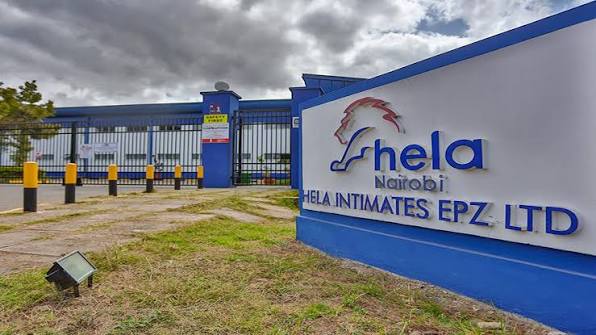
Nairobi Senator Edwin Sifuna has sought an investigation concerning more than 3,000 workers at Hela Intimates EPZ Ltd amid allegations involving delayed salaries, unremitted statutory deductions and unpaid termination-related benefits. (Note – These remain allegations requiring investigation and we are not reporting this as established findings against the company.)
The Sri Lankan and Kenyan situations are not perfectly like-for-like: different subsidiaries, labour laws, transactions and restructuring arrangements are involved.
Yet together they illustrate an important policy principle.
Corporate rescue should be measured not only by how much creditor value is preserved, but also by whether viable employment can be transferred before operating businesses collapse.
What Sri Lanka Can Learn From the Hela Test
Hela provides a useful basis for strengthening the architecture around large listed-company distress without attempting to regulate commercial failure out of existence.
A practical framework could include:
- Earlier distress escalation: Where several indicators converge, material rating deterioration, negative equity, overdue obligations, major restructuring, delayed reporting or repeated emergency capital raising the market could receive a standardised enhanced-risk disclosure.
- Plain-English audit communication: Modified opinions and disclaimers should be accompanied by a concise explanation identifying what the auditor could not verify and why it matters, without replacing the formal audit report.
- Worker-continuity planning: Major employers entering advanced restructuring should engage labour authorities, BOI and worker representatives early enough to assess transfers, restructuring or going-concern sales before liquidation becomes unavoidable.
- DFI distress-phase stewardship: Development financiers could disclose, within legitimate commercial-confidentiality limits, how employment, labour safeguards and environmental and social commitments are being monitored when investees enter severe distress.
- Governance continuity: A listed company’s ability to maintain a functioning board, audit oversight and required committees should be treated as especially important during restructuring, when management decisions have their greatest consequences for competing stakeholders.
None of these mechanisms can guarantee that a company survives.
That should not be the objective.
The goal should be to ensure that warning, disclosure, intervention and value preservation occur in the correct sequence and early enough to remain useful.
Corporate Failure Should Leave Institutional Lessons
Hela’s winding-up applications mark a serious corporate event, particularly for a company that entered the public market only in 2022 and subsequently attracted international development financing.
But the public-policy value of examining the case lies beyond deciding who was “to blame”.
Capital markets cannot eliminate business risk. Auditors cannot rescue companies. Development financiers cannot guarantee commercial success. Regulators cannot substitute themselves for boards and management.
What institutions can do is make risk visible, enforce transparency, maintain governance standards and create conditions in which workers, investors and creditors have a better chance of responding before value disappears.
There were warning signals in Hela’s case. There were also regulatory interventions, an eventual audit disclaimer, Watch List enforcement, trading suspension and, in Sri Lanka, a restructuring that preserved 3,674 jobs before winding-up applications were made.
The question for Sri Lanka is whether those separate mechanisms can now be connected into a stronger corporate-distress governance framework.
The strongest capital market is not one in which no listed company ever fails.
It is one in which failure does not arrive as an institutional surprise, and where investors, workers and the wider economy are given the clearest possible opportunity to protect value before the final stage.
This analysis is for educational and public-affairs purposes only. It is based on official filings, regulatory disclosures and publicly available information reviewed up to 9 August 2026. Allegations concerning worker liabilities in Kenya remain subject to investigation. This article does not constitute legal, financial or investment advice.