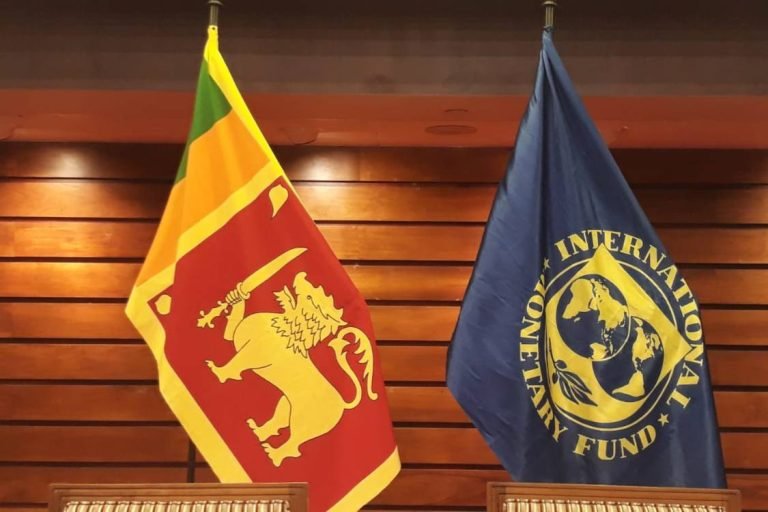

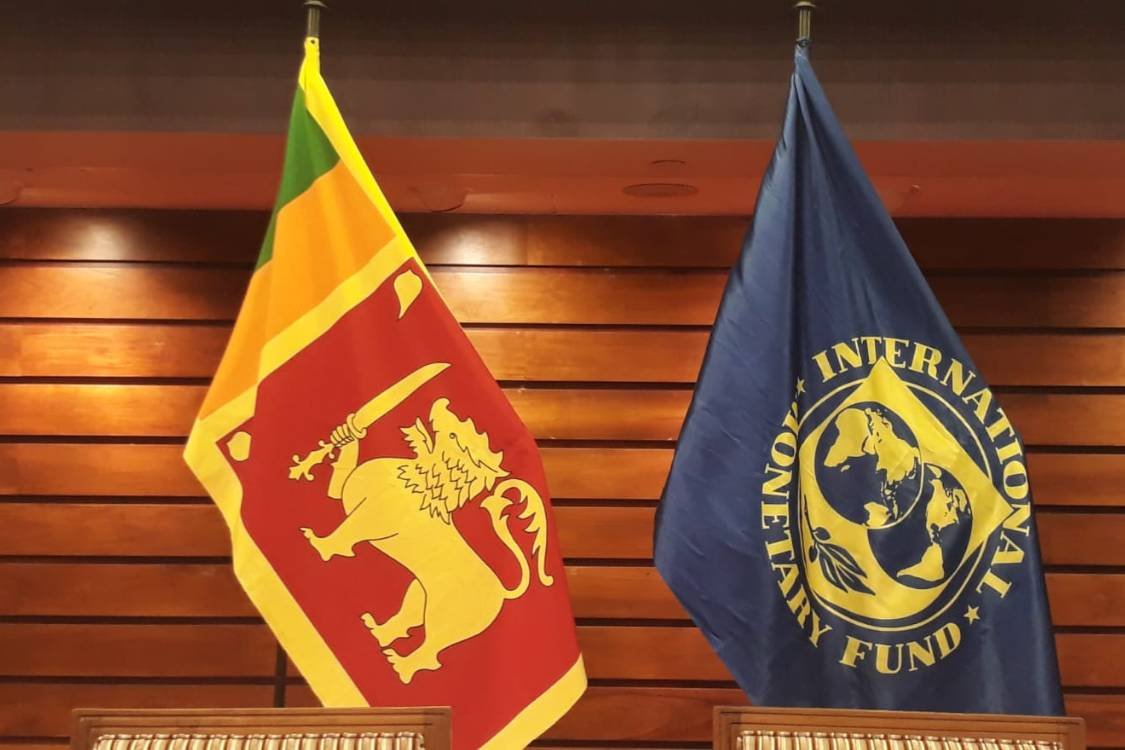
Sri Lanka IMF Seventh Review 2026 entered an important new stage on 23 September when the International Monetary Fund completed its two-week mission to the country. The IMF team arrived on 10 September to discuss both the Seventh Review of the Extended Fund Facility programme and the 2026 Article IV Consultation, and it left with a broadly positive assessment of Sri Lanka’s recovery. However, the most important point for the public to understand is that the Seventh Review has not yet been completed and a staff-level agreement has not yet been announced.
That distinction matters because IMF announcements can easily sound more final than they actually are. The Fund said discussions with Sri Lankan authorities were productive and would continue in the near term, with the goal of reaching agreement on the policies and conditions needed to conclude the review. The 23 September statement was therefore a progress report from the mission, not approval of another disbursement and not a decision by the IMF Executive Board.
Sri Lanka IMF Seventh Review 2026: What Was Actually Achieved?
The IMF’s latest assessment contains several encouraging numbers. Sri Lanka’s economy expanded by 4.2% in the second quarter of 2026, and the Fund noted that this marked eleven consecutive quarters of economic growth. Gross official reserves had risen to US$6.9 billion by end-August, banks were described as well capitalised and profitable, the fiscal result for the first half of the year was strong and debt restructuring was described as largely completed.
These are meaningful achievements when compared with the conditions Sri Lanka faced during the economic crisis. Growth has returned, reserves have been rebuilt and the immediate debt-restructuring burden is much further advanced than it was several years ago. Yet the IMF’s message was equally clear that stabilisation is not the same as completing the recovery, because the country remains vulnerable to international shocks and still has difficult reforms to complete.
| What the IMF highlighted | Position at the end of the mission |
|---|---|
| Economic growth | 4.2% in Q2 2026 |
| Growth record | 11 consecutive quarters of expansion |
| Gross official reserves | US$6.9 billion at end-August |
| Inflation | 8% year on year in August |
| Banking system | Well capitalised and profitable |
| Fiscal performance | Strong in the first half of 2026 |
| Debt restructuring | Largely completed |
| Seventh Review | Discussions continuing; not yet concluded |
The table helps explain the mixed message. Sri Lanka has moved considerably further away from emergency conditions, but the IMF still sees important risks around inflation, public finance, energy, governance and external shocks. The purpose of the Seventh Review is therefore not simply to confirm that the economy is growing again, but to test whether the recovery can continue without recreating the weaknesses that contributed to the earlier crisis.
No Staff-Level Agreement Yet Does Not Mean the Review Has Failed
People searching for Sri Lanka IMF staff level agreement 2026 should be careful with the language being used. The IMF explicitly said discussions are continuing with the goal of reaching a staff-level agreement “in the near term”, which means both sides still have work to complete before the Seventh Review can move to its next stage. That is different from the Fund saying negotiations have broken down or that the programme has failed.
A staff-level agreement is an important programme step, but even that would not be the final decision. After staff and the authorities agree on the required policies and programme conditions, the review would normally still need to proceed through the formal IMF process before any related financing becomes available. This is why the end of the September mission should be seen as the end of one round of discussions rather than the end of the Seventh Review.
For readers who want the background before this mission began, Ceylon Public Affairs previously examined what the September Seventh Review mission was expected to test. The latest IMF statement now allows those expectations to be compared with what the Fund actually emphasised after nearly two weeks of discussions.
The Tax Debate Is Moving From “More Revenue” to Better Revenue
One of the strongest messages in the IMF statement concerns government revenue. The Fund said Sri Lanka needs a medium-term revenue strategy that can maintain revenue collection while also improving the efficiency and fairness of the tax system. It called for a broader tax base, fewer unnecessary exemptions and incentives, and stronger revenue administration to improve compliance.
This is an important change in emphasis because economic recovery cannot depend forever on repeatedly raising taxes on the same group of compliant individuals and businesses. A durable tax system needs to collect what is legally due, limit unnecessary exceptions and make compliance easier and more predictable. The social challenge is ensuring that revenue reform does not place a growing burden on households already struggling with higher living costs.
Energy Prices Remain Part of Fiscal Stability
The IMF also repeated its support for cost-recovery energy pricing. In simple terms, electricity and other State-linked energy prices should broadly reflect the actual cost of supplying the service rather than allowing large losses to build inside public enterprises. The concern is that when those losses become too large, taxpayers may eventually have to cover them through government support or additional borrowing.
This does not remove the need to protect vulnerable households. A cost-reflective system can still include targeted assistance for people genuinely unable to absorb sudden increases, and the IMF itself again stressed the importance of strengthening social safety nets. The harder policy task is therefore protecting low-income households without returning to broad subsidies that become financially difficult to sustain.
Sri Lanka Also Has a Problem Spending Investment Money
Another notable part of the IMF statement received less public attention: capital spending. The Fund said Sri Lanka needs to address bottlenecks that delay the execution of public investment, including reconstruction related to Cyclone Ditwah. This matters because stronger government revenue does not automatically improve people’s lives if planned roads, hospitals, schools, water systems and reconstruction projects remain delayed.
Sri Lanka therefore faces two fiscal challenges at the same time. The Government must protect debt sustainability and avoid wasteful spending, but it also needs the administrative capacity to execute good public investment when money has already been allocated. Fiscal discipline should not become an excuse for an economy in which necessary development projects remain permanently stuck between approval and implementation.
Inflation at 8% Keeps the Central Bank Under Pressure
The IMF noted that headline inflation had reached 8% year on year in August, largely because of the global oil-price shock, although inflation expectations remained broadly anchored. It said monetary policy should remain ready to respond to price pressures and recommended keeping Sri Lanka’s 5% inflation target and current accountability band at the first statutory review of the framework.
The Fund also again supported greater exchange-rate flexibility because it allows the economy to adjust to external shocks while helping reserve accumulation. For households, however, this creates a difficult balance because a weaker currency can increase the local price of fuel, food and other imports. The challenge for monetary policy is therefore to absorb external pressure without allowing a temporary shock to develop into persistent inflation.
Governance Has Returned to the Centre of the Programme
The IMF’s comments on governance were unusually direct. It said preserving the integrity of Sri Lanka’s anti-corruption legal framework was critical for public trust and warned that selected clauses in recently tabled amendments could weaken transparency and accountability.
That statement should be understood carefully. It does not mean the IMF accused the Government of corruption or declared that Sri Lanka’s entire governance framework is failing. It does mean that governance reforms remain part of the programme and that changes to anti-corruption laws will be examined for whether they strengthen or weaken the safeguards already established.
Article IV Looks Beyond the Next IMF Payment
Searches for Sri Lanka IMF Article IV 2026 are also likely to increase because the September mission covered more than the Seventh Review. The Article IV Consultation is the IMF’s wider examination of an economy, covering issues such as growth, inflation, public finance, the external sector, the financial system and longer-term reforms. It therefore asks a broader question than whether Sri Lanka has met the immediate requirements needed for the next EFF review.
This wider discussion explains why the IMF talked about trade liberalisation, modernising business and labour rules, improving access to finance and advancing digitalisation. The Fund’s message is that Sri Lanka now needs to move from stabilisation to transformation, meaning economic policy has to create investment, jobs and higher living standards rather than simply prevent another financial crisis.
The mission’s visit to Jaffna fits into this wider discussion. The IMF highlighted opportunities in the Northern Province involving connectivity, skills, agriculture, fisheries, tourism and renewable energy, while also stressing stronger social protection. That is important because a recovery that remains concentrated in a few sectors or regions will struggle to become genuinely inclusive.
What About the Next IMF Disbursement?
Anyone searching Sri Lanka IMF next disbursement 2026 should understand that the 23 September announcement did not approve one. The immediate next step is for the IMF and Sri Lankan authorities to continue discussions and reach the staff-level agreement required to move the Seventh Review forward. Only after the relevant formal steps are completed can another programme disbursement be treated as approved.
This is precisely why the language used by both officials and the media matters. “Mission completed”, “review completed”, “staff-level agreement reached” and “Executive Board approval” describe different stages of the IMF process. Treating them as though they mean the same thing can easily create false expectations about programme progress and financing.
The Bigger Test Is Whether Stability Becomes Better Living Standards
The September IMF statement is neither a declaration of victory nor a warning that Sri Lanka is returning to crisis. It describes an economy that has rebuilt significant stability while remaining exposed to oil prices, geopolitical conflict, trade uncertainty, weather shocks and its own unfinished reforms. Growth, reserves, fiscal performance and banking stability give Sri Lanka more room to manage those risks, but that room still has to be protected carefully.
The next stage is also harder politically because people cannot live permanently on macroeconomic indicators. They will judge recovery through wages, prices, employment, public services, reliable energy, investment and whether their children see better opportunities than they did during the crisis years. That is ultimately why the IMF’s phrase “stabilization to transformation” matters more than another review number.
Sri Lanka IMF Seventh Review 2026 will therefore become truly important only when the programme’s gains begin translating into a more productive and more secure economy. The country has demonstrated that it can move away from financial collapse; the harder challenge is proving that discipline, reform and stability can eventually produce wider improvements in daily life. The continuing discussions after 23 September will tell us whether Sri Lanka is ready to move to the next formal programme stage, but the country’s longer-term success will depend on what happens far beyond that approval.
This awareness analysis is based primarily on the IMF’s official 23 September 2026 end-of-mission statement. The IMF explicitly states that these are preliminary staff findings and that the mission itself will not result in an Executive Board discussion. This article therefore does not describe the Seventh Review, a staff-level agreement or a new disbursement as completed where the IMF has not done so.