
Sugar Labels Sri Lanka – Most of us check the price before buying a packet of biscuits, a flavoured drink or a breakfast cereal. We notice the brand, the picture on the front and perhaps the expiry date, but many people still turn away without checking the sugar information sitting on the same packet. That small habit matters more than it seems, because sugar is not found only in obvious sweets; it can build up through drinks, sauces, bakery products, breakfast foods, desserts and snacks consumed several times throughout an ordinary day.
Sri Lanka already has rules designed to make this easier for consumers. The Ministry of Health continues to list colour-coding regulations for sugar, salt and fat in solid and semi-solid foods, while separate colour-coding rules apply to liquid foods and beverages. The Food (Labelling and Advertising) Regulations 2026 also came into operation on 1 July 2026, strengthening the information that must appear on packaged foods.
The Packet May Already Be Warning Us
For solid and semi-solid foods, Sri Lanka’s colour-coding system uses a simple traffic-light idea. Food containing more than 22g of sugar per 100g is marked red, food containing between 5g and 22g is amber, and food below 5g is green. The purpose is not to tell us that we can never eat a red-labelled food; it is to help us immediately recognise that it is something we should consume carefully rather than automatically making it an everyday choice.
Liquid foods have their own sugar colour-coding regulations, which are now in effect from 1 January 2026 after several implementation-date changes. The important point for the ordinary shopper is simple: if a drink is clearly showing a high-sugar warning, that information is there to help us make a decision before we drink it, not after a health problem appears.
| What you see | What it should tell you |
|---|---|
| Red sugar label | High sugar. Think before making it a regular choice. |
| Amber sugar label | Moderate sugar. Portion and frequency still matter. |
| Green sugar label | Lower sugar compared with the regulated limits. |
| Sugar shown per 100g / 100ml | Useful for comparing two similar products fairly. |
The problem is that a label only protects us when we actually look at it. A red mark can be printed clearly on the front of a product, yet habit, advertising, convenience or a child’s demand can still decide what goes into the shopping basket. Public-health regulation can put the information in front of us, but the final few seconds of attention still belong to the consumer.
Why Do We Keep Wanting Sweet Food?
There is a reason cutting down sugar can feel harder than simply deciding to do it. A 2025 scientific review on sugar addiction describes how high-sugar foods can activate reward systems in the brain involving dopamine and other signals connected with pleasure, motivation and craving. Repeated exposure to very sweet foods may strengthen the desire for them, while stress, mood and learned habits can also influence how often people reach for high-sugar food.
This does not mean everybody who enjoys chocolate or a sweet drink is medically “addicted to sugar”. Sugar addiction is still a developing area of research and should not be treated as though it were identical to dependence on an addictive drug. What the research does help explain is why repeated high-sugar eating can become a powerful habit, why cravings can feel real and why simply telling somebody to “have more self-control” may not solve the whole problem.
Children Can Learn a Sweet Habit Very Early
This is particularly important with children because food preferences are being formed while they are still young. A child who receives a very sweet drink, biscuit, cereal or dessert every day can gradually begin to expect that level of sweetness, making less-sweet foods feel less attractive. That does not mean every child who repeatedly asks for a favourite snack is addicted, but repeated exposure can help turn preference into a strong daily habit.
Parents also need to look beyond products that obviously appear to be sweets. Flavoured milk, sweetened yoghurt drinks, juices, packaged cereals, sauces and apparently small snacks can all contribute sugar across the day. WHO recommends that free sugars remain below 10% of total daily energy intake, with a further reduction towards 5% providing additional health benefits.
Sugar Labels Sri Lanka – Sri Lanka Cannot Ignore the Diabetes Context
Sugar is not the only cause of diabetes, and it would be misleading to suggest that eating one sugary product directly creates the disease. Type 2 diabetes develops through several interacting factors, including body weight, physical activity, family history, age and overall diet. However, frequent high-sugar intake can add excess energy to the diet and contribute to unhealthy weight gain, while sugar-sweetened drinks are an important target in efforts to reduce obesity and other non-communicable disease risks.
Sri Lanka already has reason to take that risk seriously. The 2021 national STEPS survey found that 14.6% of adults aged 18–69 either had raised blood glucose or were already taking medication for diabetes, compared with 7.4% reported in the 2015 survey. That does not make sugar the explanation for every case, but it does mean that ignoring daily dietary risks is increasingly difficult to justify.
The Restaurant Meal Has No Packet to Turn Around
Packaged food at least gives us something to read, but meals bought from restaurants, cafés, bakeries and hotels can be harder to judge. Sweet sauces, syrups, desserts, milk-based drinks, iced coffees and juices can contain substantial amounts of sugar without the customer ever seeing a nutrition panel. This means awareness has to continue even when there is no packet in front of us.
Consumers can simply ask whether sugar or syrup is added, request less sugar in drinks, share very sweet desserts or choose water instead of making a sweetened beverage part of every meal. None of this requires avoiding restaurants or becoming frightened of food. It simply changes the question from “Does this taste good?” to “How often am I consuming this, and how much sugar may already be coming from the rest of my day?”
Learn to Read Five Things Before You Buy
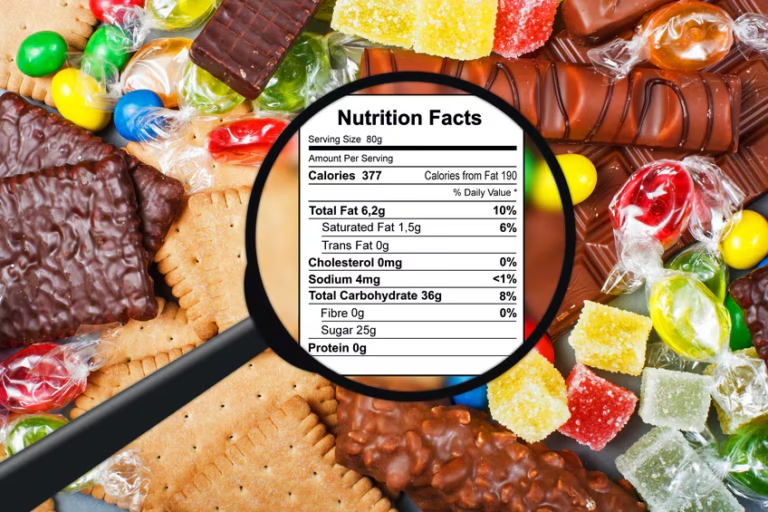
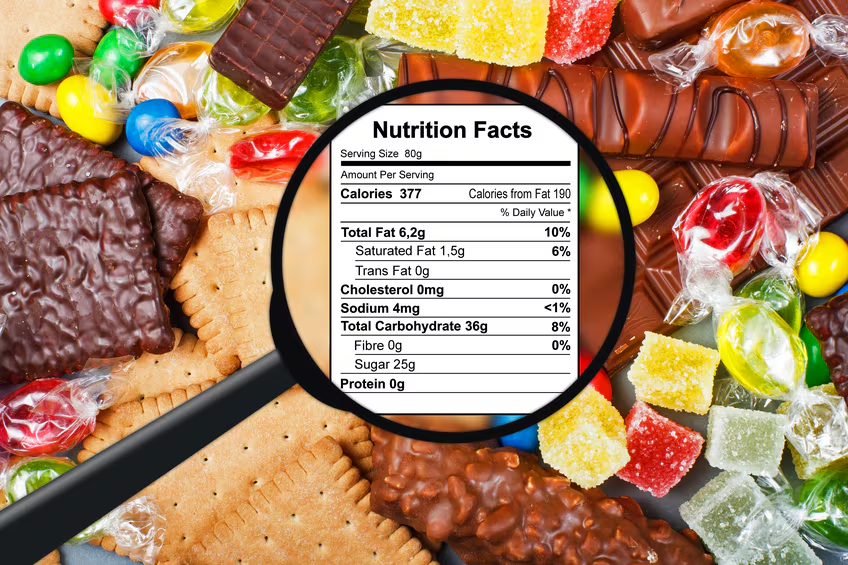
Food labels can appear technical, but most people do not need to understand every line. Start by checking the sugar colour code, then look at the amount of sugar, the quantity used for that figure, the serving size and where sugar appears in the ingredient list. Comparing similar products side by side is often more useful than trying to memorise perfect numbers.
| Check this | Why it matters |
|---|---|
| Colour code | Gives a quick warning about sugar level |
| Sugar per 100g / 100ml | Makes comparison between products easier |
| Serving size | Your actual portion may be larger than the label’s example |
| Ingredients | Helps identify added sweeteners and sugary ingredients |
| How often you eat it | A small amount every day can matter more than an occasional treat |
The final point is often forgotten. A food does not become healthy simply because the packet is small, and a high-sugar product does not become disastrous because you eat it occasionally. The bigger issue is the pattern created when breakfast, tea, snacks, drinks and dessert all quietly add sugar to the same day.
The Label Is There for Us – We Have to Use It
Sri Lanka has spent years putting more nutrition information and colour warnings onto food packaging, but regulation cannot make the decision at the supermarket shelf for us. The next stage of public awareness should therefore be less about frightening people with the word “sugar” and more about teaching families how to recognise high-sugar products, compare choices and prevent very sweet food from becoming the automatic daily option.
This matters especially for children, because today’s everyday snack can become tomorrow’s normal taste preference. It also matters for adults who may already have diabetes risks without knowing them, because dietary habits are often built through dozens of small choices rather than one obviously unhealthy meal. Before opening the packet, take five seconds to read what it is already telling you.
For more context on what Sri Lankan food labels are supposed to tell consumers, read Ceylon Public Affairs’ analysis on Sri Lanka food packaging standards and labels. Parents may also find our examination of the Sri Lanka school junk food ban 2026 useful when thinking about children’s food environments. Both issues lead back to the same principle: healthier choices become easier when clear information and everyday awareness work together.
This article is for public-awareness and educational purposes only. It is based on Sri Lankan Ministry of Health regulations, WHO guidance, the Sri Lanka STEPS survey and published scientific research reviewed up to 21 September 2026. Anyone with diabetes, another medical condition or specific dietary needs should seek personalised advice from a qualified healthcare professional.