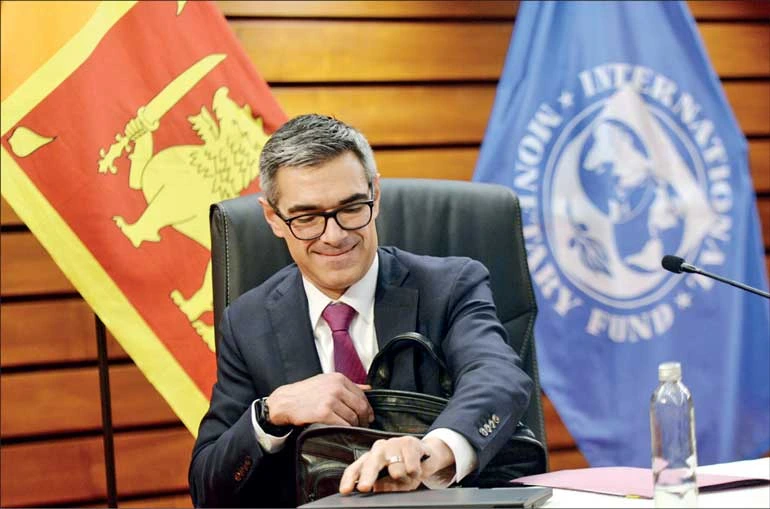

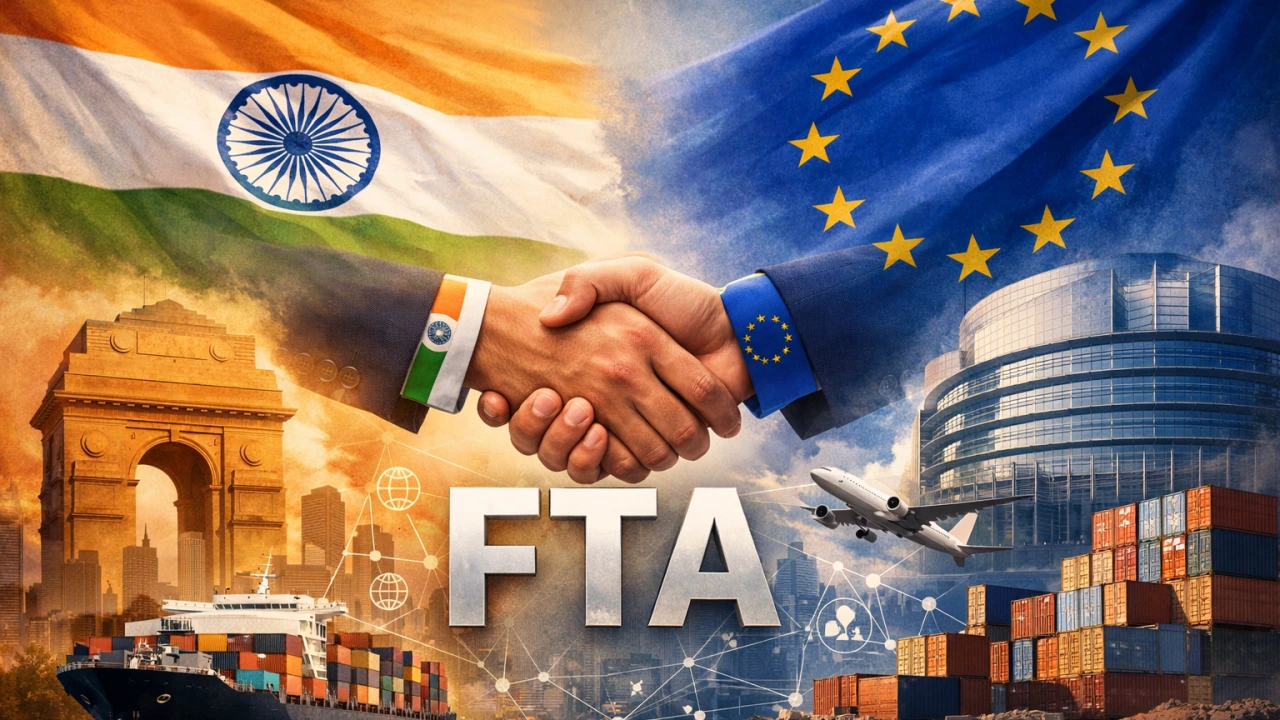
EU India FTA Sri Lanka concerns have moved from a distant trade-policy discussion to an immediate question of national preparedness. On 24 August 2026, the Sri Lanka Export Development Board met consultants appointed by the European Commission to examine the potential implications of the EU–India Free Trade Agreement for Sri Lankan exports. The timing matters because negotiations were concluded on 27 January 2026, but the agreement has not yet entered into force and still requires legal review, signature and ratification procedures.
That gives Sri Lanka something valuable: time. The country has not already lost its EU market position because of the agreement, and it would be misleading to interpret current export movements as evidence of an FTA effect that has not yet begun. What Sri Lanka does have is a clearly visible change approaching in one of its most important export markets, and the sensible policy response is to prepare before tariff preferences, sourcing decisions and investment patterns begin adjusting around it.
The European Union currently accounts for approximately 24% of Sri Lanka’s merchandise exports and remains the country’s second-largest export destination after the United States. That exposure makes this more than a technical trade-negotiation issue. It touches industrial employment, household income, foreign-exchange earnings, regional factory economies and the broader export-led recovery Sri Lanka is trying to build.
EU India FTA Sri Lanka: Why the Competitive Landscape Could Change
According to the EDB’s 24 August assessment, the EU–India agreement is expected to improve market access for a number of labour-intensive Indian exports, including apparel, marine products, leather and footwear, chemicals, plastics and rubber, sporting goods, toys, and gems and jewellery. Many products are expected to obtain substantial tariff liberalisation once the agreement becomes operational.
For Sri Lanka, the issue is relative competitiveness. Sri Lankan products do not suddenly become less efficient when an Indian product receives better market access. What changes is the commercial comparison facing a European buyer. If two suppliers can meet similar quality, delivery and compliance requirements but one begins benefiting from a more favourable tariff structure, sourcing calculations may change.
This does not mean European orders will automatically migrate to India. Buyers consider quality, reliability, lead times, sustainability, specialised manufacturing capability and established supplier relationships alongside tariffs. Sri Lanka already has strengths in many of these areas. The concern is that the country’s existing advantages may need to work harder once India receives improved preferential access.
GSP+ Has Become Even More Strategically Important
Sri Lanka’s present preferential access to the EU through GSP+ therefore becomes more important, not less important.
EDB Chairman Mangala Wijesinghe has specifically highlighted the need to safeguard Sri Lanka’s preferential market access and continue meeting the requirements of the EU’s revised GSP framework. Sri Lanka has also officially stated its intention to seek continued access under the next GSP cycle.
The difference matters because GSP+ and a bilateral FTA are not identical trade instruments. Sri Lanka’s preferential treatment under GSP+ is linked to compliance requirements, while India is moving towards a negotiated bilateral trade arrangement with the EU.
For Sri Lanka, maintaining GSP+ should therefore be viewed not simply as a diplomatic objective but as part of economic and social stability. A sudden deterioration in market access would not remain inside exporter balance sheets. It could eventually affect factories, supplier networks, logistics operators and communities whose household incomes depend on export industries.
The safest approach is to make continued preferential access part of a long-term competitiveness strategy rather than relying on tariff preference alone.
Apparel Is Where the Social Consequences Become Visible
The apparel sector illustrates why this discussion belongs in socio-economic policy rather than only business analysis.
EDB data show that Sri Lankan apparel generated approximately US$5.30 billion in export revenue in 2025 and directly employs around 350,000 people. The sector also supports a wider network of suppliers and services across the economy.
That means even modest changes in long-term competitiveness can carry wider effects. Export factories support transport providers, food suppliers, accommodation, packaging businesses and local commerce. Manufacturing jobs also distribute export income beyond Colombo into industrial zones and regional communities.
Sri Lanka should therefore avoid framing the response as a race to become the cheapest apparel producer in South Asia. Competing primarily through lower labour costs would weaken one of the country’s established advantages: its reputation for ethical, higher-quality and increasingly sophisticated manufacturing.
The stronger path is to increase the value generated per worker and per exported product through technical apparel, design, research, product development, shorter production cycles, sustainability credentials and specialised manufacturing. The EDB itself identifies this movement towards higher-value and differentiated products as an important response to the changing EU market.
Rules of Origin May Become One of the Most Important Technical Issues
The most immediate technical concern raised at the EDB meeting relates to rules of origin and regional cumulation, particularly for Sri Lankan apparel manufacturers using Indian-origin fabrics and other inputs.
Rules of origin determine whether a product contains sufficient qualifying production or inputs to receive preferential tariff treatment. For a country such as Sri Lanka, which imports part of its manufacturing inputs, the exact treatment of those inputs can materially affect whether a finished export qualifies for preferential access.
Industry representatives therefore raised the question of how Indian-origin inputs used in garments manufactured in Sri Lanka would be treated once India’s own EU agreement becomes operational. The EDB states that the Government intends to engage with the European Union on appropriate cumulation arrangements with India.
This is precisely the kind of issue Sri Lanka needs to resolve before implementation rather than afterwards.
The country should not assume that existing sourcing models will automatically retain the same preferential treatment under a changed regional trade structure. At the same time, it would be premature to claim that Sri Lankan exporters will definitely lose the ability to use Indian inputs competitively. The final legal arrangements and applicable origin provisions will determine the outcome.
Sri Lanka’s negotiating objective should be clear: regional supply-chain integration should strengthen local manufacturing, not unintentionally penalise it.
Current Export Numbers Should Not Be Misread
Sri Lanka enters this transition from a mixed but still relatively resilient export position.
EDB figures show that exports to the EU increased 13.36% year on year during January to May 2026, when the bloc represented around 25.5% of merchandise exports during that period. At the same time, apparel experienced weaker conditions in June, with total apparel and textile exports declining 11.74% year on year and shipments to the EU falling 17.79% for that month.
These movements cannot reasonably be attributed to the EU–India FTA because it is not operational.
They instead demonstrate why Sri Lanka should avoid approaching the new agreement from a position of complacency. Export industries already face changing consumer demand, production costs and international competition. A major trade agreement affecting one of the world’s largest manufacturing economies will enter this environment as an additional structural change.
Preparedness therefore means strengthening competitiveness before companies are forced to react under pressure.
The Risk Is Not Limited to Export Orders
A major FTA can also influence investment decisions.
The European Commission consultants engaged by the EDB noted that economic modelling points towards stronger Indian exports to Europe and potentially increased foreign direct investment into India after implementation.
For Sri Lanka, that creates another reason to improve the domestic investment environment. A manufacturer deciding where to expand production may compare market access, energy reliability, logistics, labour skills, regulatory predictability and the ability to connect with regional supply chains.
Sri Lanka cannot compete with India’s domestic scale. It does not need to.
Its opportunity is to become a smaller but highly reliable production and services platform connected to both India and global markets. That requires efficient ports, predictable trade procedures, skilled labour, faster customs processes and investment in technology rather than attempting to reproduce India’s manufacturing model.
The Government’s National Export Development Plan 2026–2030 already identifies integration into regional and global value chains, export diversification and movement towards a more knowledge-intensive economy as national priorities. The EU–India FTA makes implementation of that strategy more urgent.
Sri Lanka Needs a Preparedness Framework Before the FTA Takes Effect
The response should begin with a sector-by-sector exposure assessment. Apparel cannot be treated in the same way as rubber products, seafood, gems or chemicals. Government and industry should identify which tariff lines face the greatest potential change, where Sri Lanka retains a non-price advantage and where exporters may require product or market diversification.
Rules-of-origin negotiations should be treated as a priority, particularly where Indian materials already form part of Sri Lankan supply chains. At the same time, GSP+ continuity requires sustained attention because preferential access remains one of the country’s strongest tools in the European market.
The next layer is productivity. Sri Lanka cannot permanently defend market share through concessions alone. Exporters need support for automation, testing, certification, energy efficiency, digitalisation, product development and compliance with increasingly demanding European environmental and traceability standards.
SMEs also require attention. Large exporters generally have greater capacity to interpret new trade rules, modify sourcing strategies and invest in compliance. Smaller suppliers may discover changes later and face greater adjustment costs. EDB-led technical guidance should therefore reach regional and smaller enterprises well before the FTA becomes operational.
Finally, Sri Lanka should diversify without withdrawing from Europe. The EU is too important a market to treat diversification as replacement. The better strategy is to retain and deepen European access while simultaneously building stronger positions elsewhere.
Preparation Is More Valuable Than Alarm
The EU–India FTA represents a real competitive change, but Sri Lanka still has time to respond rationally.
India gaining better access to Europe does not automatically mean Sri Lanka loses. Sri Lanka’s outcome will depend on whether it protects preferential access, resolves rules-of-origin questions, improves productivity and gives exporters enough information to adapt before the new trade structure becomes operational.
This is also why the issue should not be reduced to apparel-company margins. Export competitiveness supports employment, foreign-exchange earnings, supplier ecosystems and household income. Losing competitiveness can therefore become a social issue; strengthening it can support a broader and more durable recovery.
The EDB’s decision to engage with European Commission-appointed consultants before implementation is consequently a useful start. The more important test will be whether those discussions translate into trade negotiations, industry preparation and measurable improvements in productivity.
Sri Lanka does not need to wait until Indian goods begin entering Europe under the new agreement to discover where its vulnerabilities are. The advantage of seeing the change early is the ability to adjust before the market forces the adjustment upon us.
The EU–India FTA has not yet rewritten Sri Lanka’s export position. What it has done is give the country a deadline for strengthening it.
This analysis is for educational and public-affairs purposes only. It is based on official Government of Sri Lanka and Sri Lanka Export Development Board information reviewed up to 25 August 2026. It does not constitute trade, financial, investment or legal advice.
For more economic and socio-economic public-affairs analysis, visit Ceylon Public Affairs.