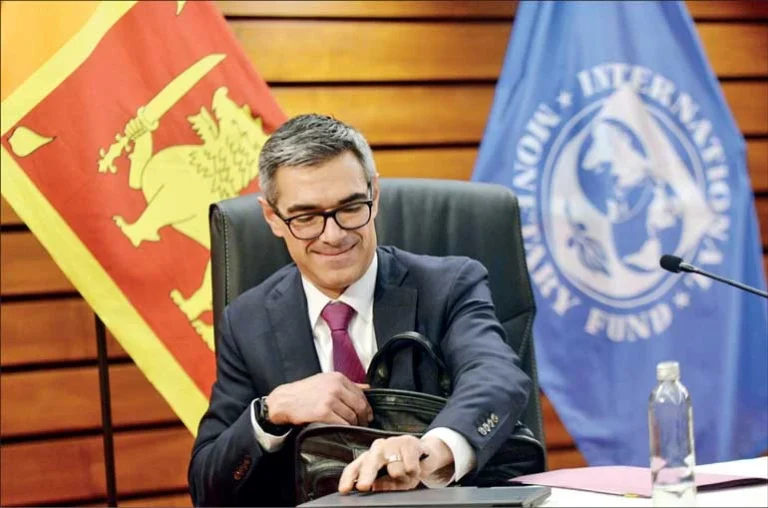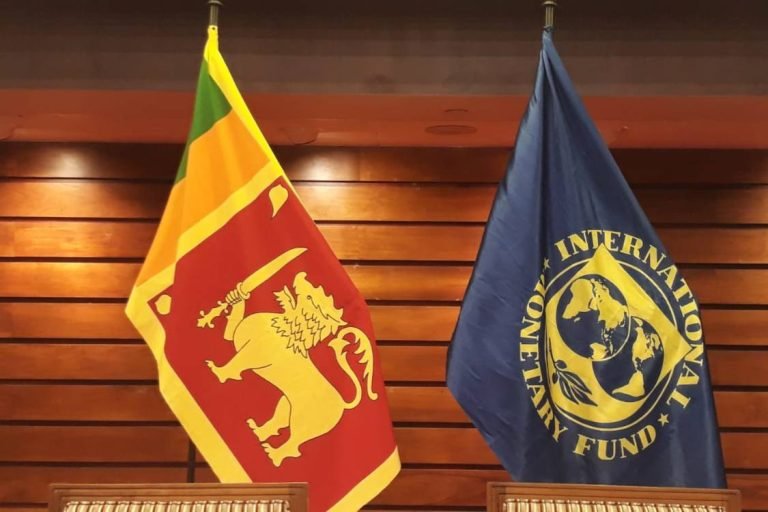

Sri Lanka IMF staff-level agreement 2026 has now been reached, closing the most important gap left after the IMF mission ended in September without an agreement. On 4 October, IMF staff and the Sri Lankan authorities announced that they had agreed on the economic policies needed to conclude the Seventh Review of the country’s Extended Fund Facility arrangement. If the review is subsequently approved by the IMF Executive Board, Sri Lanka will gain access to approximately US$345 million in additional financing. That is an important programme milestone, but it is equally important to understand what has happened, what has not happened yet and why the IMF is still warning that Sri Lanka cannot relax its reform effort.
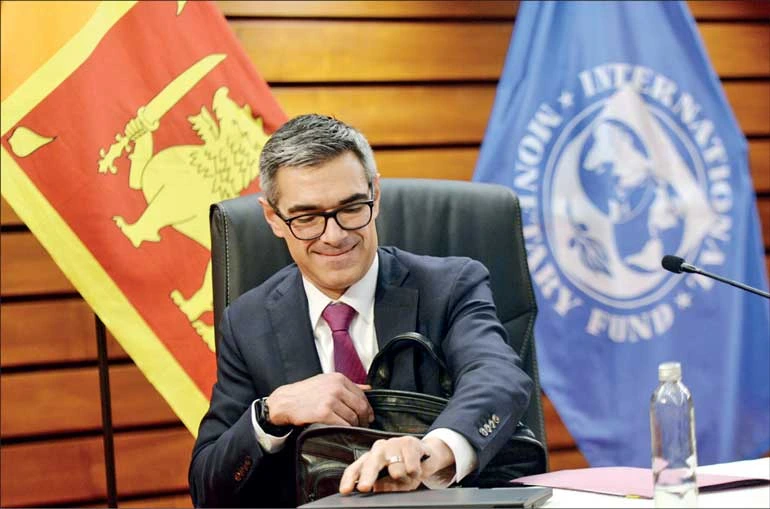
The announcement comes after several weeks of unusually visible uncertainty around the review. IMF Mission Chief Evan Papageorgiou and his team were in Sri Lanka from 10 to 23 September, but the mission ended with both sides saying discussions would have to continue before a staff-level agreement could be reached. Those discussions then continued virtually, and the new official IMF announcement confirms that the remaining policy discussions have now advanced sufficiently for IMF staff and the authorities to agree.
Sri Lanka IMF Staff-Level Agreement 2026: What Changed on 4 October?
The simplest way to understand the latest development is to separate three stages that are often mixed together in public discussion. An IMF mission can finish without reaching an agreement, a staff-level agreement can later be reached after further discussions, and only after the IMF Executive Board completes the review does the associated financing become available. Sri Lanka has now moved from the second of those stages towards the third, but it has not yet received the US$345 million attached to the Seventh Review.
| Stage | Position |
|---|---|
| 10–23 September mission | Discussions held on the Seventh Review |
| 23 September | Mission ended without staff-level agreement |
| 4 October | Staff-level agreement reached after further discussions |
| Next step | IMF Executive Board consideration and approval |
| Financing after approval | About US$345 million |
This distinction matters because the phrase “IMF agreement” can easily be understood as though the money has already arrived. It has not. The new agreement means IMF staff and Sri Lankan authorities have reached a common position on the policies needed to conclude the review, while the formal approval process still has to be completed.
Why the Agreement Matters Even Before the Money Arrives
The US$345 million is important, particularly for a country still rebuilding external buffers after a severe balance-of-payments crisis. Yet the financial amount alone does not explain why staff-level agreement matters. The IMF programme also works as a signal that the country’s economic policies remain sufficiently aligned with the programme for the review to move forward.
This matters to other development partners, creditors and investors because Sri Lanka’s recovery still depends heavily on policy credibility. The country has made substantial progress since the 2022 crisis, but debt sustainability, reserves, fiscal management and exposure to external shocks remain important concerns. Reaching agreement after additional discussions indicates that the September delay was a negotiation period within the review process rather than evidence that the programme had collapsed.
The latest statement from Papageorgiou describes the economy as continuing to show resilience despite successive shocks and connects that resilience with reforms already carried out by the authorities. That is an important acknowledgement of progress, but it comes with an equally important qualification: risks remain significant, especially because of the continuing war in the Middle East.
The Middle East Risk Has Not Disappeared Because an Agreement Was Reached
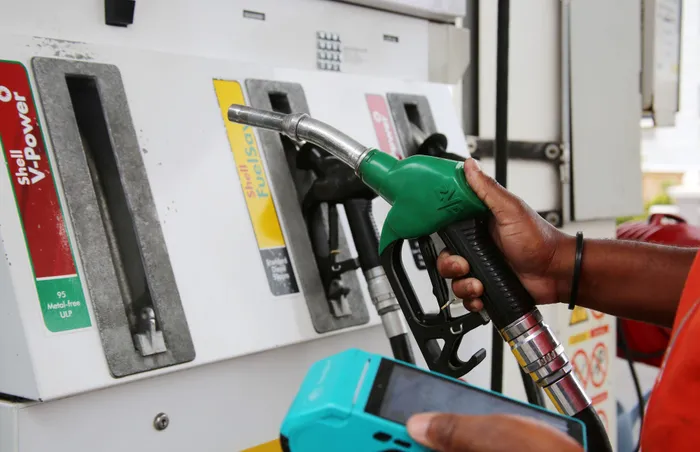
Sri Lanka remains unusually exposed to changes in global energy prices because it imports a large share of the fuel required by households, transport and industry. Higher international oil prices increase the country’s import bill, create additional demand for foreign exchange and can feed into domestic transport, electricity and production costs. The October agreement therefore arrives at a time when external resilience remains just as important as meeting individual programme conditions.
The Middle East also matters beyond oil. The region is important for Sri Lankan migrant workers and remittance flows, while disruptions to aviation routes can affect tourism and travel costs. This is why Papageorgiou’s latest statement again stresses that Sri Lanka must protect the “hard-won gains” of the recovery rather than assume that macroeconomic stability is now permanent.
The wording is worth paying attention to because the IMF is not describing Sri Lanka as being back in crisis. It is saying that a country which has rebuilt some fiscal and external space now has more ability to face shocks than it did several years ago, but that this space can be lost if reforms weaken or an external shock becomes severe. The policy challenge has therefore moved from emergency stabilisation towards protecting the stability that has already been achieved.
US$345 Million Is the Next Instalment, Not a New Programme
Another point that deserves clarity is the size and nature of the financing. Sri Lanka’s four-year EFF arrangement was originally approved in March 2023 for approximately SDR 2.286 billion, or about US$3 billion. Following completion of the combined Fifth and Sixth Reviews in May 2026, total IMF financial support released under the programme reached approximately US$2.4 billion.
If the Executive Board completes the Seventh Review and releases another approximately US$345 million, cumulative support under the arrangement would move to roughly US$2.7–2.8 billion, depending on the exchange rates used to translate the IMF’s SDR amounts into US dollars. The exact dollar total can change because IMF programme commitments are formally denominated in Special Drawing Rights rather than fixed US-dollar amounts.
This is therefore not a new bailout or a second IMF programme. It is another scheduled financing step under the existing EFF, conditional on Sri Lanka continuing to meet the programme’s agreed economic and structural requirements.
The More Important Question Is What Sri Lanka Agreed to Keep Doing
The October announcement should also be read together with what the IMF said when its mission ended on 23 September. At that time, the Fund identified medium-term revenue reform, energy cost recovery and better execution of public investment as key policy priorities. It also highlighted inflation risks, governance, structural reform and the need to strengthen the conditions for investment and growth.
The staff-level agreement means that the policy discussions surrounding the Seventh Review have advanced, but it does not mean these issues have disappeared. Sri Lanka still needs government revenue that is sustainable without continually increasing pressure on the same taxpayers, while tax administration and compliance need to improve. Electricity and fuel pricing also remain sensitive because the country has to protect consumers without recreating large losses inside State institutions.
Public investment is another area where the debate should move beyond how much money appears in the Budget. Roads, hospitals, schools, water systems and reconstruction programmes create economic value only when projects can actually move through approval, procurement and implementation. The IMF’s repeated focus on execution is therefore closely connected with Sri Lanka’s ability to turn fiscal stability into visible improvements in people’s lives.
Reform Fatigue Is Now a Bigger Political Risk
A difficult stage of economic recovery begins when the emergency has faded but the reforms continue. During the height of a crisis, the public can see why extraordinary measures are being taken because shortages, inflation and financial instability are visible everywhere. Several years later, people understandably begin asking when fiscal discipline, taxation and restructuring will translate into better incomes, stronger public services and more secure employment.
That makes communication particularly important after the Seventh Review agreement. The Government should not present IMF approval itself as the final measure of economic success, because households experience the economy through food prices, transport costs, wages, employment and public services. At the same time, abruptly abandoning policies that helped rebuild reserves and government finances could create another cycle of instability whose cost would again fall heavily on ordinary households.
Sri Lanka therefore needs to move beyond the argument that there are only two choices: permanently following austerity or abandoning reform. The more useful policy question is how fiscal stability can create room for better-targeted social protection, productive public investment and private-sector growth while maintaining debt and external sustainability.
What Does This Mean for the Next IMF Disbursement?
For people searching when will Sri Lanka receive IMF US$345 million, there is not yet a confirmed payment date in the latest announcement. The IMF has clearly stated that access to the approximately US$345 million depends on approval of the Seventh Review by its Executive Board. Until that approval happens, the financing should be described as expected or potentially available, not as money Sri Lanka has already received.
The Executive Board stage matters because a staff-level agreement represents the conclusions of IMF staff and the national authorities, while formal programme decisions belong to the Fund’s Executive Board. The staff will therefore move the review through the required institutional process before the financing can become available. Any additional conditions or formal requirements stated by the IMF before Board consideration should be assessed from the official documentation when it is published rather than assumed in advance.
What Our Earlier Analyses Got Right – and What Has Now Changed
Before the September mission began, Ceylon Public Affairs examined what the Seventh Review was likely to test, particularly inflation, external pressure, fuel costs, tourism, reserve accumulation and the programme commitments Sri Lanka had been implementing. That analysis argued that the review would be more difficult than a routine programme check because the economy was facing new external pressures even while the recovery remained intact.
When the IMF mission ended on 23 September, our second analysis explained why the absence of a staff-level agreement did not mean the Seventh Review had failed. The IMF had explicitly said discussions would continue in the near term, and we cautioned against describing the review as completed or another disbursement as approved before that happened.
The 4 October announcement changes one important part of that position. The staff-level agreement that was still outstanding on 23 September has now been reached, confirming that the continued discussions produced an agreement. What has not changed is the distinction we made between a mission, a staff-level agreement and final Executive Board approval: Sri Lanka has passed the second stage, but the Seventh Review and US$345 million financing still require the final formal step.
The Agreement Is Progress, but the Real Test Comes After It
Sri Lanka has therefore reached an important point in the EFF programme. The country entered the September mission with stronger growth, higher reserves and substantially better fiscal conditions than during the crisis, but also with renewed inflation and external pressures linked partly to the Middle East conflict. The staff-level agreement indicates that Sri Lanka and the IMF have now found sufficient common ground on the policy framework for the Seventh Review to move forward.
That is worth recognising, but it should not become another moment where programme approval is mistaken for economic completion. Sri Lanka’s deeper challenge is to turn macroeconomic resilience into productivity, investment, employment and better living standards without rebuilding the fiscal and external vulnerabilities that led to the crisis. Continued reform will matter, but so will the quality, fairness and implementation of those reforms.
The next headline will likely be about the IMF Executive Board and the US$345 million. The more important story will continue long after that meeting: whether Sri Lanka can use the stability created during the EFF years to build an economy that is less vulnerable when the next global shock arrives. That is ultimately how this Seventh Review should be judged, not simply by whether another instalment is released, but by whether the country becomes progressively less dependent on emergency support in the future.
This Ceylon Public Affairs analysis is based primarily on the IMF’s official staff-level agreement announcement of 4 October 2026 and earlier official IMF statements relating to the Seventh Review. The staff-level agreement remains subject to IMF Executive Board approval, and the approximately US$345 million associated with the review has not been described here as disbursed before that approval.