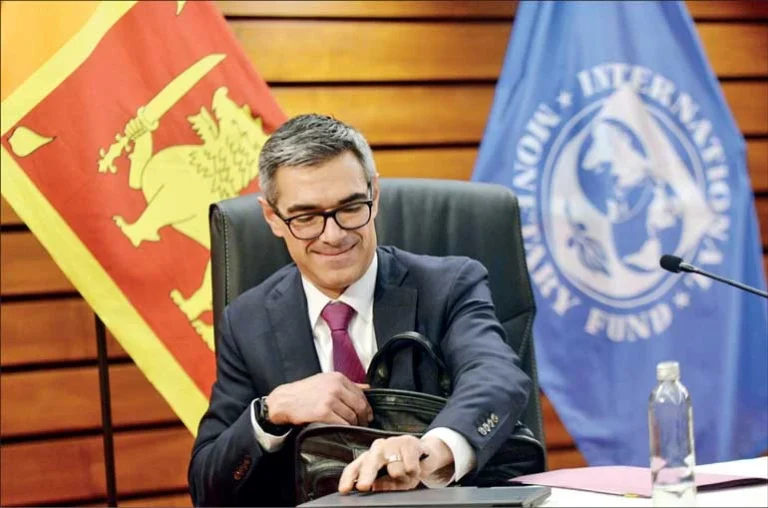

Sri Lanka IMF Seventh Review 2026 now has a confirmed timetable. IMF Mission Chief for Sri Lanka Evan Papageorgiou has announced that the IMF country team will visit the country from 10 to 23 September, ending the uncertainty that remained after the Fund’s June visit when the mission was described only as taking place during the fall.
The September visit will have two distinct purposes. The team will discuss the Seventh Review of Sri Lanka’s reform programme under the Extended Fund Facility, while simultaneously conducting the 2026 Article IV Consultation, the IMF’s broader periodic assessment of the economy, its policies, risks and medium-term outlook.
That distinction matters. This is not a new IMF agreement, a fresh disbursement or evidence that the Seventh Review has already been completed. Sri Lanka remains at the stage reached after the combined Fifth and Sixth Reviews, when the Executive Board approved access to approximately US$695 million, bringing total purchases under the programme to about US$2.4 billion of the roughly US$3 billion EFF arrangement.
What has changed since then is the economy the IMF team will be examining.
Sri Lanka IMF Seventh Review 2026: The September Mission Is More Than a Routine Check
When the IMF team visited Colombo between 24 and 30 June, it was not conducting a formal programme review. The Fund said explicitly that programme performance would instead be assessed during the Seventh Review and noted that the Middle East conflict had already increased pressure through energy prices, inflation, tourism and reserve accumulation.
During that June IMF visit, Papageorgiou emphasised fiscal and external sustainability, prudent monetary policy, exchange-rate flexibility, continued reserve accumulation, cost-recovery energy pricing and stronger public financial management. He also highlighted the importance of protecting vulnerable households while preserving the reform programme.
Those issues have not disappeared during the two months since.
In several areas, the latest data have made them more important.
The Seventh Review should therefore not be understood simply as the IMF checking whether Sri Lanka completed a list of legislative reforms. It will also test whether the macroeconomic framework agreed earlier in the year remains credible after new price, trade and external-sector pressures.
Inflation Has Moved Well Above the Earlier IMF Projection
The most visible change is inflation.
Colombo Consumer Price Index headline inflation accelerated to 8.0% year on year in August 2026, up from 7.3% in July. Food inflation increased to 8.5%, while core inflation rose to 5.1%. CBSL said the acceleration in headline inflation was driven mainly by a statistical base effect in food prices, although the Bank still expects inflation to remain above its 5% target in the near term.
This needs careful interpretation.
Eight per cent inflation does not itself mean the IMF programme has failed. The original May programme projections were prepared amid substantial uncertainty surrounding the Middle East conflict and expected average inflation of about 5% for 2026, with end-period inflation of 6.1%. The Fund also explicitly warned that higher oil prices could push inflation higher.
But 8% changes the policy conversation.
The September mission will need to assess whether inflation is primarily the temporary result of energy shocks and base effects, as current projections assume, or whether broader price pressures are beginning to become more persistent.
For households, this distinction may sound technical, but the social consequences are not. Food, transport, utilities and other essential costs determine how much of the recovery is actually felt outside macroeconomic statistics.
A programme that restores reserves and fiscal discipline while households experience a renewed erosion of purchasing power will face a much harder social environment.
Four Consecutive Current-Account Deficits Change the External Picture
The external account presents the second major issue.
Sri Lanka recorded a US$142 million current-account deficit in July, marking the fourth consecutive month in deficit. The cumulative current account moved to a US$387 million deficit during January–July 2026, compared with a surplus during the same period of 2025.
That number deserves context.
In May, the IMF projected a full-year 2026 current-account deficit of approximately US$534 million, equivalent to around 0.5% of GDP. By July, the cumulative deficit had already reached US$387 million. This does not mean the full-year projection will necessarily be exceeded because remittances, tourism, trade and import expenditure can change considerably during the remaining months.
It does mean the September discussions will occur against a considerably tighter external position.
The merchandise trade deficit widened to US$6.5 billion during January–July, compared with US$3.9 billion a year earlier. That expansion reflects both stronger imports associated with economic normalisation and the significant effect of higher energy expenditure.
Sri Lanka is therefore confronting a familiar recovery dilemma.
As domestic economic activity strengthens, businesses and households import more vehicles, machinery, intermediate goods and consumer products. That can support growth, but it simultaneously increases demand for foreign currency.
The IMF’s emphasis on rebuilding buffers is directly connected to this vulnerability.
Fuel Has Become One of the Clearest External Risks
Energy expenditure is now particularly significant.
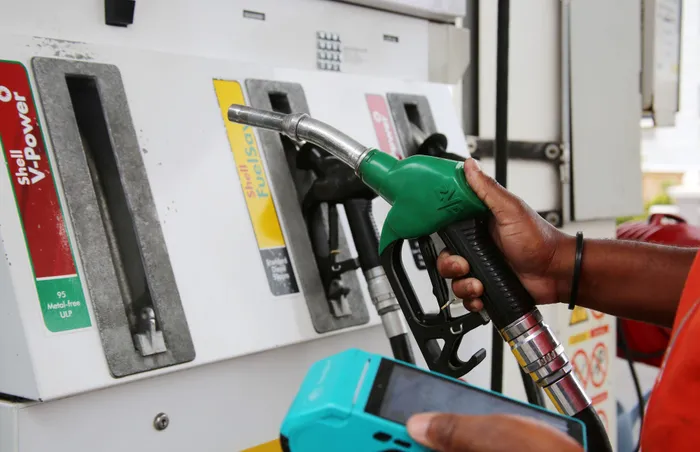
Fuel-import expenditure reached approximately US$3.62 billion during the first seven months of 2026, representing a 59.9% increase year on year. July fuel imports alone cost around US$453 million, 68% higher than in July 2025, largely because of higher expenditure on crude oil.
This is not simply an oil-company or trade statistic.
Sri Lanka imports much of the energy required for transport, electricity generation and productive activity. Higher global energy costs therefore spread through the economy through foreign-exchange demand, transport costs, electricity costs, inflation and ultimately household expenditure.
That explains why the IMF has repeatedly focused on cost-recovery energy pricing.
Allowing State enterprises to absorb higher fuel or electricity costs without corresponding pricing or budgetary support may protect consumers temporarily, but it can recreate quasi-fiscal losses elsewhere in the public sector.
The more difficult policy task is maintaining financial sustainability while ensuring targeted support reaches households that genuinely cannot absorb sharp energy-price increases.
Tourism Is Recovering, but Not Providing the Same Buffer
Tourism is another area the September mission will examine closely.
Sri Lanka recorded 196,845 tourist arrivals in July, 1.7% lower than a year earlier. More importantly for the balance of payments, estimated tourism earnings were about US$286 million, down 10.3% year on year. During January–July, tourism earnings declined 11.5% to approximately US$1.8 billion.
Again, this is not evidence of a tourism-sector collapse.
July earnings were substantially stronger than June on a month-to-month basis, and Sri Lanka continues to receive significant tourism inflows. The relevant concern is that tourism is currently contributing less foreign exchange than policymakers might have expected earlier in the recovery.
That matters because tourism had become one of the major sources helping compensate for merchandise trade deficits.
When tourism weakens while fuel imports increase, the burden on other foreign-exchange sources becomes heavier.
Remittances Remain One of the Strongest Buffers
The external picture is not uniformly negative.
Workers’ remittances increased to approximately US$778 million in July, 11.5% higher than a year earlier. Cumulative remittances during January–July reached around US$5.4 billion, representing growth of 21.4%.
That performance is economically significant.
Remittances are supporting household consumption and foreign-exchange availability at precisely the time when the merchandise trade account and tourism receipts are under pressure.
The Central Bank was also able to continue accumulating reserves. Gross official reserves, including the People’s Bank of China swap, stood at around US$6.6 billion at end-July.
So the correct interpretation is not that Sri Lanka has stopped rebuilding its external buffers.
It is that the cost of rebuilding those buffers has become harder because the economy is simultaneously absorbing a larger fuel bill and a wider trade deficit.
That is precisely where exchange-rate flexibility becomes relevant.
Exchange-Rate Flexibility Will Remain Central to the IMF Discussion
During the June visit, the IMF said exchange-rate flexibility was “paramount” for allowing the economy to adjust to external shocks while preserving reserve accumulation. It also said foreign-exchange intervention should be limited to addressing excessive volatility rather than preventing normal adjustment.
By the end of August, the Sri Lankan rupee had depreciated approximately 5.5% against the US dollar during 2026. CBSL nevertheless noted that the currency had appreciated somewhat during recent weeks following monetary, fiscal and macroprudential measures.
This is likely to remain a sensitive but important component of the Seventh Review.
A weaker currency raises the rupee cost of imported fuel and other goods, adding to inflation. But attempting to hold an exchange rate artificially stable through large reserve sales could undermine the reserve rebuilding that the IMF programme considers essential.
The policy challenge is therefore not choosing between a strong currency and a weak currency.
It is maintaining a credible market-determined exchange rate while preventing disorderly volatility and rebuilding enough reserves to withstand future shocks.
The Seventh Review Will Also Examine What Happened in August
The September mission begins immediately after a month containing several important IMF programme commitments.
Ceylon Public Affairs recently examined the end-August IMF commitments, including reforms concerning public-investment project readiness, electricity tariff methodology, reconstruction procurement transparency and operationalisation of the Meridien debt-management system.
Those reforms now move from deadline monitoring into formal review territory.
The mission will be in a stronger position than outside observers to assess not merely whether documents were published, but whether the underlying reforms meet the programme’s technical requirements and are actually being implemented.
That is particularly important for the electricity benchmark. A separate renewable-energy feed-in tariff decision should not be confused with the broader IMF requirement for a transparent cost-recovery electricity tariff methodology.
Likewise, the existence of a public-investment procedure is not automatically the same as satisfying the benchmark for standardised project-readiness and selection criteria.
The Seventh Review should provide greater clarity on these distinctions.
Article IV Makes This Mission Broader Than the EFF
The addition of the 2026 Article IV Consultation also gives the September visit a broader horizon.
An EFF review is primarily concerned with programme performance: quantitative targets, structural reforms, financing assurances and whether conditions exist for another programme disbursement.
An Article IV consultation looks beyond those immediate programme tests.
It examines the wider economy, including growth, inflation, fiscal policy, monetary conditions, financial stability, external sustainability and structural constraints over the medium term.
For Sri Lanka, that matters because the policy debate is gradually changing.
The country is no longer discussing only how to move out of the 2022 crisis. It must increasingly ask what kind of economy emerges after stabilisation: whether investment increases, whether productivity improves, whether employment becomes more secure and whether fiscal reforms produce better public services rather than simply stronger government accounts.
The September mission will therefore assess both whether Sri Lanka is staying within the recovery programme and whether the recovery itself is becoming sustainable.
This Is a More Difficult Review, Not Necessarily a Negative One
The latest data do not establish programme failure.
Sri Lanka continues to receive strong remittance inflows. Official reserves remain materially higher than during the crisis. The Government has recorded significant fiscal improvement, while economic activity in manufacturing and services remains in expansion territory.
But the environment confronting the Seventh Review is less comfortable than the one envisaged when the combined Fifth and Sixth Reviews were completed.
Inflation is higher.
The current account has been in deficit for four consecutive months.
Fuel costs have risen sharply.
Tourism earnings are weaker year on year.
And the country still needs to continue building reserves while allowing the exchange rate to absorb external pressure.
The September mission will therefore become an important test of whether Sri Lanka’s recovery framework can withstand a new external shock without reversing the gains achieved since 2022.
That is ultimately what an IMF programme should be judged against.
Not whether every economic indicator remains favourable, but whether institutions and policies are strong enough to respond when conditions become less favourable.
The team arriving on 10 September will have almost two weeks to examine that question.
What it concludes on 23 September may tell Sri Lanka considerably more about the quality of its recovery than another simple announcement of whether a benchmark was passed.
This analysis is for educational and public-affairs purposes only. It is based on IMF and Central Bank of Sri Lanka information publicly available and reviewed up to 4 September 2026. The scheduled mission does not itself constitute completion of the Seventh Review or approval of a further EFF disbursement. It does not constitute financial, investment or policy advice.