
Sri Lanka health system reform 2026 is beginning to reveal two different but equally important directions. On one side, Cabinet has committed more than Rs.5 billion to expand specialist cardiac infrastructure in Trincomalee and Anuradhapura. On the other, Sri Lanka has accepted an invitation from the World Health Organization to undertake a Universal Health and Preparedness Review, examining how well the entire State can identify, prevent and respond to future health emergencies.
Neither decision should be treated as competing policy. Sri Lanka still needs modern hospitals, specialised cardiac treatment, diagnostic capacity and geographically accessible tertiary care. Yet the country also faces an ageing population, a large non-communicable disease burden and the possibility of future epidemics, natural disasters and other health shocks that cannot be solved simply by adding hospital buildings.
The policy question is therefore becoming more sophisticated: can Sri Lanka continue strengthening treatment capacity while shifting enough investment upstream, towards preventing disease, detecting risk early, connecting patient records, strengthening primary care and ensuring that the health system continues functioning during emergencies?
Sri Lanka Health System Reform 2026: Two Cabinet Decisions, One Bigger Question
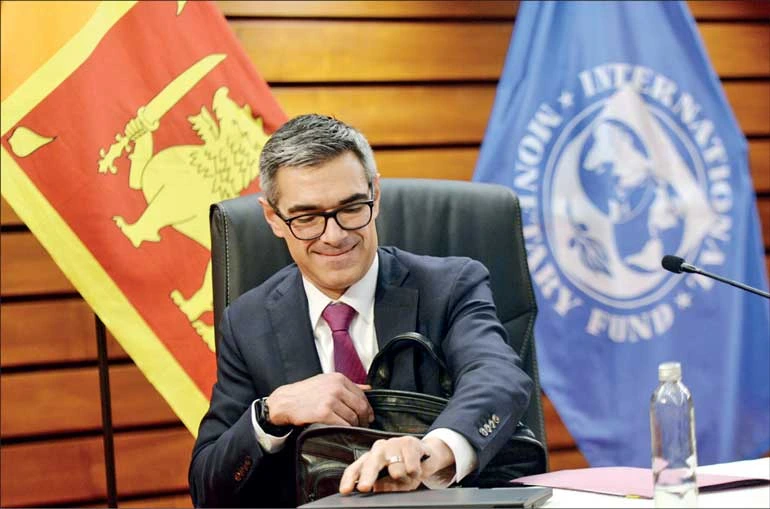
At the Cabinet meeting of 24 August, the Government accepted the WHO Director-General’s invitation for Sri Lanka to participate in the Universal Health and Preparedness Review. The Cabinet decision on the Universal Health and Preparedness Review describes the initiative as a voluntary process intended to strengthen Member States’ ability to identify, prevent and respond to health emergencies through a “Whole of Government” and “Whole of Society” approach.
The decision is significant because the UHPR is not simply another technical assessment of the Ministry of Health. WHO defines the mechanism as a voluntary, transparent and Member State-led peer-review process designed to elevate health-emergency preparedness to the highest levels of government, improve multisectoral coordination and encourage sustainable investment in preparedness.
At the same Cabinet meeting, the Government approved construction contracts for a new cardiology unit at Trincomalee District General Hospital valued at Rs.2,036.46 million and a new cardiology and cardiothoracic surgery complex at Anuradhapura Teaching Hospital valued at Rs.3,004.88 million, both excluding VAT. Together, the two packages amount to approximately Rs.5.04 billion.
The Cabinet decision on the two cardiac-care construction packages states that the work forms part of the Health and Medical Services Improvement Project initiated in 2018 with financing from the Japan International Cooperation Agency. The wider project seeks to improve cardiovascular diagnosis and treatment facilities across hospitals including Kandy, Anuradhapura, Kurunegala, Badulla and Trincomalee.
The New Cardiac Buildings Address a Genuine Need
It would be easy to frame new hospital construction as evidence that Sri Lanka remains too treatment-focused. That would be unfair.
Cardiovascular disease represents one of the country’s most important health burdens. Sri Lanka’s National Policy and Strategic Framework for Prevention and Control of Chronic Non-Communicable Diseases 2023–2033 cites estimates in which NCDs accounted for nearly 83% of deaths, with cardiovascular disease alone representing approximately 34%. The same policy identifies ischaemic heart disease as the leading cause of hospital death in the 2019 data on which the framework was developed.
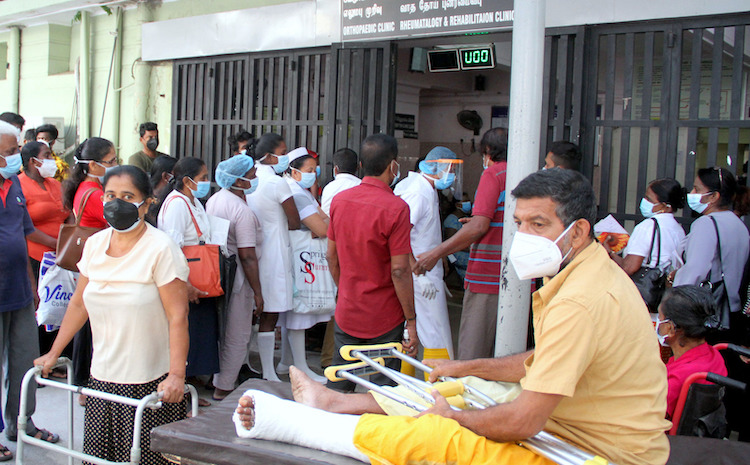
Expanding cardiac services in Anuradhapura and Trincomalee can therefore improve more than clinical capacity. Specialist services concentrated in a small number of major urban hospitals create indirect costs for patients and families who must travel long distances, find accommodation, lose working days and sometimes delay treatment.
Regional cardiac capacity can reduce these pressures and improve geographical equity. A patient in the North Central or Eastern regions should not need to depend routinely on Colombo simply because advanced diagnosis or surgery is unavailable closer to home.
The question is not whether Sri Lanka should build the facilities. It should.
The question is whether investment of this kind is being accompanied by sufficient investment in preventing the patients of the future from reaching the point where they require expensive tertiary intervention.
The Cheapest Heart Procedure Is Often the One That Never Becomes Necessary
Sri Lanka’s own NCD policy makes the case for prevention unusually clearly. It identifies tobacco and alcohol use, unhealthy diet, physical inactivity and psychological stress among the major modifiable behavioural risks and explicitly calls for prevention across the life course, early detection and integrated people-centred care.
That policy also states that primary healthcare should be strengthened to provide integrated NCD services, that screening coverage should improve and that referral and back-referral systems should be strengthened through shared-care clusters. It specifically calls for sustainable financing for NCD prevention at primary-care level.
These are not abstract policy ambitions. Sri Lanka’s NCD Directorate currently publishes primary-care guidelines covering hypertension, diabetes, cardiovascular-risk management and other chronic conditions, while Healthy Lifestyle Centres and other screening mechanisms already form part of the prevention system.
The policy direction therefore exists.
The more difficult issue is scale, consistency and public use. A prevention programme is only effective when people at risk are identified early, attend screening, receive affordable medicines, remain in follow-up and are referred before complications become emergencies.
A Rs.3 billion cardiac complex is highly visible. Thousands of successful blood-pressure interventions across hundreds of primary-care centres are much less visible, even though their cumulative health value may be enormous.
Primary Care Should Become the Front Door, Not the Last Resort
Sri Lanka has already invested in strengthening primary healthcare. The Health System Enhancement Project, supported through Asian Development Bank financing, was designed around improving the efficiency, equity and responsiveness of primary care, while also strengthening health-information systems and disease-surveillance capacity.
The project has tested shared-care clusters in which primary institutions are linked to higher-level hospitals rather than functioning as disconnected facilities. This model matters because stronger primary care is not simply about constructing smaller clinics. It is about creating continuity: screening at community level, routine management near home, appropriate referral to specialists and a functioning pathway back into local care after treatment.
Without that continuity, tertiary hospitals become overloaded with conditions that could be monitored or treated closer to the patient.
The WHO’s Sri Lanka Country Cooperation Strategy for 2024–2030 places the same emphasis on a primary-healthcare-oriented system, alongside disease prevention and stronger preparedness for all hazards.
This suggests that the strategic direction of Sri Lanka’s health system is already broader than hospital expansion. The next test is whether budgets, staffing and implementation consistently follow that strategy.
Digital Records Are Not an Optional Technology Project
The missing bridge between primary and tertiary care is increasingly information.
A patient may be screened for hypertension at one institution, admitted elsewhere after a cardiac event and then return to another facility for long-term medication. If those encounters remain in disconnected files, continuity depends heavily on what the patient can remember or physically carry between institutions.
Sri Lanka has recognised this problem. In April 2025, the Ministry of Health identified digitalisation as a major health-sector priority and began work on a strategic framework intended to improve health infrastructure and connect major digital-health initiatives.
The NCD policy goes further by calling for real-time health information, individual-level tracking and an accelerated shift towards digital information systems.
But digitalisation should not be measured by the number of hospitals possessing software.
The real test is interoperability.
A useful health record should allow authorised clinicians to understand a patient’s history across levels of care while preserving confidentiality and appropriate access controls. It should improve referrals, medication management, disease surveillance and planning rather than creating several electronic versions of the same disconnected paper system.
Why the WHO Preparedness Review Matters After COVID-19
The UHPR potentially brings these separate issues together.
WHO developed the review mechanism following the recognition that pandemic preparedness cannot be left entirely to health ministries. The organisation describes a process consisting of a national review followed by a global peer-review phase, with the country identifying strategic priorities and using those findings to strengthen health-security capacity, the wider health system and universal health coverage.
Sri Lanka’s Cabinet decision specifically states that the review should strengthen intersectoral coordination, develop an optimal administrative structure and help ensure financial commitment beyond earlier national and international health-sector assessment processes.
That is an important ambition.
During a major health emergency, hospital beds are only one component of preparedness. Laboratory capacity, epidemiological surveillance, medicine stocks, supply chains, emergency procurement, risk communication, local-government coordination, border health, trained personnel and reliable health information all matter.
Preparedness also requires financing arrangements that can activate before a crisis becomes catastrophic.
The UHPR should therefore be used to identify institutional weaknesses honestly rather than becoming another international report that receives attention when launched and little follow-through afterwards.
Resilience Must Include Ordinary Healthcare During an Emergency
One lesson from any major health shock is that the damage does not come only from the emergency itself.
When routine clinics are interrupted, patients with diabetes, hypertension, cancer or kidney disease can lose access to medicines and monitoring. Maternal care, vaccinations and elective procedures can also be disrupted when staff and resources are redirected.
Sri Lanka’s own NCD policy recognises this by explicitly calling for uninterrupted care for people living with NCDs during disasters and emergencies.
That connection between chronic disease and emergency preparedness deserves more attention.
A resilient system is not merely one capable of opening an emergency treatment centre quickly. It is one capable of responding to a new threat without allowing ordinary healthcare to collapse around it.
Digital records, stronger primary care, reliable medicine distribution and district-level coordination become emergency infrastructure for exactly this reason.
Sri Lanka Needs a Health-Investment Scorecard
The next stage should make the balance of health investment much easier to evaluate publicly.
Major hospital investments are announced with contract values, buildings and completion milestones. Prevention and resilience programmes should receive similarly measurable reporting.
Sri Lanka could publish annual indicators showing the proportion of high-risk adults screened for major NCDs, hypertension and diabetes control rates, primary-care utilisation, waiting periods for referrals, digital-record coverage, medicine availability and emergency-preparedness gaps identified through the UHPR.
Capital investment should also be assessed alongside operating capacity. A new cardiac complex requires cardiologists, surgeons, nurses, technicians, medicines, equipment maintenance and recurrent financing after construction ends.
A hospital building without the workforce and operating budget to use it fully is not completed health investment.
Likewise, prevention without accessible treatment after a risk is identified loses much of its value.
The Real Shift Is From Treating Illness to Managing Health
Sri Lanka should not choose between specialist hospitals and prevention.
The country needs cardiac centres capable of treating serious disease, particularly in regions where access has historically been limited. It also needs a health system that reduces how many people eventually require those centres.
The two Cabinet decisions of 24 August can therefore be read as parts of the same challenge.
One strengthens the capacity to treat disease that already exists.
The other creates an opportunity to examine whether the State itself is sufficiently prepared to prevent, detect and respond to threats before they overwhelm the healthcare system.
The strongest outcome would be for the Universal Health and Preparedness Review to become more than an emergency-planning exercise. It should examine whether Sri Lanka’s financing, primary care, information systems, workforce and inter-agency structures are capable of keeping people healthier during normal years as well as protecting them during exceptional ones.
The future of Sri Lankan healthcare should not be measured only by how advanced its hospitals become. It should also be measured by how many people can avoid needing those hospitals for conditions that could have been prevented, detected earlier or managed closer to home.
For further reading on the structural pressures facing the sector, see Sri Lanka’s Healthcare System Challenges.
This analysis is for educational and public-affairs purposes only. It is based on official Government of Sri Lanka, Ministry of Health and World Health Organization information reviewed up to 4 September 2026. Sri Lanka has approved participation in the UHPR process; this article does not imply that the review itself has already been completed. It does not constitute medical or policy advice.