
Sri Lanka bus culture change is something my generation has heard promised many times. Better buses. Better discipline. Better timetables. Digital payments. Safer roads. More comfortable public transport.
For many of us in Gen Z, however, the bus culture we actually grew up knowing was very different.
Then I read a LinkedIn article published by entrepreneur and writer Nayomini Weerasooriya, titled Will the bus culture change?, and realised that there was another Sri Lankan bus story before ours.
She remembers a generation of Ceylon Transport Board drivers in their khaki uniforms, old red buses with difficult gears and crews who knew their regular passengers well enough to sometimes wait for them. In her memory, the driver was not simply someone controlling a large vehicle. He was part of the community travelling inside it.
That is an interesting story to read as someone from Gen Z.
Because it almost sounds like she is describing another country.
Also in Explained | Sri Lanka’s New Metro Buses: A Welcome Step Forward, But When Will We Truly End the Overcrowded, Polluting Bus Culture?
Sri Lanka Bus Culture Change Across Two Generations
My generation does not have many romantic memories of everyday bus travel.
We know the sudden braking.
We know the conductor trying to fit another passenger into a bus that already appears physically incapable of accepting one.
We know the race between two buses operating on the same route.
We know the horn.
We definitely know the music.
And anyone who has spent enough time on Sri Lankan roads knows the uncomfortable moment when a bus suddenly crosses lanes as though road markings were simply suggestions.
Mrs Weerasooriya’s article describes that change through her own lifetime. As a Gen X, she remembers the older CTB culture, the arrival of private buses after 1977 and, eventually, the aggressive and unpredictable environment she later experienced on Colombo roads. She specifically writes about the challenge of sharing High Level Road with buses on Route 138 and her experience as a female passenger.
Then her story changes again.
She describes travelling with the newer Metro bus service and finding something surprisingly ordinary: polite staff, patient behaviour, adherence to road rules, consideration towards passengers with disabilities, scheduled operations and defined stops.
Ordinary things.
But when ordinary standards have been missing for long enough, they begin to feel revolutionary.
That may be the most important point in her story.
Gen Z Does Not Need Luxury. We Need Predictability.
When we discuss modernising public transport, it is easy to become obsessed with the vehicle.
Is it air-conditioned?
Does it have comfortable seats?
Is it electric?
Does it have USB charging?
Can passengers use an app?
Those things matter.
But from a Gen Z perspective, one of the biggest upgrades is much simpler: knowing what is going to happen.
When will the bus arrive?
Where will it stop?
How long should the journey take?
Can I track it?
Can I pay without searching for exact change?
Will the driver actually stop at the designated place?
Can an elderly passenger or someone with a disability board without being treated as an inconvenience?
Will I reach work, university or an appointment approximately when I planned to arrive?
That predictability changes behaviour.
A modern public-transport system does not have to persuade people with advertisements telling them buses are better.
It has to become reliable enough that people discover this themselves.
That is also the central argument in Mrs Weerasooriya’s reflection: cultural behaviour can shift when people experience an alternative that is visibly better and accessible enough to choose.
This Is Now Bigger Than a Pilot Project
What makes this conversation particularly timely is that Metro Transit is no longer just an isolated transport experiment.
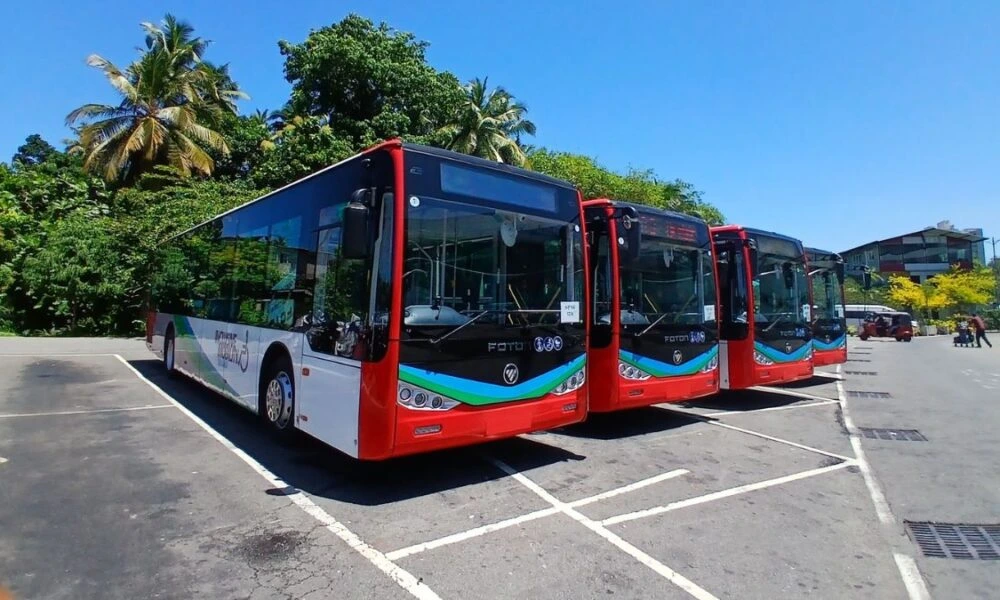
Lanka Metro Transit (Pvt) Ltd was incorporated on 3 October 2025 as a subsidiary of the Sri Lanka Transport Board. According to the Government, pilot urban operations began using 10 low-floor buses purchased through funding under the Clean Sri Lanka programme. The Government now says the pilot has demonstrated both commercial viability and public acceptance.
The next stage is considerably larger.
On 11 August 2026, Cabinet approval was announced for Rs.1,067.5 million in equity capital for Lanka Metro Transit. The Government says another 112 low-floor buses are planned to enter service in September, accompanied by infrastructure development including a central workshop and modern depots at Thalangama, Kadawatha, Ratmalana and Homagama.
Interestingly, that announcement arrived one day after Mrs Weerasooriya published her reflection.
One generation was writing about what buses once were and what they might become.
At almost the same moment, the State was committing more resources to expanding the model.
The Ministry of Transport is also developing a Metro Bus Digital Platform, including live passenger-information infrastructure and bus-stop display systems.
So we are no longer simply discussing new buses.
We are beginning to discuss a different operating system for bus travel.
But Please Do Not Let the New Buses Inherit the Old Culture
This is where my generation becomes slightly sceptical.
Sri Lanka is quite good at introducing something new.
Our harder problem is preserving the standard after the opening ceremony.
The buses can be new while the culture becomes old again.
A low-floor bus driven aggressively is still an unpleasant bus.
A digital timetable that is routinely ignored becomes another screen displaying information nobody trusts.
A beautifully designed bus stop becomes meaningless when buses stop fifty metres away because that is where passengers happen to be standing.
An accessible bus is not truly accessible if staff are impatient with someone who needs additional time to board.
And a new service will not create a national cultural shift if good behaviour depends entirely on the enthusiasm of the first group of employees.
The real test of Metro Transit will therefore not be whether passengers are impressed during its first year. It will be whether the same discipline still exists five years later.
That requires systems.
Drivers and conductors need professional training, performance standards and fair employment conditions.
Schedules need monitoring.
Complaints need to produce consequences.
Dangerous driving cannot be tolerated because a route is running late.
Cleanliness has to become operational routine.
Accessibility has to be treated as a right rather than customer service.
Technology should measure whether the service is actually performing as promised.
Culture changes when good behaviour stops depending on individual personality and becomes the expected standard.
Maybe Older Sri Lanka and Gen Z Want the Same Thing
There is something unexpectedly encouraging about reading Mrs Weerasooriya’s story as a younger generation.
Her generation remembers something we often describe as modern: a driver who behaved responsibly, recognised passengers and understood that transporting people came with a duty of care.
My generation wants something that sounds futuristic: live tracking, scheduled stops, digital information, accessible buses and predictable travel.
But underneath the technology, both generations may actually be asking for the same thing.
Respect for the passenger.
The old CTB driver showed it by waiting for someone he knew.
The modern system can show it by arriving when it said it would.
One is personal.
The other is institutional.
Sri Lanka probably needs both.
Technology can make public transport efficient, but service culture makes people trust it.
A Better Bus Can Change More Than Bus Travel
Public transport is also one of those rare public services experienced directly by almost every social class.
A better bus network affects the student travelling to class, the office worker going into Colombo, the elderly passenger visiting a hospital, the person with a disability trying to move independently and the worker spending a considerable part of each day commuting.
It can also influence people who currently avoid buses altogether.
If public transport becomes predictable, comfortable and safe enough, some people who currently depend on cars, motorcycles or three-wheelers may genuinely choose it.
That choice matters for congestion, household transport costs and the quality of urban life.
But people will not abandon private mobility because policymakers tell them public transport is socially desirable.
They will shift when the alternative becomes better.
On that point, Mrs Weerasooriya’s entrepreneur’s reading of the Metro experience is probably correct: people change habits after they experience a superior option, not simply after being lectured about why they should change.
This Gen Z Wants the Story to Continue
I did not grow up with the red CTB buses Mrs Weerasooriya describes.
I cannot tell you whether every driver of that generation really was as patient or dependable as memory makes them appear.
Every generation probably edits its past slightly.
But the contrast in her story still matters.
It tells us that what Sri Lankans now consider an unavoidable “bus culture” was not necessarily permanent.
Culture changed once.
Which means it can change again.
This time we have better technology, better vehicles and the ability to build services around data rather than guesswork.
What we cannot afford is to modernise the hardware without modernising the behaviour.
As a Gen Z, that is what makes this moment interesting.
For perhaps the first time in our generation’s memory, younger passengers could begin associating a Sri Lankan city bus with timeliness rather than racing, accessibility rather than inconvenience and professionalism rather than unpredictability.
And perhaps someone from Mrs Weerasooriya’s generation can step onto the same bus and recognise something familiar too, not the engine, the colour or the technology, but the feeling that the people operating it understand they are carrying human beings.
If that happens, the Metro buses will have achieved something much bigger than putting a modern fleet on Colombo’s roads.
They may have helped two generations recognise the same standard of public service in completely different-looking buses.
And that would be a bus culture change worth keeping.
Editor’s Note: This commentary was inspired by Mrs Nayomini Weerasooriya’s LinkedIn article Will the bus culture change?, published on 10 August 2026, and reflects the perspective of a Gen Z considering Sri Lanka’s public-transport transition across generations. Government information on the current Metro Transit expansion was reviewed up to 11 August 2026.