
Is Sri Lanka’s Healthcare System Ready for the Challenges of a Government Hospital Patients Increase? Sri Lanka’s government hospitals continue to shoulder the vast majority of the country’s healthcare burden, with over 95 percent of in-patients and roughly half of all out-patients relying on the public system. Patient numbers are rising due to an ageing population, the growing burden of non-communicable diseases (NCDs), post-crisis health needs, and limited affordable private alternatives for many families.
Overcrowded wards, longer waiting times, medicine shortages, and staff strain have become increasingly visible, raising urgent questions about system readiness. The question is no longer whether patient demand is growing; it is whether Sri Lanka’s healthcare system can manage this surge while delivering timely, quality care without compromising equity or safety.
The distinction matters. A healthcare system that excels in infectious disease control and maternal health can still falter under rising chronic care demands if infrastructure, staffing, and resources lag behind. Sri Lanka’s recent experience economic stabilisation alongside persistent pressures on public hospitals shows both the scale of the challenge and the clear path forward through urgent, critical reform.
Also in Explained | Sri Lanka Faces Alarming Rise in Pan-Resistant Bacteria: A Newborn Blood Culture Shows Resistance to Every Tested Antibiotic
The Rising Patient Load in Sri Lanka’s Healthcare System Discourse
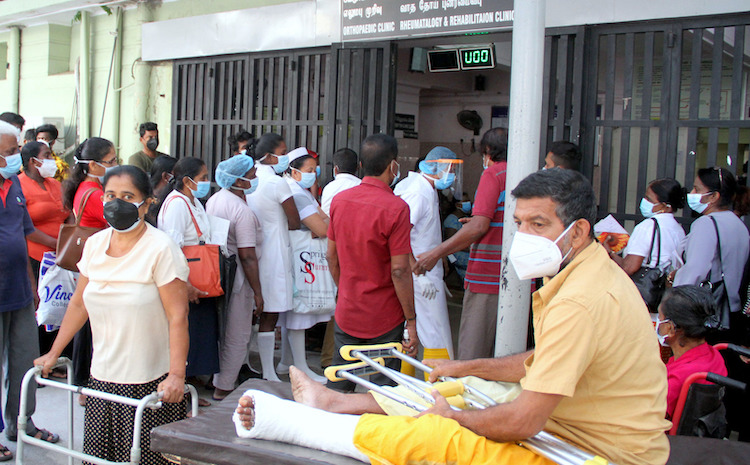
National dialogue increasingly highlights strains on government hospitals. Reports of overcrowded wards where patients sleep on floors, prolonged waiting times, and doctor protests over inadequate facilities and support staff have featured prominently in media and parliamentary discussions. The Government Medical Officers’ Association (GMOA) has raised alarms about potential collapse under current fiscal and operational constraints. The 2026 budget commits significant funds over Rs. 47 billion for infrastructure, including a Rs. 12 billion National Heart Unit and a Rs. 31 billion programme to modernise 82 Base Hospitals alongside plans for new “Arogya” primary health centres. Yet the conversation often centres on new investments or macroeconomic recovery rather than the immediate operational readiness of existing hospitals facing daily patient surges.
Understanding Healthcare System Capacity: The Foundation of Universal Access and Quality Care
A resilient healthcare system must balance preventive, primary, secondary, and tertiary care while handling increasing patient volumes. This requires adequate staffing (doctors, nurses, specialists), sufficient beds and equipment, reliable medicine and diagnostic supplies, efficient referral pathways, and strong primary care to reduce unnecessary hospital visits. Effective systems also address social determinants and promote quality and safety standards.
In a prepared framework, government hospitals deliver timely care without excessive waits, maintain dignity for patients, and integrate with community-level services to ease pressure on higher-level facilities. Without sufficient capacity, rising demand leads to overcrowding, burnout among health workers, compromised quality, and higher out-of-pocket costs as patients turn to private options they can ill afford.
Sri Lanka’s Healthcare System: Progress but Critical Capacity Gaps
Sri Lanka has long been praised for its free-at-point-of-delivery public healthcare model, supported by a network of over 1,200 institutions ranging from Primary Medical Care Units to National Hospitals. Recent steps include allocations in the 2026 budget for infrastructure upgrades, completion of stalled hospital projects, recruitment drives for nurses and support staff, and new policies such as the National Strategic Plan on Healthcare Quality and Safety (2026–2030) and the evolving National Health Policy (2026–2035), which emphasise equitable and gender-responsive care.
Yet significant gaps persist. Specialist and doctor emigration continues, with reports of around 25 specialists leaving annually in recent years. Many wards operate beyond capacity for example, accommodating 47 patients in a 30-bed ward with only three nurses. Medicine and equipment shortages, though improved from crisis peaks, still occur. Primary care remains under-resourced relative to hospital-level spending, leading to avoidable referrals and higher patient loads at secondary and tertiary facilities. Rural and estate areas face acute shortages of trained staff and infrastructure.
The Patient Increase Challenge: Evidence from Demand, Staffing and Infrastructure
Data and on-the-ground reports reveal a clear mismatch. Over 90 percent of hospital budgets historically flow to secondary and tertiary levels, leaving primary care with limited resources. Wards frequently exceed bed capacity, with patients sleeping on floors and nurses handling excessive ratios. Doctor and nurse shortages, compounded by emigration and recruitment freezes under fiscal consolidation, have triggered protests and trade union actions. Waiting times for specialist care and diagnostics have lengthened in many facilities.
Out-of-pocket expenditure, while moderated, still accounts for a substantial share of current health spending, pushing some families toward private care or delayed treatment. NCDs, including diabetes, hypertension, and cardiac conditions — drive much of the rising demand, alongside an ageing population. These pressures translate into real risks: delayed diagnoses, reduced quality of care, health worker burnout, and inequitable access, particularly for low-income and rural patients.
Why Capacity Gaps Persist: Policy, Resource and Operational Realities
Several factors sustain the shortfall. First, public health spending remains below optimal levels (historically around 1.6–2 percent of GDP), limiting rapid workforce expansion and infrastructure maintenance despite 2026 budget commitments. Second, fiscal consolidation and past unutilised funds have slowed recruitment and upgrades. Third, heavy reliance on hospital-centric care, rather than robust primary and preventive services, concentrates demand at higher-level facilities. Coordination challenges across ministries and implementation lags in new policies further delay impact.
Public discourse rightly celebrates new investments and stabilisation gains, yet urgent focus on day-to-day operational capacity, staff retention, and primary care strengthening has been slower to materialise.
Risks of an Unprepared Healthcare System for Sri Lanka’s Future
Failure to address rising patient loads in government hospitals carries serious risks. Overstretched facilities could see declining care quality, higher infection rates, and increased mortality from treatable conditions. Health worker exodus and burnout may accelerate, creating a vicious cycle. Vulnerable groups rural residents, the elderly, and low-income families will face greater barriers, widening health inequities and pushing more households into financial hardship through out-of-pocket costs or forgone care.
In a country pursuing inclusive recovery and resilience against NCDs and demographic shifts, an unprepared system risks undermining human capital, increasing long-term costs, and eroding public trust in the free healthcare model that has been a cornerstone of Sri Lanka’s social progress.
A Forward-Looking Policy Shift: Building Capacity for Rising Demand
Sri Lanka must urgently strengthen its healthcare system through critical, targeted action on three fronts.
First, accelerate workforce expansion and retention. Prioritise recruitment and training of doctors, nurses, and specialists, with incentives for rural and underserved areas, while addressing emigration drivers through better working conditions, career pathways, and adequate staffing norms in hospitals.
Second, shift toward stronger primary and preventive care. Fully implement “Arogya” primary health centres and community-based models to manage NCDs and routine care closer to homes, reducing unnecessary hospital visits. Integrate quality and safety standards across all levels as outlined in the 2026–2030 plans.
Third, optimise infrastructure and resource use. Fast-track modernisation of Base Hospitals and completion of stalled projects, improve supply chain reliability for medicines and diagnostics, and enhance referral pathways and data systems for efficient patient flow. Leverage public-private partnerships judiciously to expand capacity without undermining the public system’s equity focus.
These steps, supported by sustained funding increases, better utilisation of allocations, and transparent monitoring, are essential to match capacity with growing demand.
Conclusion
Sri Lanka’s government hospitals face a growing patient load driven by NCDs, demographic changes, and reliance on the public system, with visible strains including overcrowding, staffing shortages, and longer waits. While the 2026 budget and new policies signal important investments, current capacity still falls short of what is needed for safe, timely, and equitable care.
A ready healthcare system capable of managing rising demand in government hospitals is not optional, it is fundamental to protecting lives, reducing financial hardship, and sustaining national development. By urgently addressing workforce gaps, strengthening primary care, modernising infrastructure, and improving operational efficiency, Sri Lanka can ensure its public hospitals meet the moment. The challenges are pressing, but so is the opportunity. Critical, reform-driven action today will determine whether every patient receives the quality care they deserve. The time to build readiness is now for a healthier, more resilient Sri Lanka.
Also in Explained | Are We Prepared for Sri Lanka’s Next Public Health Emergency?