

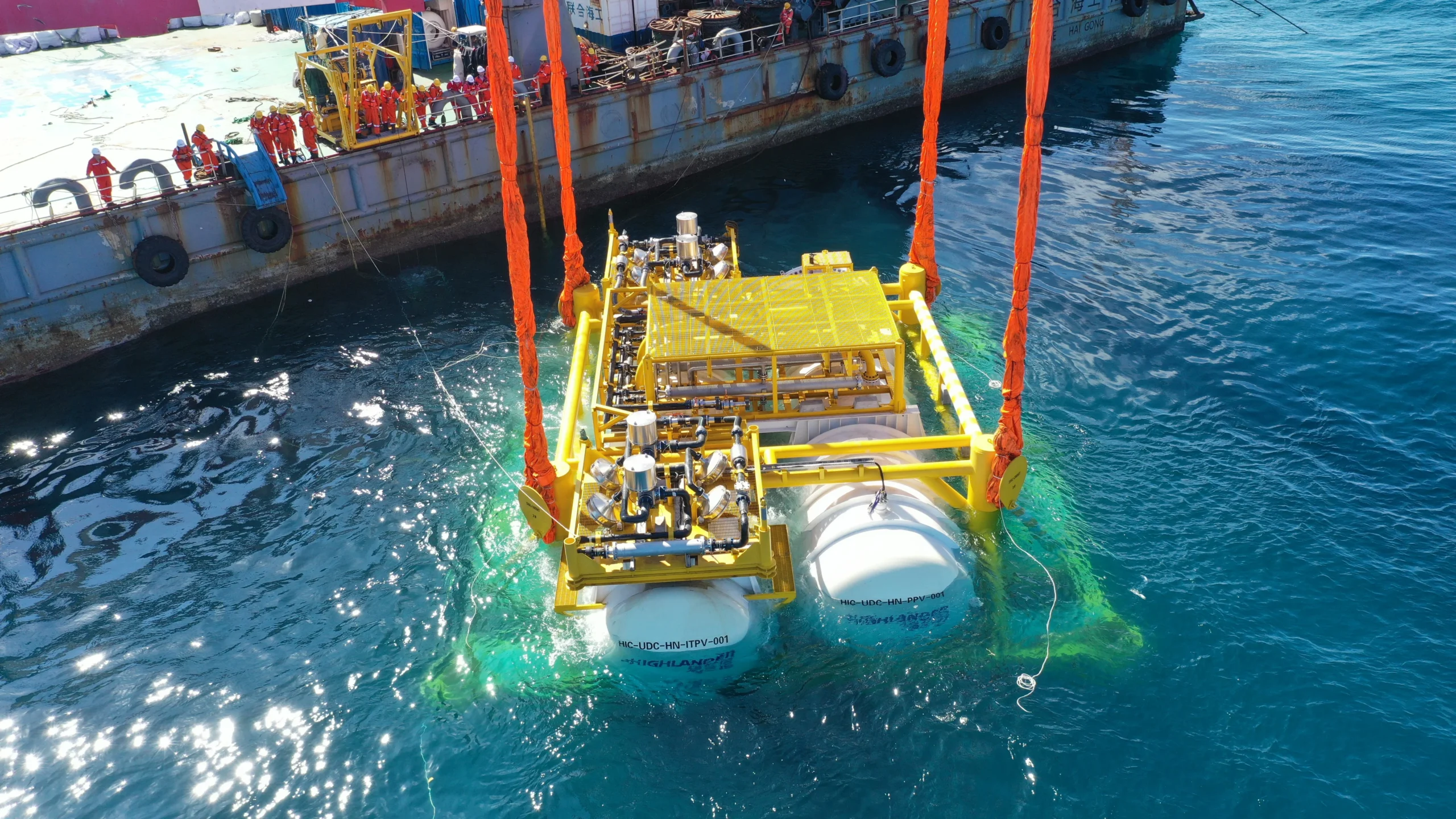
Underwater data centers are emerging as a sustainable solution to the AI boom’s growing energy demands. By using seawater cooling systems, these submerged servers promise to significantly reduce the energy and water costs typically associated with traditional data centers.
Traditional data centers on land are voracious consumers of electricity and freshwater. Servers generate enormous heat, and keeping them cool can account for up to 40% of a facility’s total energy use. As artificial intelligence and cloud computing demand explodes worldwide, innovators are turning to a radical solution: submerging sealed server units deep underwater. The ocean itself becomes a natural, constant cooling system, eliminating the need for energy-intensive air conditioning or evaporative cooling towers. This emerging technology is already moving from experiments to commercial reality, particularly in China, where large-scale underwater facilities are demonstrating significant efficiency gains.
The concept is elegantly simple. Servers are housed in watertight, pressure-resistant capsules deployed on the seabed, typically at depths of 30 to 100 metres. Seawater flows around external heat exchangers, drawing away heat without ever coming into direct contact with the equipment. Because ocean temperatures at these depths remain stable and cool year-round, the system requires almost no additional power for cooling. Some projects pair the facilities with offshore wind farms, further reducing reliance on fossil fuels.
In China, underwater data centers have progressed beyond pilots. Commercial-scale installations near Shanghai and in Hainan Province now host high-density AI workloads. Operators report that seawater cooling can slash energy consumption for temperature regulation by up to 90% compared with conventional land-based sites. Overall electricity demand drops by 30% or more, while freshwater use for cooling is virtually eliminated. These gains are critical as global data center electricity consumption is projected to double or triple by 2030, driven largely by AI training and inference.
Also in Explained | Microplastics Inside Us – Urgent Warning on the Invisible Threat Already Altering Health
The Clear Advantages of Submerged Computing
The benefits extend far beyond energy savings. Underwater data centers free up valuable land in coastal cities where real estate is expensive and power grids are often strained. They also reduce competition for freshwater resources, a growing concern in many regions facing drought or high urban demand. Because the ocean provides a stable, low-temperature environment, servers can run more reliably with fewer thermal-related failures. Early tests, including Microsoft’s earlier Project Natick, showed failure rates up to eight times lower than on land.
For the AI boom, the approach offers practical advantages. Lower latency is possible when facilities are placed near population centres along coastlines, where nearly 40% of the world’s people live within 100 kilometres of the sea. Deployment can be faster than building large land-based facilities, and the modular capsules can be retrieved, upgraded, or replaced without major disruption. When powered by renewable offshore wind or tidal energy, the overall carbon footprint shrinks dramatically. In an era when data centers are among the fastest-growing sources of electricity demand and greenhouse gas emissions, this innovation represents a meaningful step toward aligning digital growth with planetary limits.
Potential Drawbacks and Environmental Concerns
Despite the promise, underwater data centers are not without challenges. Maintenance is one of the most significant hurdles. Accessing equipment on the seabed requires specialised vessels, divers, or remotely operated vehicles, making repairs costly and time-consuming. Any hardware failure or upgrade means resurfacing entire modules, which can be logistically complex and expensive compared with walking into a land-based facility.
Environmental impacts also require careful scrutiny. Even though the systems use closed-loop heat exchange, the slight warming of surrounding seawater could affect local marine ecosystems, particularly in sensitive coastal areas. Scientists have raised questions about possible disruption to marine life, including changes in water temperature that might influence plankton, fish migration patterns, or coral health. There is also the risk of accidental leaks from hydraulic fluids, coolants, or materials used in the capsules, though modern designs prioritise robust sealing and non-toxic components.
Deployment itself carries risks. Capsules must withstand high pressure, corrosion from saltwater, and potential damage from underwater currents, earthquakes, or shipping traffic. Regulatory and permitting processes can be lengthy, especially when projects involve coastal waters or protected marine zones. Upfront capital costs for engineering, deployment, and specialised infrastructure are substantial, which could limit adoption to well-funded operators or government-backed initiatives.
Security is another consideration. Underwater facilities are physically isolated, which can enhance protection against physical tampering or extreme weather on land. However, they may be more vulnerable to acoustic-based attacks or sabotage from the sea, and monitoring remote underwater sites in real time remains technically demanding.
A Balanced Path Toward Greener Digital Infrastructure
The trade-offs illustrate a broader truth about sustainable technology: no solution is perfect, but some represent meaningful progress when weighed against the status quo. Traditional land-based data centers consume massive amounts of electricity and freshwater while occupying valuable real estate. Underwater alternatives address several of these pain points head-on, particularly in regions with access to deep, cool coastal waters.
China’s rapid progress in this field demonstrates that the technology is viable at scale. As AI and cloud computing continue to grow exponentially, the pressure on energy and water resources will only intensify. Submerged data centers offer one practical way to decouple digital expansion from some of its heaviest environmental costs.
For countries like Sri Lanka, where energy security and sustainability are pressing concerns, the concept holds indirect relevance. While underwater facilities may not be immediately feasible here, the underlying principle working with natural systems rather than fighting them aligns with broader goals of renewable energy adoption and efficient resource use. Lessons from these innovations could inform future planning for data infrastructure, cooling strategies, and coastal development.
Ultimately, underwater data centers are neither a complete fix nor a silver bullet. They are a creative response to a growing problem: how to power the digital world without further straining the planet’s finite resources. As the technology matures, ongoing research into environmental monitoring, material durability, and cost reduction will determine how widely it can be adopted. The ocean has provided humanity with food, transport, and energy for centuries. Now, it may also help cool the servers that power our increasingly connected future.
The shift toward submerged computing reminds us that innovation does not always mean building bigger or faster on land. Sometimes, the smartest solutions involve looking to nature itself for elegant, low-impact answers. As global data demands continue to rise, underwater data centers could become an important piece of a more sustainable digital infrastructure provided we address the real environmental and operational challenges along the way.
Also in Explained | Can Sri Lanka Embrace Sustainable Alternatives to Everyday Plastics?