
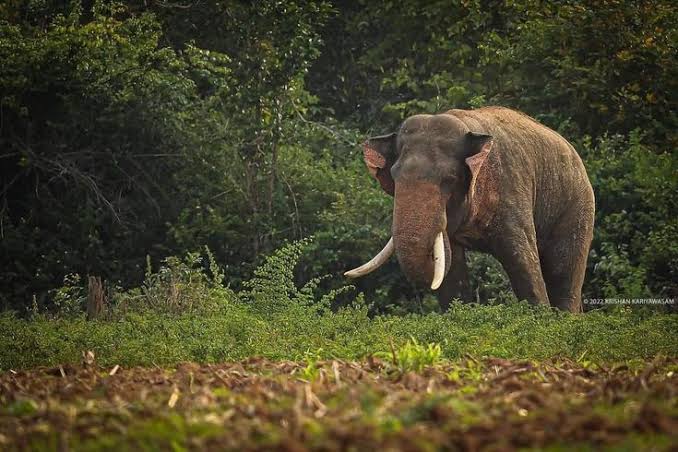
Human elephant conflict in Sri Lanka has become one of the country’s most painful environmental challenges. Every few weeks, another incident reminds us how vulnerable both wildlife and rural communities have become. The death of the well-known tusker Kavantissa on 16 October 2026, following weeks of veterinary treatment for a reported gunshot injury, has renewed public concern about the protection of wild elephants. But the bigger question is whether Sri Lanka should continue waiting for another tragedy before discussing how its wildlife is protected.
Sri Lanka’s wildlife is not simply something beautiful for tourists to photograph. Animals play important roles in maintaining healthy forests, supporting biodiversity and preserving a natural heritage that cannot easily be replaced. Protecting them also requires protecting people living near wildlife habitats, because conservation cannot succeed while families fear for their lives and livelihoods. A responsible wildlife protection system must provide safety for both communities and animals.
Why Are Elephants Dying in Sri Lanka?
The scale of the problem is already serious. According to the Government’s June 2026 Cabinet announcement, Sri Lanka’s 2024 elephant census estimated approximately 7,450 wild elephants, while human–elephant conflict affects 19 of the country’s 25 districts. The same announcement identified 134 Divisional Secretariat divisions as affected areas and reported more than 1,000 incidents of property damage annually. These figures show that the problem is far wider than a few villages bordering national parks.
The Department of Wildlife Conservation subsequently reported 207 elephant deaths and 88 human deaths as of 21 August 2026 in its conflict-related update. Earlier departmental reporting identified shootings, unlawful electrical connections, explosive bait, poison, railway collisions and other accidents among causes of elephant deaths. These figures refer to reported periods and should not be mistaken for final annual totals. They nevertheless demonstrate why preventive action remains necessary even when some indicators improve.
Kavantissa’s Death Raises Questions About Wildlife Medical Care
Kavantissa was among Sri Lanka’s most recognisable wild tuskers and was receiving treatment from wildlife veterinary teams after suffering a reported gunshot wound to his front leg. His condition later deteriorated, and he died on 16 October in the Siyambalangamuwa area. On 17 October, the Galgamuwa Magistrate’s Court reportedly ordered a post-mortem examination and an investigation into his death. The final medical cause should not be treated as established before the examination and investigation are completed.
The case raises questions extending beyond one elephant. How quickly can veterinary teams reach an injured animal, and what equipment is available when treatment must continue for several weeks? Are specialist teams supported by laboratories, transport facilities and sufficient field personnel? These questions deserve systematic assessment without assuming that veterinary officers failed simply because treatment could not save an animal.
Wildlife Treatment Must Be a Permanent Public Service
When a wild elephant is seriously injured, treating it is not comparable to taking a domestic animal to a veterinary clinic. Wildlife veterinarians may need to assess the animal in difficult terrain, manage risks to nearby communities and determine whether sedation can be performed safely. Treatment can require wound care, medication, fluid support, laboratory testing and repeated monitoring. Some animals may also require specialised care that cannot be delivered through an ordinary field visit.
Sri Lanka already possesses important veterinary expertise through the Department of Wildlife Conservation and institutions such as the University of Peradeniya’s Faculty of Veterinary Medicine and Animal Science. The policy opportunity is to strengthen coordination between those institutions and make emergency treatment capacity more dependable across affected districts. Regional equipment, trained response teams and clear medical records could support faster decisions and better follow-up. Independent veterinary reviews and properly documented post-mortems could also improve scientific understanding when treatment fails.
Protecting Elephants Means Protecting Their Natural Routes
An elephant cannot be expected to understand that land it crossed for generations has now become a road, settlement or cultivated field. As forests are divided by development, animals may continue following familiar routes towards food, water and other habitats. Those journeys can bring them into contact with homes, farms and railway lines, creating dangerous situations for everyone involved. The IUCN Asian Elephant Specialist Group identifies habitat connectivity and landscape-level planning as essential parts of conservation.
Sri Lanka has already recognised this concern officially. In June 2026, the Cabinet approved measures concerning elephant routes in Monaragala and Hambantota, including the proposed protection of the Handapanagala-Yala route and action relating to the Koholankala corridor. These are significant planning decisions, although Cabinet approval should not automatically be confused with completed land acquisition or final legal declaration. Protecting existing movement routes could reduce dangerous encounters more effectively than repeatedly responding after elephants reach populated areas.
How to Prevent Human Elephant Conflict in Sri Lanka
Fencing remains useful, but the location and management of a fence matter as much as its construction. Poorly positioned barriers can restrict elephant movement or push animals towards another settlement, while inadequate maintenance can leave communities exposed. The objective should be to protect vulnerable homes and cultivation areas without unnecessarily separating elephants from suitable habitats. Community participation and clear responsibility for maintenance are therefore essential.
Ceylon Public Affairs previously explored this issue in our analysis of Sri Lanka’s proposed bamboo bio-fence initiative. That proposal offers a possible environmentally compatible method for selected locations, but its effectiveness still requires proper scientific testing. The broader lesson remains unchanged: a barrier may protect a village, but it cannot replace a functioning wildlife habitat. Corridor protection, suitable fences, early warnings and local safety planning need to operate together.
Railway safety is another urgent concern. On 1 September, the Government signed an agreement for a technology-based elephant detection and warning project, with pilot deployment planned at 13 high-risk railway locations. The proposed system uses sensors and warnings to alert train drivers before approaching detected animals. Its value will depend on testing, reliable operation, maintenance and measurable reductions in collisions.
Sri Lanka Already Has Wildlife Protection Laws
Wild elephants are not animals that people are free to shoot, capture or injure simply because they appear outside national parks. Sri Lanka’s Fauna and Flora Protection Ordinance establishes protections for wildlife and habitats, including specific provisions concerning elephants outside reserves. The 2009 amendment also addresses the use of electrical wires and other devices to injure or kill elephants. The legal framework therefore provides a foundation for enforcement, although the application of individual offences depends on the circumstances and applicable provisions.
Illegal electrical connections are a particularly dangerous example. In September 2026, the Public Utilities Commission of Sri Lanka held a consultation on unlawful makeshift electric fences, highlighting risks to wildlife and people. Properly designed wildlife-management fencing must not be confused with dangerous live wires connected unlawfully to electricity supplies. Enforcement should distinguish lawful safety measures from actions that deliberately or recklessly endanger lives.
The law also needs to be supported by public awareness and accessible reporting procedures. People should understand that injuring wildlife is not an acceptable alternative to contacting authorised officers. At the same time, affected farmers need timely assistance, dependable protection measures and clear channels for reporting danger. Legal protection becomes more effective when people can see practical alternatives to taking matters into their own hands.
What to Do if You See an Injured Elephant in Sri Lanka
The first responsibility is personal safety. An injured elephant may be frightened, unpredictable or unable to move normally, and approaching it for photographs or attempting treatment can put both people and the animal in danger. Members of the public should maintain a safe distance, keep others away and contact the nearest Department of Wildlife Conservation office or the police where immediate danger exists. The Department publishes its contact information through its official website.
Crowds, vehicles and drones should not interfere with veterinary work. Giving an injured elephant food, water or medication without professional direction can also complicate treatment or create additional risk. Wildlife officers and veterinary specialists should decide how the animal is approached, examined and treated. Public concern is valuable, but the most helpful response is often giving trained teams the space they need.
What Can Sri Lanka Learn From Countries With Strong Animal-Welfare Systems?
Sri Lanka does not have to develop every aspect of wildlife protection without examining international experience. A WorldAtlas article on countries recognised for animal welfare highlights examples including Austria, New Zealand and the United Kingdom. However, its 2018 article reflects older Animal Protection Index assessments, not a current ranking of wildlife-management performance. The updated 2020 index awarded no country an overall A grade, reminding us that every national system still has areas requiring improvement.
The useful approach is to examine specific policies rather than copy a country’s ranking or legislation without considering Sri Lankan conditions.
| Country | Established approach | Possible lesson for Sri Lanka |
|---|---|---|
| United Kingdom | Animal welfare consideration in national policy through its 2022 animal-sentience legislation | Examine wildlife welfare when planning policies and development |
| New Zealand | Animal welfare legislation supported by care standards and advisory systems | Develop clearer treatment and welfare standards for animals under human care |
| Kenya | Dedicated wildlife veterinary services, rescue operations and wildlife-health monitoring | Strengthen regional wildlife emergency treatment and specialist response |
These examples address different parts of the problem. The United Kingdom’s Animal Welfare (Sentience) Act creates a mechanism for examining animal-welfare implications in government policymaking. New Zealand’s animal welfare framework establishes care responsibilities and detailed standards, particularly for animals under human control. Neither system provides a ready-made answer to Sri Lanka’s wild elephant conflict.
Kenya offers a more directly relevant medical example. Its Wildlife Service maintains specialised veterinary and capture services, including treatment, disease monitoring, laboratory diagnosis and wildlife investigations. Such systems show the value of treating animal rescue as an organised professional service rather than an occasional emergency operation. Sri Lanka can examine these practices while developing its own protocols suited to Asian elephants and local landscapes.
Wildlife Is a National Treasure, Not Simply a Tourism Product
Elephants help maintain forests and grasslands by spreading seeds and creating pathways used by other animals. Protecting elephant habitats can therefore benefit many species, not just elephants themselves. The World Wildlife Fund recognises these important ecological roles, alongside the threats created by habitat loss and fragmentation. Their value cannot be measured only through tourism income or the public attention given to a particularly famous tusker.
There is also an important difference between conservation and animal welfare. Conservation considers the survival of species, populations and habitats, while welfare also considers the suffering and health of individual animals. Sri Lanka needs both approaches, including appropriate veterinary care and welfare standards for elephants kept under human control. Protecting large populations should never mean that an injured individual becomes unimportant.
A National Wildlife Protection System Must Work Before Tragedy
In June 2026, the Cabinet approved drafting a new National Action Plan for Human-Elephant Conflict Management, recognising that circumstances had changed since the earlier 2020 plan. This provides an opportunity to connect habitat protection, village safety, infrastructure planning, enforcement and veterinary services within one accountable framework. The outcome should be measured through fewer deaths, fewer injuries, better protection for families and healthier wildlife habitats. Announcing a plan is only the beginning; implementation and public reporting will determine its value.
Sri Lanka cannot protect its natural heritage through sympathy after every tragedy alone. Wildlife conservation requires everyday decisions about land use, transport, agriculture, medical care and the enforcement of existing laws. Countries with developed animal-welfare and conservation institutions offer useful examples, but Sri Lanka must adapt those lessons to its own communities and ecosystems. The real achievement would be reaching a point where fewer wildlife tragedies happen in the first place.
The death of a well-known elephant may attract national attention, but countless less familiar animals deserve the same protection. Families living near elephant habitats also deserve to move through their villages without fear. A responsible conservation policy should recognise both realities and build a system capable of protecting them together. That is how Sri Lanka can begin treating its wildlife as a lasting national treasure rather than an inheritance we remember only when another life is lost.
Editor’s Note: This Ceylon Public Affairs analysis uses official Sri Lankan government decisions, wildlife legislation, conservation guidance and reported developments reviewed up to 19 October 2026. Kavantissa’s final cause of death remains subject to the relevant veterinary examination and investigation. International examples are presented as policy lessons, not as evidence that any country has eliminated animal-welfare or human–wildlife conflict problems.