
The bamboo bio-fence Sri Lanka initiative represents a potentially useful shift towards non-lethal, environmentally compatible methods of reducing human–elephant conflict. China has agreed to provide technical knowledge, research and development support, and relevant best practices following discussions between a Sri Lankan delegation and the International Center for Bamboo and Rattan in Beijing.
The delegation was led by Deputy Minister of Environment Anton Jayakodi, who formally requested Chinese assistance in establishing bamboo-based barriers. According to the official government announcement published on 28 July 2026, the initiative could combine conflict mitigation with bamboo cultivation, processing and new economic opportunities for affected rural communities.
The proposal deserves serious study. A living fence that protects selected villages or cultivated areas while generating usable bamboo could offer environmental and livelihood advantages over purely defensive infrastructure.
However, bamboo should not be presented as a single solution to a conflict created by land conversion, fragmented habitats, poorly located development and weak coordination between wildlife and land-use authorities. A fence may protect a boundary. It cannot compensate for the continuing loss of the landscape on which elephants depend.
Bamboo Bio-Fence Sri Lanka: What the Initiative Proposes
The discussions in Beijing covered bamboo cultivation, advanced processing technology and bamboo-based industrial products. China agreed in principle to support Sri Lanka with technical expertise, research and recognised practices for developing bio-fences.
The proposal therefore appears to have three connected objectives:
- Creating a physical or behavioural barrier between elephants and selected human settlements or farms.
- Supporting greener conflict-mitigation methods that do not injure elephants.
- Generating rural income through bamboo cultivation and processing.
These aims are compatible with sustainable development, but the initiative remains at an early stage. The government announcement does not yet identify the bamboo species, pilot locations, funding, planting distances, ownership arrangements, maintenance responsibilities or evidence standard that will determine whether the project is successful.
Those details matter. Bamboo species differ significantly in growth pattern, water requirements, root behaviour, commercial value and ecological impact. A species suitable for industrial production may not necessarily form an effective elephant barrier. A poorly selected species could also spread beyond its intended area or compete with local vegetation and water resources.
Sri Lanka should therefore begin with monitored pilot projects rather than large-scale planting.
Also in Explained | Sri Lanka’s Agriculture in 2026: Navigating Export Strengths Amid Climate Challenges and Building Resilience
The Root Cause Is the Reorganisation of Elephant Habitat
The government itself has formally acknowledged that population growth, expanding development and deforestation have destroyed elephant habitats and traditional movement routes. A Cabinet decision issued in June 2026 stated that human–elephant conflict now affects 19 of Sri Lanka’s 25 districts and 134 of its 341 Divisional Secretariat divisions. It cited the 2024 elephant census estimate of approximately 7,450 wild elephants and noted that more than 1,000 incidents of elephant-related property damage are recorded annually.
This official diagnosis is important because it changes how the problem should be described.
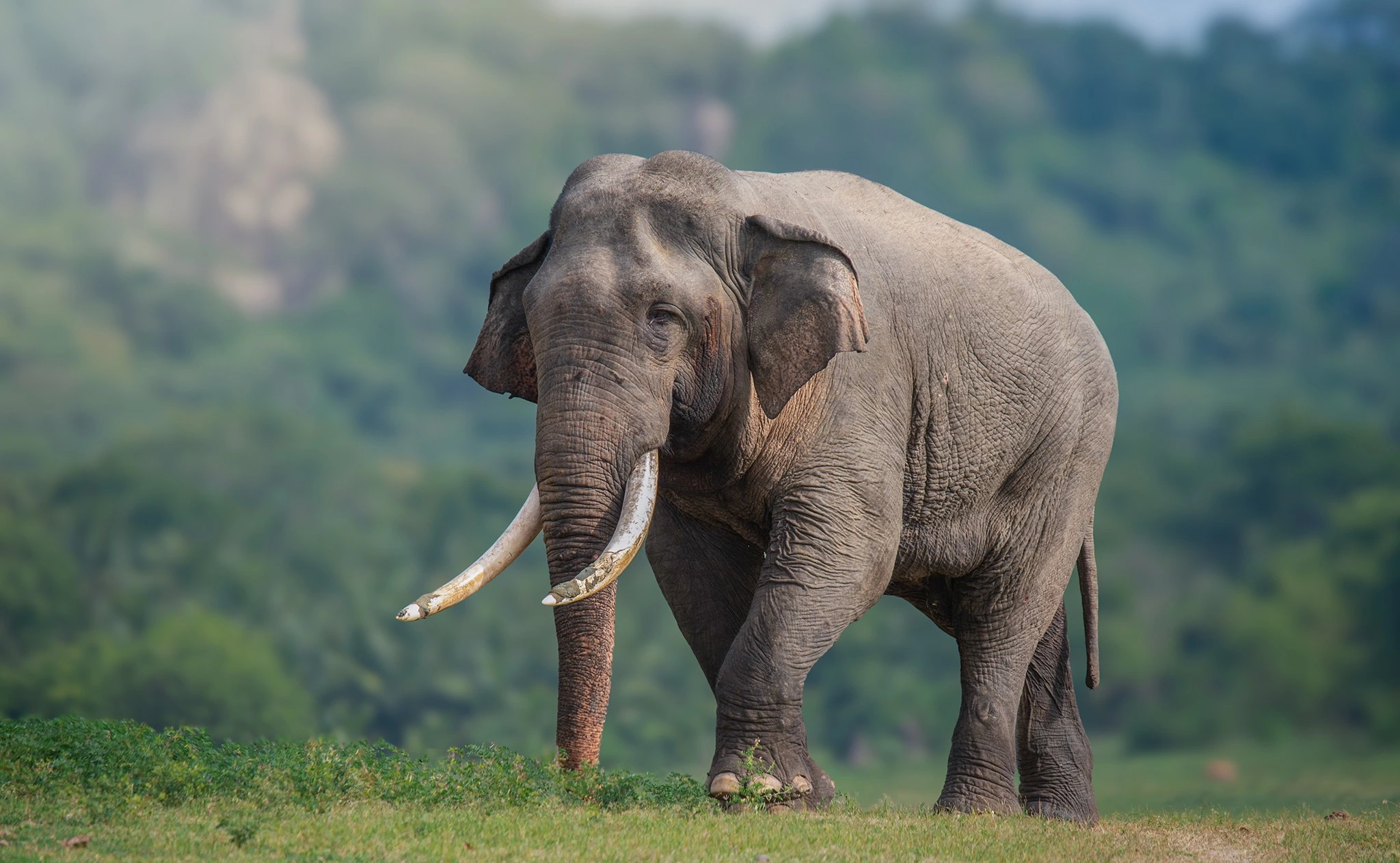
Elephants are not generally leaving an intact wilderness to identify and invade unrelated human property. In many conflict landscapes, farms, settlements, roads, irrigation systems and commercial projects have expanded into areas that elephants have used for feeding, water access and seasonal movement.
Elephants have large home ranges and strong attachment to familiar areas. When land use changes, animals may continue moving through or returning to those locations. Driving them away or relocating them does not necessarily remove that behaviour, and aggressive confrontation can increase stress and dangerous encounters.
This does not mean that affected villagers are responsible for the entire crisis. Many families have settled or cultivated land through state-supported schemes, inherited arrangements or economic necessity. They face genuine threats to life, crops, homes and income.
Responsibility must therefore be assigned at the correct level. Communities require immediate protection, while governments, developers and land authorities must prevent further decisions that place people directly inside active elephant ranges.
Fencing People and Assets Is Different from Imprisoning Elephants
Sri Lanka’s 2020 National Action Plan proposed a significant conceptual change: instead of attempting to drive elephants into protected areas and contain them there, protection should be placed around villages, farms and human assets where conflict occurs.
The plan identified community-based electric fences as a central short-term intervention and proposed surveying existing fences, identifying locations where elephants remain on both sides, and realigning inappropriate barriers.
This distinction should also guide the bamboo project.
A bio-fence placed around a village boundary, cultivated block, school or grain store could protect people while leaving elephant movement routes open. A continuous bamboo wall constructed across an established corridor could create another form of habitat fragmentation and potentially transfer conflict to a neighbouring community.
The decisive question is not simply whether bamboo can stop an elephant. It is where the fence is placed, what it protects and what movement it blocks.
Every pilot location should therefore be selected using elephant-movement data, land-tenure records, water sources, crop patterns and community consultation. The Department of Wildlife Conservation should approve ecological placement, while residents should participate in maintenance and report breaches or unintended consequences.
Bamboo Is a Tool, Not a Substitute for Habitat Protection
Living barriers have several potential advantages. They may be less visually intrusive, create biomass, stabilise some soils and provide material for furniture, construction, handicrafts or other industries. If local communities receive secure access to the economic returns, the project could improve acceptance and long-term maintenance.
Yet a bio-fence also has limitations.
It requires time to mature. Young plants may need temporary protection. Gaps, roads, canals and gates can weaken the barrier. Elephants are intelligent and may test or circumvent unfamiliar deterrents. Effectiveness may vary according to plant density, terrain, season and the availability of attractive crops.
Sri Lanka has previously examined other living barriers, including palmyrah, lime and beehive systems. These approaches show potential, but their performance is highly location-specific and they should not be promoted nationally without monitored evidence.
The bamboo initiative should be measured against defined indicators:
- Elephant entries before and after establishment.
- Human and elephant injuries or deaths.
- Crop and property losses.
- Maintenance expenditure.
- Survival and spread of the planted bamboo.
- Household income generated from bamboo products.
- Conflict transferred to adjacent villages.
- Effects on existing elephant routes and native ecosystems.
A project that produces commercially valuable bamboo but merely moves elephants towards a neighbouring settlement cannot be classified as successful conflict mitigation.
Sri Lanka Already Has a Framework, but It Is Being Revised
As of 29 July 2026, Sri Lanka is not operating without laws or policy instruments.
The Fauna and Flora Protection Ordinance protects elephants inside and outside national reserves and provides the legal foundation for wildlife protection. The Department of Wildlife Conservation administers national parks, sanctuaries, jungle corridors and the country’s managed elephant reserve.
Sri Lanka also has the National Action Plan for the Mitigation of Human–Elephant Conflict developed in 2020. Its approach includes community-based fencing, scientific monitoring, relocation of poorly positioned fences, early warning, community participation and the discontinuation of harmful elephant drives.
However, the Cabinet decided on 15 June 2026 that the conflict had changed sufficiently to require a new National Action Plan for Human–Elephant Conflict Management. The proposal was presented by Minister of Environment Dr Dammika Patabendi. The Cabinet decision specifically recognised development expansion, deforestation, habitat destruction and the loss of migratory routes as major drivers.
The new plan should not discard the scientifically sound elements of the 2020 framework. It should convert them into a funded, time-bound and legally coordinated implementation programme.
The main deficiency has often been less about the absence of plans and more about fragmented execution, unsuitable fence placement, weak maintenance, institutional capacity and land decisions taken without sufficient regard for elephant movement.
Also in Explained | Post-Harvest Chemical Use in Agriculture: The Hidden Food-Safety Gap
Illegal Encroachment and Harmful Development Need Stronger Consequences
Public awareness campaigns asking villagers not to harm elephants will have limited credibility when large-scale clearing, unauthorised cultivation or poorly assessed development continues to remove habitat.
Sri Lanka’s protected-area network includes national parks, sanctuaries, nature reserves and two formally declared jungle corridors. The Department of Wildlife Conservation itself identifies habitat fragmentation as a severe problem and recognises corridors as essential for animal movement between protected areas.
Nevertheless, elephants spend substantial time outside formally protected areas. Protection cannot therefore stop at a park boundary.
The revised national framework should establish a legally recognised national elephant landscape map covering:
- Core habitats.
- Seasonal ranges.
- Water access routes.
- Established movement corridors.
- frequently used crossing points.
- High-conflict settlements and farms.
- Existing and proposed fences.
- Approved, disputed and illegal land developments.
This map should become a mandatory planning layer for land alienation, irrigation, road construction, renewable-energy projects, tourism developments and major agricultural schemes.
Projects inside critical elephant landscapes should undergo enhanced ecological assessment. Unauthorised clearing and construction should trigger stop-work orders, restoration requirements and meaningful penalties rather than becoming accepted once the development is established.
The principle must be straightforward: an illegally created risk should not later be managed by killing, trapping or permanently displacing elephants.
Communities Still Need Immediate Protection
Recognising human responsibility for habitat loss must not minimise the suffering of rural communities. Families living with nightly elephant movements face crop destruction, damaged homes, disrupted schooling, sleep deprivation and the risk of death.
A credible coexistence policy must protect these communities now while addressing landscape causes over time.
Bamboo barriers could form one part of a local protection package alongside properly placed community electric fences, solar lighting, watchtowers, rapid-response teams, mobile alerts, crop-storage protection and insurance or compensation mechanisms.
The 2020 action-plan framework emphasises protecting villages and farms directly and involving communities in mitigation. It also warns that aggressive elephant drives and repeated confrontation can increase animal stress and worsen conflict.
Public education should therefore include practical guidance:
- Do not block known elephant routes.
- Do not approach, provoke or surround elephants.
- Do not use household electricity, poison, traps or explosives.
- Avoid storing attractive crops in unprotected buildings.
- Report damaged fences and elephant movements promptly.
- Use coordinated community responses rather than isolated confrontation.
Education must be accompanied by enforcement. People who deliberately electrocute, poison, shoot or injure elephants should face consistent legal action. The same standard should apply to individuals or businesses that illegally destroy habitat and subsequently demand the removal of elephants.
A Stronger National Coexistence Framework
The new national action plan should contain five connected pillars.
First, protect elephant landscapes before approving development. Land-use decisions must incorporate current movement data and cumulative effects rather than assess projects separately.
Second, defend people and cultivated assets at the correct boundary. Bamboo, electric fences and other barriers should surround communities or cultivation, not divide elephant habitat indiscriminately.
Third, establish enforceable responsibility. Every fence, warning system and pilot project should have an identified owner, maintenance budget, performance target and public reporting mechanism.
Fourth, link conservation with local economic benefit. Communities maintaining bamboo barriers should receive priority access to processing, training and market opportunities. Revenue should not be captured only by outside contractors.
Fifth, apply the law equally to direct harm and habitat destruction. Wildlife offences, illegal clearing, encroachment and unauthorised development are parts of the same conflict cycle and should not be handled as unrelated administrative issues.
From Conflict Management to Responsible Coexistence
China’s willingness to support Sri Lanka’s bamboo bio-fence initiative is positive. It brings technical cooperation, research potential and an opportunity to test a greener community-protection method. It may also create a new rural industry if environmental safeguards and benefit-sharing arrangements are properly designed.
The initiative will fail, however, if it becomes a symbolic planting programme placed on top of unresolved land-use failures.
Sri Lanka cannot continue clearing elephant ranges, fragmenting movement routes and approving incompatible development, then describe elephants as outsiders when they return to landscapes they have long occupied. Nor can policy ignore the real danger and economic loss faced by families already living in conflict areas.
The appropriate response is neither unrestricted human expansion nor the removal of elephants from every shared landscape. It is disciplined coexistence: protect critical habitat, regulate development, secure villages, compensate losses, enforce wildlife laws and test locally suitable deterrents through evidence.
A bamboo fence can mark a safer boundary. Only responsible land governance can determine whether that boundary is fair, effective and sustainable.
This analysis is for educational and public-affairs purposes only. It is based on official information available as of 29 July 2026 and does not constitute legal, environmental or investment advice.