
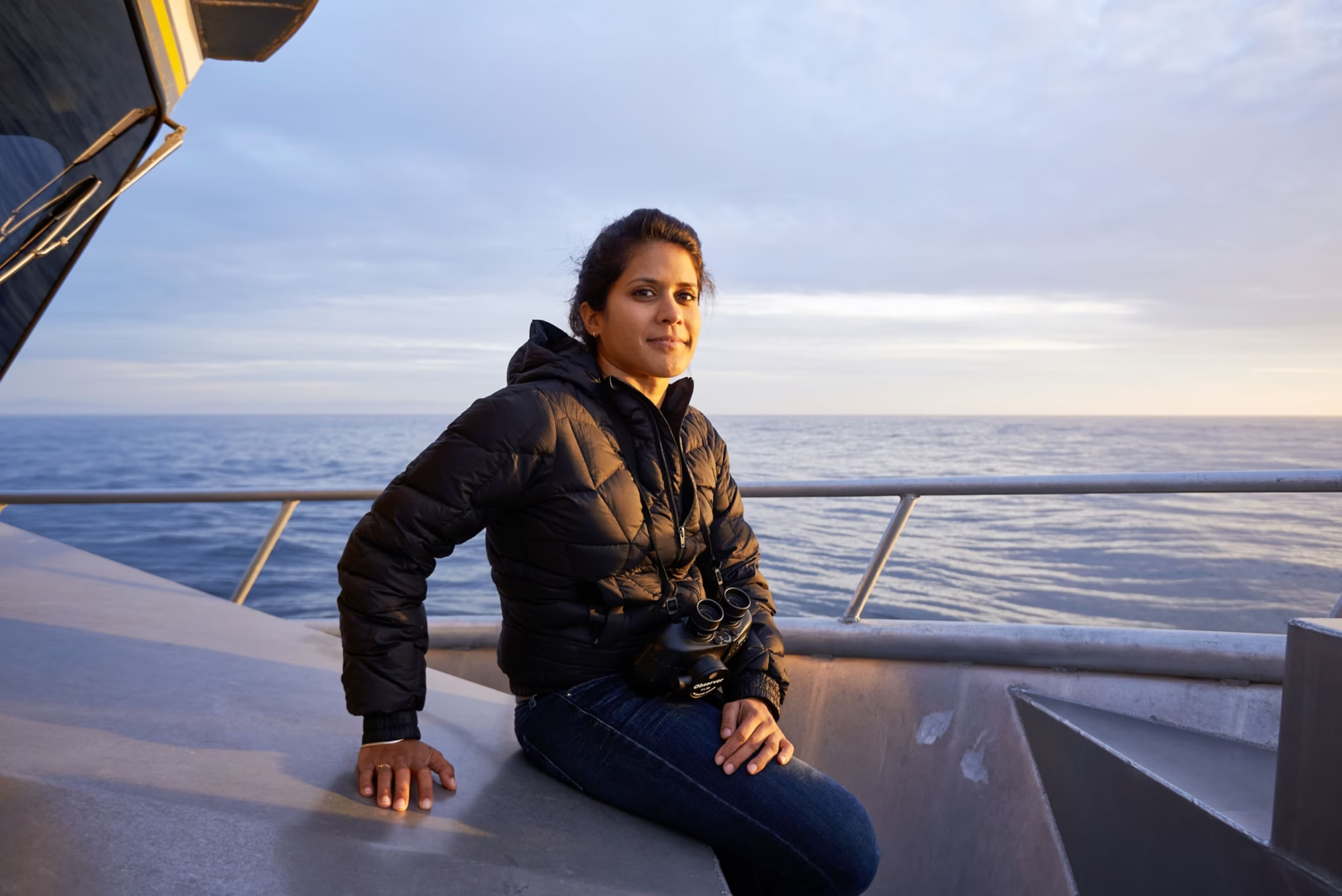
In a proud moment for Sri Lanka that is inspiring the nation and beyond, Sri Lankan marine biologist Dr. Asha de Vos has been honoured on the world stage. Her portrait and powerful message were featured at the opening of the United Nations General Assembly in March 2026, as part of the campaign for International Women’s Day and the 70th session of the Commission on the Status of Women (CSW70). The display celebrated women who break barriers, with her quote, “They told me I was not capable, so I made a discovery that changed the world” highlighting resilience and determination.
Deputy Minister of Foreign Affairs Arun Hemachandra praised her achievement as a strong call to empower women to challenge limitations, influence science, and make the nation proud. This recognition shines a spotlight on Sri Lankan excellence in global conservation, showing how one woman’s passion for the ocean is reshaping our understanding of the planet while paving the way for future generations.
Dr. de Vos’s story is a beacon for anyone facing doubt or limited opportunities. As Sri Lanka’s first deep-sea explorer and the country’s only PhD holder in marine mammal research, she has transformed a childhood dream into groundbreaking science that protects the world’s largest animals. Her work reminds us that true impact comes from persistence, local knowledge, and a commitment to lifting others up.
Also in Explained | Sri Lankan-Born Astrophysicist Ray Jayawardhana: A Trailblazing Journey to the Presidency of Caltech
Sri Lankan Marine Biologist Dr. Asha de Vos – From Sri Lankan Shores to Global Marine Leadership
Born in 1979 in Sri Lanka, Asha de Vos grew up with a spark of curiosity ignited at age six when her parents gave her second-hand National Geographic magazines. She dreamed of becoming an “adventure-scientist” who would explore places no one else had seen. Her early education at Ladies’ College, Colombo, and Colombo International School laid a strong foundation before she moved abroad for higher studies.
She earned her Bachelor’s degree in marine and environmental biology from the University of St. Andrews in Scotland, followed by a Master’s in integrative biosciences at the University of Oxford, and finally a PhD from the University of Western Australia, becoming the first and only Sri Lankan to achieve a doctorate in marine mammal research.
Returning home with world-class knowledge, Dr. de Vos refused to follow the traditional academic path. Instead, she founded the Sri Lankan Blue Whale Project in 2008, launching the first long-term study of blue whales in the northern Indian Ocean. Her research revealed something extraordinary: a unique population of blue whales that stays year-round in Sri Lankan waters rather than migrating as previously thought. This discovery challenged global assumptions, led the International Whaling Commission to classify these whales as needing urgent conservation, and prompted collaboration with the Sri Lankan government to reduce ship strikes.
To make her science sustainable and local, she established Oceanswell Sri Lanka’s first marine conservation research and education organisation. Through it, she fights “parachute science,” where outsiders collect data and leave without building local capacity. Her mission is simple yet powerful: create a “local hero on every coastline” so Sri Lankans lead the protection of their own seas. She has also held roles as a senior programme officer with the International Union for Conservation of Nature (IUCN), a post-doctoral scholar at the University of California Santa Cruz, and an adjunct research fellow at the University of Western Australia.
Achievements and Inspiration for Sri Lankan Youth
Dr. de Vos’s achievements span science, leadership, and advocacy. She is a Senior TED Fellow, a National Geographic Explorer, a Pew Marine Conservation Fellow, and one of the BBC 100 Women of 2018. Her honours include the Wings WorldQuest Women of Discovery Award, Scuba Diving Magazine’s Sea Hero of the Year, the Asian Scientist 100 laureate title, and the Tällberg-SNF-Eliasson Global Leadership Prize. In 2024, she joined the United Nations Secretary-General’s Scientific Advisory Board as one of only seven external members, and she serves on key IUCN committees shaping global marine policy.
Her work has been featured by the BBC, New York Times, TED, and National Geographic, bringing Sri Lankan science to the world. Yet what makes her story truly special is her focus on people. She advocates fiercely for women in science, urging them to “define themselves by their capacity and not let their gender limit their potential.” She also pushes for diversity and equity in conservation, proving that science thrives when local voices lead.
For Sri Lankan youth, especially young women and girls dreaming of STEM careers, Dr. de Vos is living proof that barriers can be broken. Growing up in a country where marine biology was not a common path, she faced doubts about her capabilities but she turned them into fuel for discovery. Her UN honour in 2026, with its message of overcoming “they told me I was not capable,” sends a clear message: Sri Lankans belong on the global stage. Whether exploring oceans, protecting wildlife, or solving environmental challenges, young minds can follow her example by staying curious, building local solutions, and never letting doubt win.
In reflecting on her journey, Dr. de Vos shows that greatness comes from both personal courage and community impact. As she continues her work through Oceanswell and international boards, she inspires a new generation to protect our blue planet while making Sri Lanka proud. Her story urges every youngster: Dream boldly, work relentlessly, and remember your discovery could change the world.
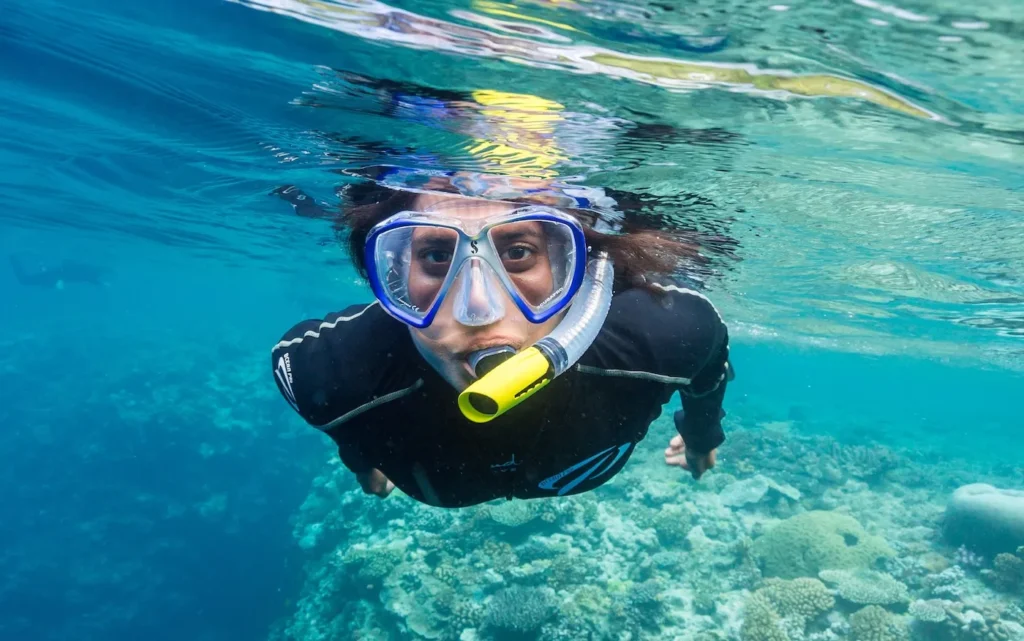
Copyright: Ryan Lash
Also in Explained | Sri Lanka’s Brain Drain Crisis: The Cost of Losing Our Brightest Minds