
ILO C188 Sri Lanka fisheries reform could become one of the most consequential labour-policy changes for a sector that feeds the country, sustains coastal economies and earns foreign exchange. At its meeting on 20 July 2026, the Cabinet approved a joint proposal to ratify the International Labour Organization’s Work in Fishing Convention, 2007 (No. 188), and introduce its standards in phases.
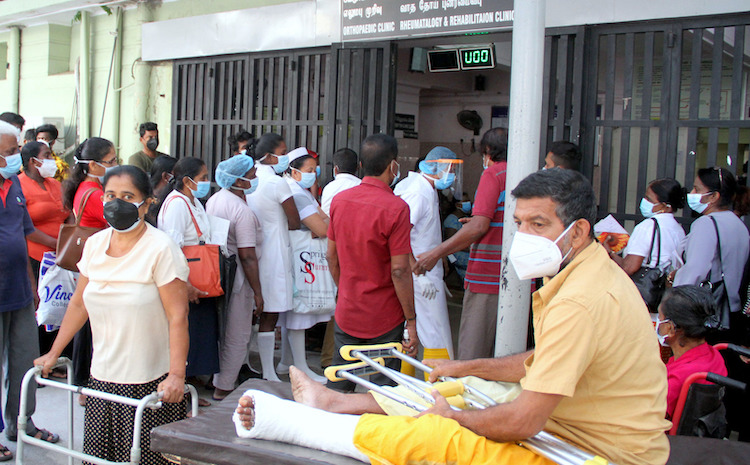
The proposal was submitted jointly by Minister of Fisheries, Aquatic and Ocean Resources Ramalingam Chandrasekara and Minister of Labour Professor Anil Jayantha Fernando. The Cabinet decision states that Sri Lanka’s fishing industry involves more than 315,000 members of the fishing community and remains substantially informal because of the nature and traditional structure of the sector. It also identifies occupational security, health and working conditions as areas requiring stronger protection.
The Cabinet decision is therefore important, but it does not itself mean that Sri Lanka has completed formal international ratification.
As of 8 August 2026, Sri Lanka has not yet formally ratified C188 at the international level. The ILO’s NORMLEX database continues to record 27 ratifications and does not list Sri Lanka among them. Under Article 47 of the Convention, formal ratification must be communicated to the Director-General of the International Labour Office for registration. Once Sri Lanka’s ratification is registered, C188 will enter into force for the country 12 months later.
ILO C188 Sri Lanka Fisheries: What the Convention Would Change
C188 establishes minimum standards for people working on commercial fishing vessels. It covers minimum age, medical fitness, written work agreements, hours of rest, accommodation, food and drinking water, occupational safety, medical care, social security and repatriation.
It also clarifies responsibility. Vessel owners carry overall responsibility for enabling compliance, while skippers are responsible for safe operation, fatigue prevention and onboard safety. Fishers should receive understandable written terms explaining payment, duties, benefits and repatriation arrangements.
This is highly relevant to Sri Lanka, where working relationships can depend on oral agreements, family networks, informal arrangements or shares of the catch rather than conventional salary systems.
Without written agreements, disputes involving payment, voyage duration, injuries, medical expenses, death at sea or responsibility for repatriation can become difficult to resolve.
A phased implementation approach is therefore sensible. The same compliance model cannot simply be imposed on a large multi-day offshore fishing vessel and a small coastal craft. However, flexibility should not become a permanent exemption from minimum standards of safety and dignity.
Fishing Is an Economic Sector and a High-Risk Workplace
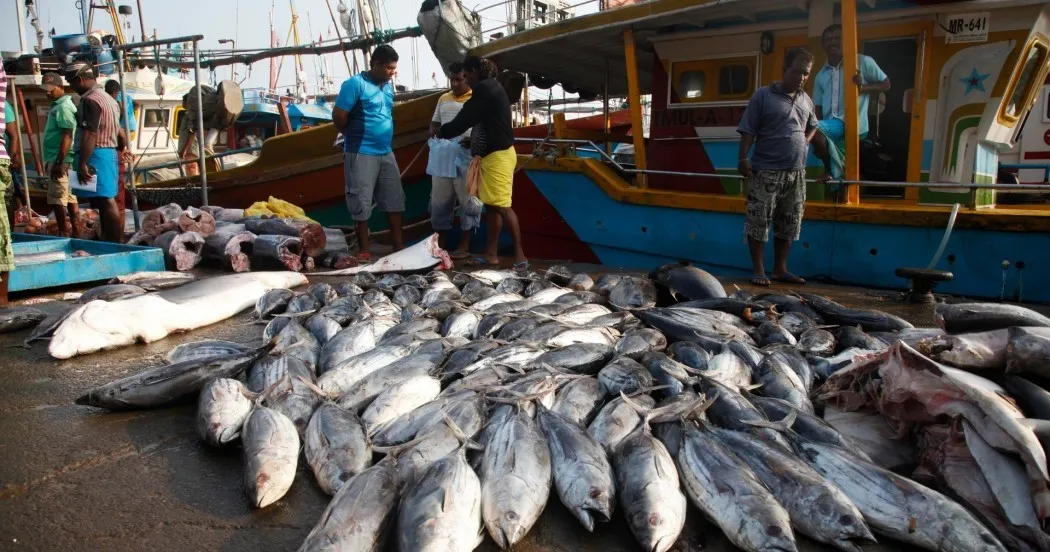
Sri Lanka’s fisheries sector is frequently discussed in terms of production, fuel costs, fish prices, exports and marine-resource management. The people performing the work receive comparatively less policy attention.
Fishing can involve severe weather, mechanical failures, extended working hours, fatigue, isolation, accidents and limited access to medical care.
An International Labour Organization assessment of Sri Lanka’s fishing sector previously identified gaps in comprehensive social protection, protection against injury and death at sea and safeguards against exploitative labour practices. It also argued that implementation of C188 could support both improved working conditions and wider economic benefits.
Better labour standards can reduce avoidable accidents, improve crew retention and create clearer responsibility across the fisheries value chain.
Ratification is not an export certification scheme. Nevertheless, credible adherence to international decent-work standards can strengthen Sri Lanka’s standing in seafood markets where buyers, regulators and consumers increasingly examine traceability, ethical sourcing and working conditions.
National Export Growth Does Not Show Who Receives the Value
Sri Lanka earned US$240.19 million from seafood exports in 2025, representing an increase of 3.09 per cent. During January to May 2026, seafood exports reached US$105.49 million, rising 19.2 per cent compared with the corresponding period of the previous year.
These figures show economic potential.
They do not, however, reveal how much export value reaches individual fishing communities, boat crews, small-scale fishers or specific districts.
Export growth can exist alongside low producer margins, post-harvest losses, weak bargaining power and limited local processing.
This is where implementation of C188 could complement wider fisheries reform. Written agreements, more transparent catch-sharing, proper fisher registration and digital landing records can improve worker protection while also supporting commercial traceability.
Investment in ice production, cold storage, hygienic landing facilities, testing, grading and local processing can help fishing communities retain a larger share of the final value generated from their catch.
Batticaloa: The Land of Singing Fish but Not Yet a Measured Export Hub
Batticaloa is widely known as the “Land of Singing Fish.” Fishing is central to livelihoods, local commerce and the cultural identity of the district.
The Ministry of Fisheries’ 2024 statistical bulletin recorded 42,050 active marine fishers, 29,120 fishing households and a fishing-household population of 125,190 in the Batticaloa fisheries district.
The Ministry specifies that the active-fisher figure includes full-time, part-time, occasional and other unspecified fishers.
The district also recorded 6,614 operating fishing vessels, including 4,198 non-motorised traditional craft, while marine fish production stood at 13,910 metric tonnes.
Calculated from the Ministry’s national totals, Batticaloa represented approximately 18.6 per cent of Sri Lanka’s recorded active marine fishers but around 4.5 per cent of recorded marine fish production in 2024.
This should not be interpreted as a simple productivity ranking.
The high fisher population reflects Batticaloa’s labour-intensive, small-scale fishing structure, while marine-production statistics do not capture every aspect of lagoon fishing, inland fisheries, processing, trading or other value-chain activity.
Nevertheless, the contrast raises an important economic question.
A district with such a substantial fishing population should have clearer information on how much value is created after fish are landed.
No sufficiently detailed official district-level dataset is publicly available to establish how much of Sri Lanka’s seafood export income originates from Batticaloa or how much of the final export value remains within the district.
National authorities publish seafood export performance for Sri Lanka as a whole, but not the value retained by individual fishing districts.
That is a significant information gap.
A district-level fisheries value system should measure landings, species, quality grades, buyer destinations, cold-chain utilisation, processing, export eligibility and the percentage of final sale value received by fishers.
The issue is therefore not simply whether Batticaloa exports seafood.
It is whether Batticaloa can convert its fishery resources, community labour, geographic identity and accumulated fishing knowledge into higher, more stable and locally retained economic value.
Traditional and Local Knowledge Should Inform Modern Management
Fishing activity in Batticaloa is closely connected to changing lagoon and seasonal conditions.
Research on the Paalameenmadu and Kallar barmouth fisheries has found that seasonal opening and closing of the Batticaloa Lagoon influences catch composition and fishing activity, while surveyed fishers demonstrated awareness of the importance of sustaining fishery resources.
The 2024 study surveyed 210 respondents and provides useful evidence that local fishing communities possess practical knowledge of environmental conditions and resource sustainability.
More broadly, research on fishing communities internationally shows that lunar phases, tides and moonlight can influence fishing activity and fisher decision-making.
Such knowledge should not automatically be treated as scientific evidence of spawning cycles or stock condition.
Instead, locally observed practices in Batticaloa should be systematically documented and tested against catch, spawning, tidal, lunar and seasonal data.
This is particularly important because traditional fishing communities often develop rules, observations and restraint practices through repeated experience over generations.
Some may correspond with scientifically identifiable ecological patterns. Others may be cultural or operational practices whose biological effects remain uncertain.
Modern fisheries management does not need to choose between science and traditional knowledge.
It can use local observations to identify questions and patterns, while scientific monitoring tests whether those patterns correspond with reproductive cycles, juvenile abundance, migration, environmental conditions or stock health.
Where they are validated, local practices can strengthen seasonal restrictions, mesh-size rules, lagoon management and community compliance.
Sri Lanka already has a legal foundation for local fisheries management.
The Fishery Management (Batticaloa Lagoon) Regulations 2001, introduced under Gazette Extraordinary No. 1167/3 of 15 January 2001, contain controls covering fishing activity, gear and management within the lagoon.
The East Coast area of Batticaloa District was subsequently declared a Fisheries Management Area through Gazette Extraordinary No. 1801/29 of 14 March 2013.
The next step should be stronger co-management involving fisheries officials, scientists, fisheries societies and cooperatives, active fishers, traders and post-harvest workers.
Traditional restraint should not be treated automatically as an obstacle to commercial development.
Where communities voluntarily avoid environmentally sensitive fishing activity and those practices are supported by scientific evidence, they may actually be protecting the future economic value of the resource.
Decent Work Can Make Conservation More Practical
Labour policy and marine conservation are often treated as separate issues, but in fishing communities they are deeply connected.
A fisher without income security, social protection or alternative earnings may struggle to observe a closed fishing season even when the ecological justification is strong.
A crew member whose income depends entirely on the immediate catch may face pressure to remain at sea longer, accept unsafe working conditions or target fish that would be better left to grow.
C188 is not a fisheries-conservation convention.
However, written employment or work agreements, rest requirements, medical protection and social-security coverage can create conditions in which sustainable fishing rules become easier to follow.
Conservation measures should therefore be accompanied by economic support.
Temporary income protection, alternative livelihood programmes, skills training and accessible credit can reduce pressure on households during scientifically justified closures or restrictions.
A seasonal restriction will attract greater community support when fishers understand why it exists and have a realistic means of supporting their families while complying with it.
A Phased National Implementation Framework
Sri Lanka should use the period before formal international ratification and eventual entry into force to prepare a practical national implementation system.
- First, conduct and publish a legal gap assessment. This should identify which provisions of C188 can be implemented through existing law, which require regulations and which may require amendments to fisheries, labour, maritime, health or social-security legislation.
- Second, establish an integrated fisher-registration system. Fishers, vessel owners and skippers should be linked to vessels, voyages, insurance information and emergency contacts. Registration must remain affordable and accessible to small operators.
- Third, introduce simple written work agreements. Standard model agreements should be available in Sinhala and Tamil and should address payment or catch-sharing, voyage duration, food, medical costs, insurance, rest, injury compensation and repatriation.
- Fourth, apply requirements proportionately. Implementation could begin with higher-risk vessels and longer voyages while developing simplified but meaningful requirements for small-scale coastal fishing.
- Fifth, expand inspections beyond technical vessel compliance. Labour conditions, medical arrangements, rest, safety equipment and basic living conditions should become part of the compliance framework.
- Sixth, consider Batticaloa as a district pilot. A pilot programme could combine C188-related worker protections with safety equipment, medical screening, written agreements, improved cold-chain infrastructure, catch traceability and scientifically documented local fisheries knowledge.
- Finally, report outcomes publicly. Annual reporting should cover accidents, deaths and disappearances at sea, insurance coverage, work agreements, inspection findings, complaints, export-quality landings and district-level value addition.
Ratification Should Improve Life at the Landing Site
The Cabinet’s decision to proceed towards ratifying C188 is a positive policy development.
Its real value will depend on whether international standards become practical protection for the fisher boarding a vessel, the family waiting for a safe return and the coastal community depending on the next landing.
Sri Lanka should not measure success only by the eventual deposit of a ratification instrument with the International Labour Organization.
Success should be measured by whether fishers understand their working terms, receive medical and social protection, work aboard safer vessels, have clearer rights when accidents occur and receive a fairer share of the economic value created through fisheries.
It should also be measured by whether fishing communities can comply with conservation requirements without being pushed into deeper financial insecurity.
For Batticaloa, the opportunity is particularly important.
The Land of Singing Fish should be able to become a model of how traditional knowledge, decent work, sustainable resource management, modern cold-chain infrastructure and higher-value seafood markets can reinforce one another.
ILO C188 can establish a minimum floor for working conditions.
Building a stronger fishing economy will require Sri Lanka to go further by linking labour protection with fisheries science, resource conservation, infrastructure, traceability, value addition and transparent district-level economic measurement.
Protecting the fisher and protecting the fishery are not competing objectives. In a sustainable coastal economy, each depends on the other.
This analysis is for educational and public-affairs purposes only. It is based on official information and publicly available sources reviewed up to 8 August 2026 and does not constitute legal, labour, fisheries or investment advice.