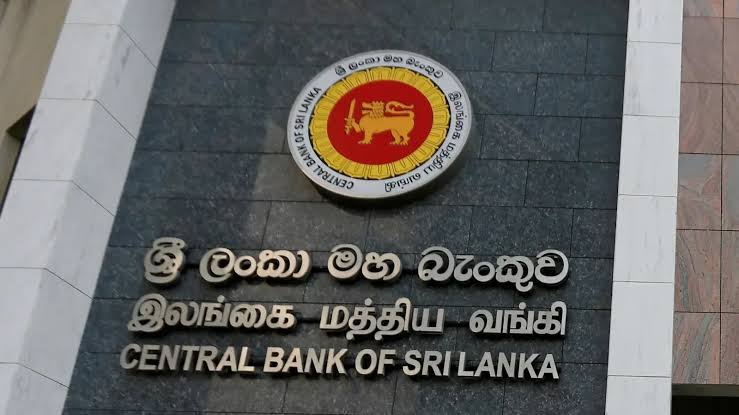

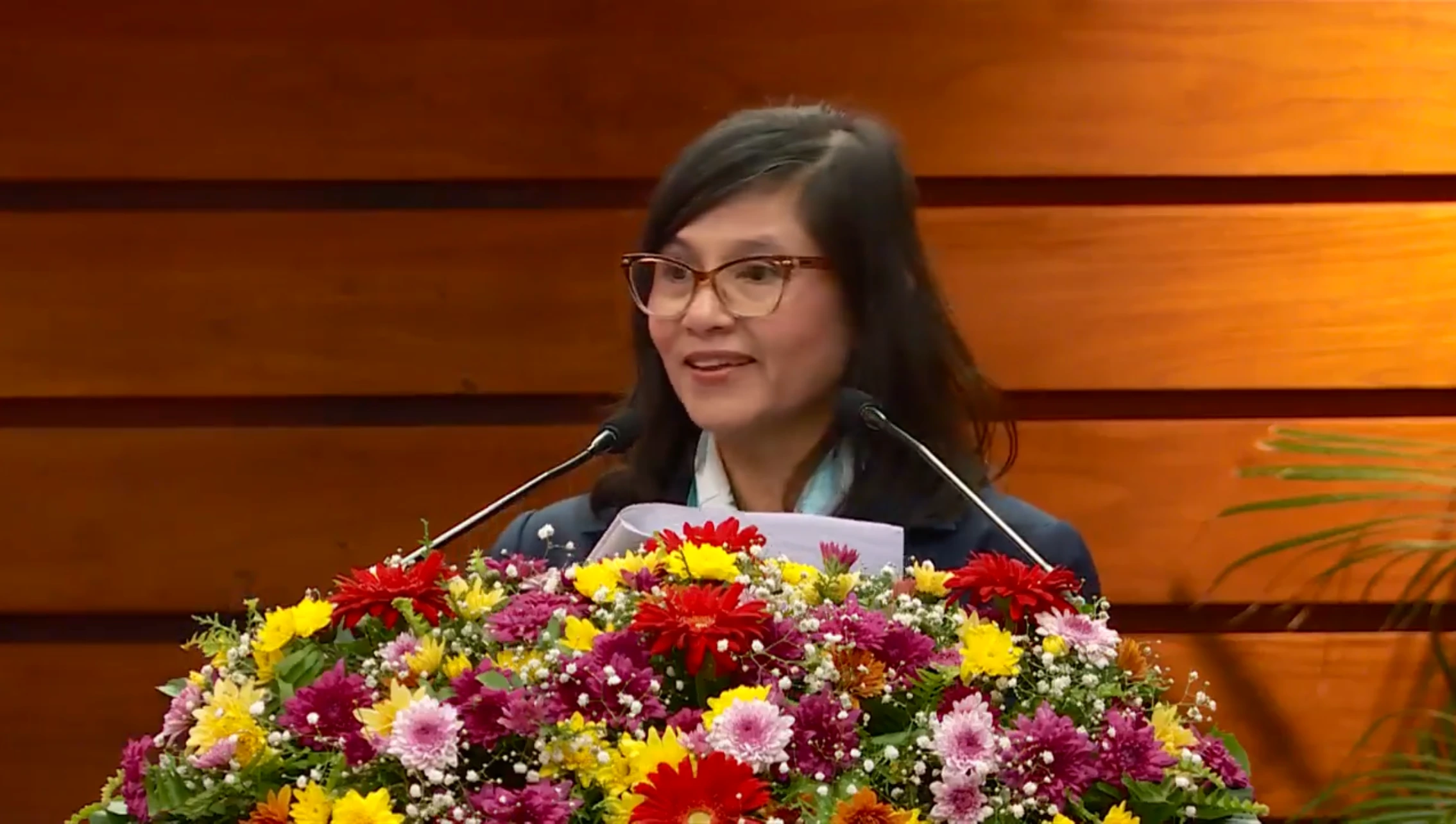
AI in banking is moving from an idea discussed at technology conferences into a practical part of the financial system. Banks can now use artificial intelligence to identify suspicious transactions, analyse financial information, support customer services and improve internal operations. These developments promise greater efficiency, but they also raise questions about data accuracy, fraud, cybersecurity and accountability. At the Central Bank of Sri Lanka’s 76th Anniversary Oration on 23 October 2026, a senior IMF official delivered a message that deserves national attention: technological progress must never weaken public trust.
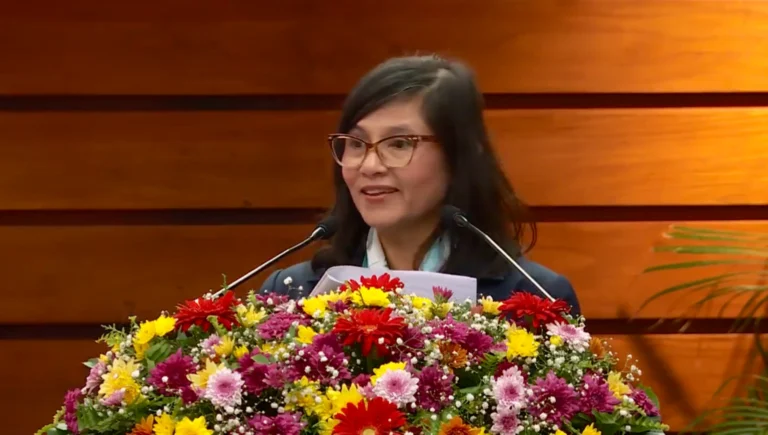
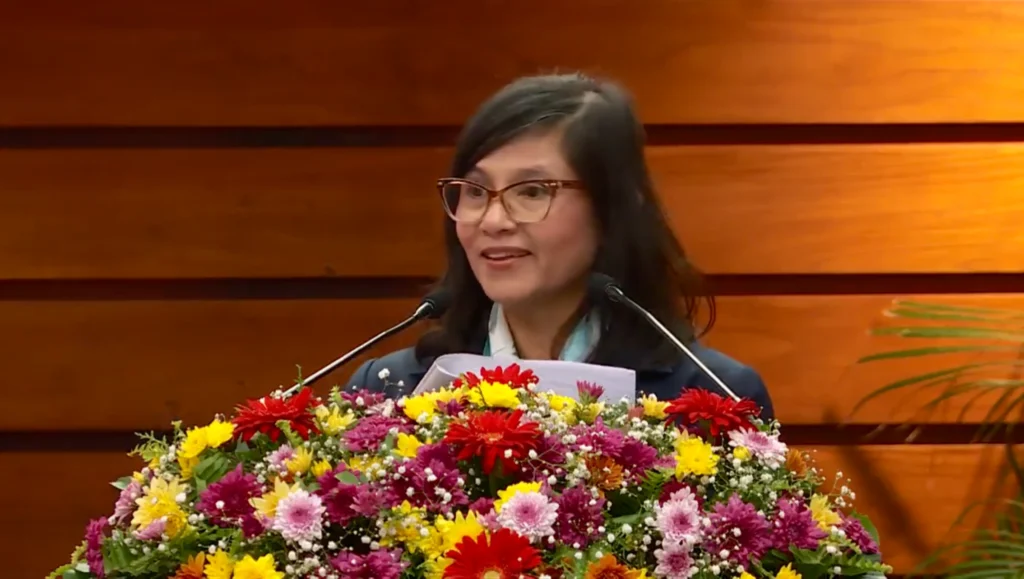
The address, titled “The Intelligent Central Bank: Building Trust in the Age of AI,” was delivered by Shirin Hamid, Chief Information Officer and Director of the Information Technology Department at the International Monetary Fund. Speaking in Colombo, Hamid examined how artificial intelligence is changing central banking and creating opportunities alongside serious security risks. The Central Bank shared the oration through its official LinkedIn account. Her central message was that the success of an intelligent financial institution should be judged by whether its technology can be trusted, rather than how many AI systems it operates.
What Does an Intelligent Central Bank Actually Mean?
An intelligent central bank is not simply a traditional central bank equipped with chatbots. The idea involves using advanced technology to understand economic developments, identify emerging financial risks and improve supervision. AI can examine large amounts of information much faster than traditional manual methods, potentially allowing officials to recognise unusual patterns before problems become more serious. However, information produced quickly is not automatically information that can be trusted.
Hamid emphasised that AI systems operating within financial institutions must remain explainable, secure, properly governed and supervised by people. In ordinary language, this means a bank should understand why an automated system has reached a decision and who is responsible for checking it. If a system incorrectly identifies a legitimate transaction as fraudulent or makes a mistake in assessing financial risk, somebody must be able to examine and correct that decision. Human accountability cannot disappear simply because an algorithm produced the answer.
Sri Lanka’s Banks Are Already Adopting AI
Sri Lanka is not starting this transition from zero. According to figures attributed to the Central Bank in reporting surrounding the oration, 31% of licensed banks have introduced AI into live operations, while another 38% are undertaking pilot projects. The remaining 31% were reported as not yet using AI in their operations. These figures show different stages of adoption rather than proving that one group of institutions is necessarily safer or more efficient than another.
| AI adoption status | Reported share of licensed banks |
|---|---|
| AI already in live operations | 31% |
| AI pilot or testing stage | 38% |
| Not yet adopting AI | 31% |
Source: Figures attributed to CBSL in reporting published around the October 2026 oration. The underlying survey methodology was not independently available for verification.
A further reported figure raises an important governance question: only 8% of banks had dedicated board-level committees overseeing AI-related risks. This does not automatically mean other banks lack oversight, because responsibilities may sit within existing risk or technology committees. Nevertheless, it suggests an area worth examining as AI becomes more involved in financial decisions. Banks need to ensure that supervision develops alongside technology rather than being added only after problems occur.
How Artificial Intelligence Is Used in Banking
People searching how artificial intelligence is used in banking may already have experienced some applications without recognising them. A bank might use automated systems to identify unusual transactions, process documents or support customer inquiries. More advanced systems can assist with credit-risk analysis, financial crime monitoring and identifying changes in market conditions. These applications can help employees work more efficiently when the underlying data and controls are reliable.
Central banks may also benefit from stronger analytical tools. For example, AI can support financial stability monitoring by examining changes across institutions, markets and economic indicators. But an algorithm cannot independently understand every social or economic consequence of a decision affecting millions of people. Policymakers must still interpret the evidence and accept responsibility for decisions involving inflation, monetary stability and financial supervision.
Deepfake Fraud Is Becoming a Banking Concern
One of Hamid’s strongest warnings concerned criminals using AI to imitate people. Voice-cloning technology can produce convincing copies of someone’s voice from short recordings, while deepfake video can make fraudulent communication appear genuine. These methods create problems for financial institutions that have traditionally relied on voices, appearances or familiar communications when verifying identity. A convincing voice is no longer reliable proof that the person speaking is genuine.
This is particularly relevant to AI banking fraud and cybersecurity in Sri Lanka, where customers increasingly use online payments, mobile applications and digital communication. Imagine receiving an urgent telephone call that sounds exactly like a relative or a bank employee requesting a money transfer. AI-generated impersonation could make that situation more convincing, even when the caller is an unknown criminal. The practical response is to verify unusual requests through an independently obtained official number or trusted contact rather than relying only on how somebody sounds.
AI Can Also Make Cyberattacks Faster
The second concern involves attacks that operate at speeds beyond normal human response. Hamid warned about automated systems capable of coordinating cyberattacks and attempts to manipulate AI assistants operating inside financial institutions. In some cases, malicious instructions hidden in external material could influence an internal AI tool if adequate protections are missing. The consequences can extend beyond an individual computer when banking systems and digital services are interconnected.
A June 2026 IMF study on AI and cybersecurity explains that artificial intelligence can increase the speed and scale of cyber threats. Banks often depend on common software, payment systems and cloud-service providers, meaning a weakness in widely used infrastructure can affect multiple institutions. The IMF therefore highlights the importance of prevention, detecting attacks quickly, limiting their spread and restoring services. For financial stability, preparing to recover from an attack can be just as important as trying to prevent every attack.
Even an Intelligent AI Can Produce Wrong Financial Information
Another striking example from the oration concerned the reliability of AI-generated economic data. According to reporting by EconomyNext, Hamid described IMF testing in which commercial generative AI tools produced incorrect GDP figures in a substantial share of responses, reportedly reaching two-thirds in some tests. This should not be interpreted as a general error rate for all AI tools or every economic question because the full testing method was not provided. It does, however, illustrate why financial institutions should not accept convincing-looking numbers without verifying their source.
Hamid also discussed StatGPT, an IMF system designed to answer economic-data questions using verified information instead of simply allowing a language model to generate plausible figures. The distinction matters because an incorrect number in a casual conversation is not equivalent to an incorrect number used in economic analysis or financial supervision. Banks and regulators require data that can be traced, checked and explained. AI can make information easier to access, but it does not remove the responsibility to establish whether that information is correct.
Risks of Artificial Intelligence in Banking Need Stronger Governance
The risks of artificial intelligence in banking are not limited to hackers or incorrect answers. AI systems may use incomplete information, misunderstand unusual cases or produce outcomes that are difficult for customers to challenge. If a loan application is rejected through automated assessment, for example, customers should have access to an understandable explanation and appropriate review procedures. Technology should improve financial services without reducing fairness or removing accountability.
Hamid identified four foundations for responsible adoption: reliable data, trustworthy systems, operational resilience and governance that can adapt as technology develops. These are not simply technical responsibilities belonging to a bank’s IT department. Senior management, risk teams, internal auditors and boards must understand the systems being introduced and the consequences when they fail. A financial institution cannot transfer responsibility for customer outcomes to its technology provider.
AI in Banking – Sri Lanka Has an Opportunity, but Readiness Matters
Hamid also highlighted Sri Lanka’s progress in building digital financial infrastructure and wider public services. In coverage of the address, she described opportunities for smaller economies to introduce modern systems without carrying all the limitations of older technology. This is a useful perspective for Sri Lanka, where digital payments and public-service modernisation are increasingly important. But technological opportunities become meaningful only when institutions have the people, safeguards and infrastructure needed to manage them.
That includes strengthening digital financial knowledge among the public. The Central Bank launched its Financial Literacy Month 2026 earlier in October, with programmes covering responsible financial behaviour and protection against fraud. AI-related scams should become part of such education because traditional advice about passwords and suspicious messages is no longer sufficient on its own. Consumers increasingly need to recognise that voices, videos and apparently official communications can also be manipulated.
The Next Challenge Is Public Trust, Not the Number of Algorithms
For Ceylon Public Affairs, the most important question raised by the 76th Anniversary Oration is whether Sri Lanka’s financial governance can develop as quickly as banking technology. The country needs efficient payments, better financial supervision and stronger fraud detection, but those benefits should not come at the expense of security or customer rights. Financial authorities should therefore continue examining AI-specific risks, accountability arrangements, independent testing and the ability to maintain essential banking services during technological failures. These are practical requirements for a more digital economy, not arguments against innovation.
This discussion also connects with our earlier analysis, AI Risks 2026: Why the Debate Has Moved Beyond Hallucinations, which examined the growing importance of AI security, misinformation and responsible oversight. In banking, those concerns become especially important because failures can affect savings, payments, borrowing and wider confidence in financial institutions. The consequences extend beyond individual AI users to the functioning of the financial system itself. That is why central-bank supervision and institutional responsibility matter.
Sri Lanka has an opportunity to make banking more capable and accessible through artificial intelligence. Yet the deeper achievement will not be the number of banks introducing AI or how quickly they automate existing processes. It will be whether customers can continue trusting that their money, information and financial rights remain protected. As Hamid’s message makes clear, an intelligent financial system must remain a trustworthy financial system.
Editor’s Note: This analysis is based on the Central Bank of Sri Lanka’s official LinkedIn announcement of its 76th Anniversary Oration on 23 October 2026, contemporary reporting of IMF Chief Information Officer Shirin Hamid’s address and the IMF’s June 2026 cybersecurity research. A complete public transcript of the oration could not be independently verified. Banking-sector AI adoption figures are identified as reported figures, while policy recommendations are presented as Ceylon Public Affairs’ analysis rather than announced regulatory requirements.